
Loading, please wait...
LOT 0346
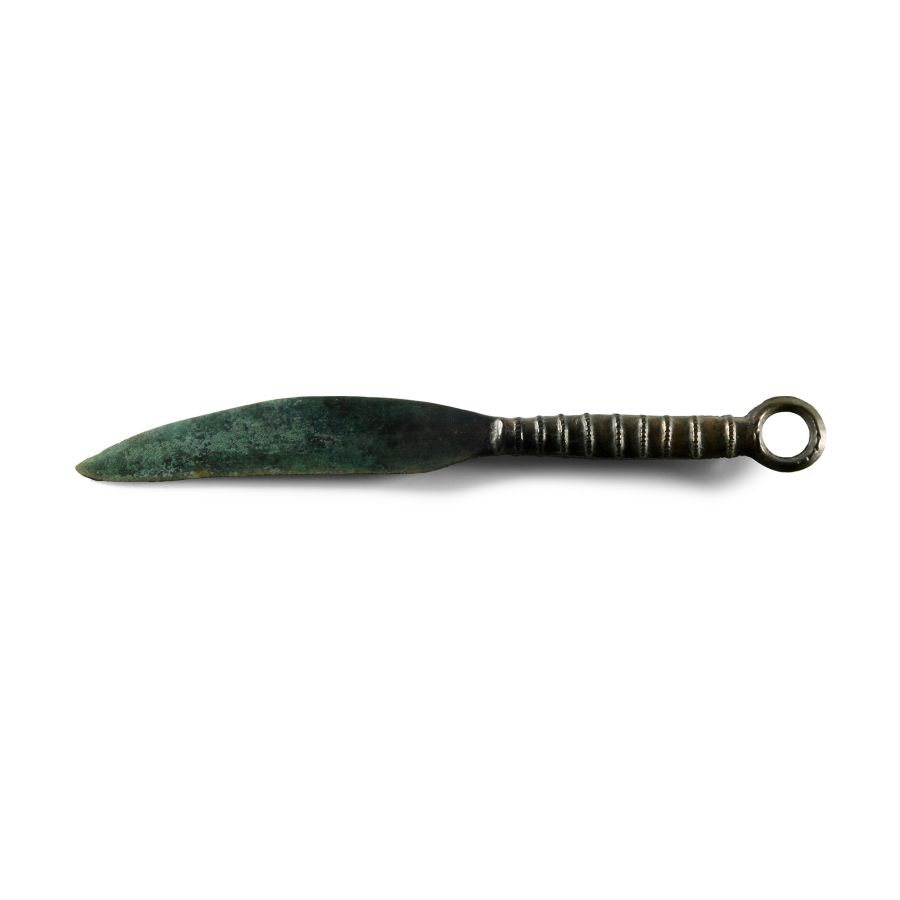
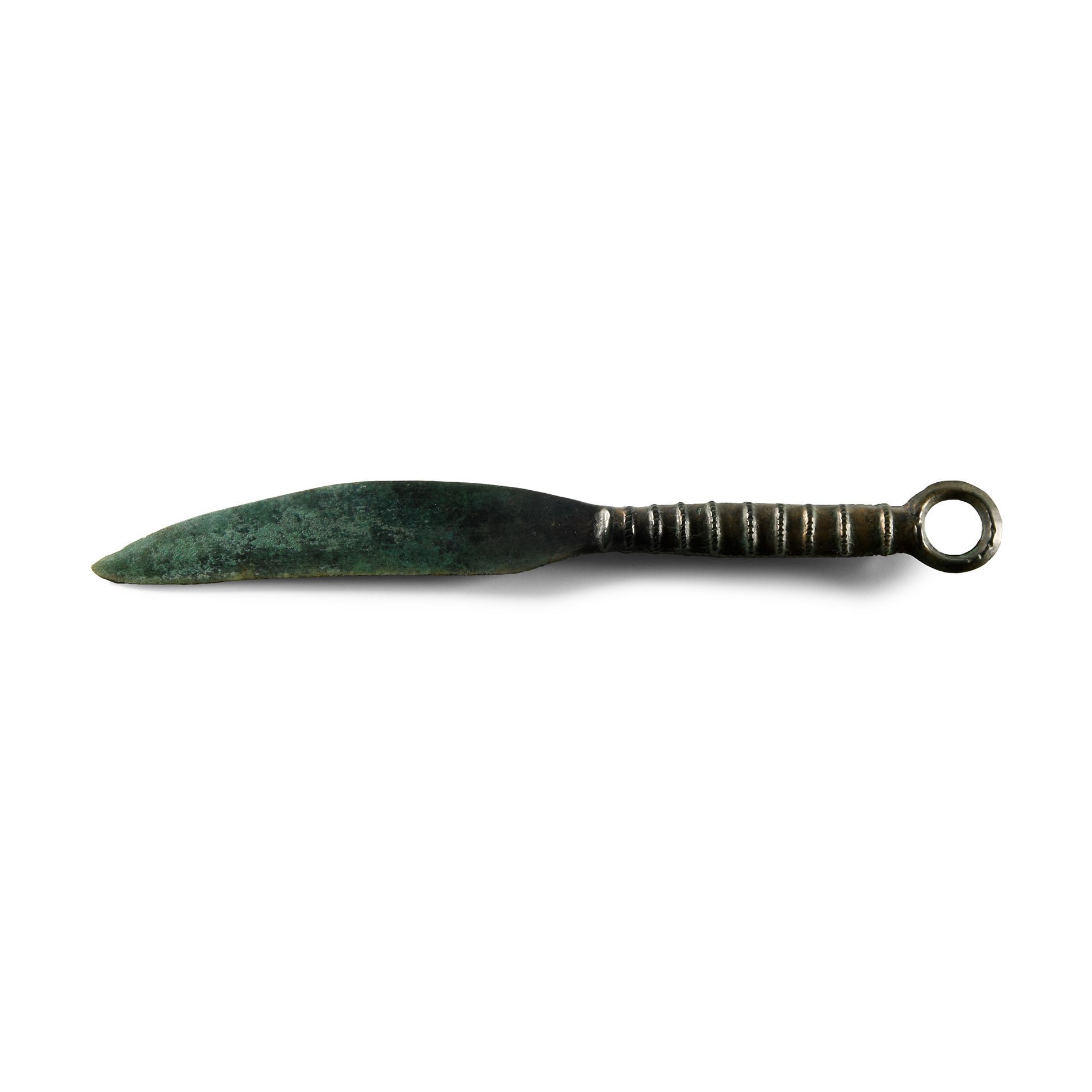
Bronze Age Knife with Ribbed Handle
CIRCA 2ND MILLENNIUM B.C.
8 1/2 in. (94.2 grams, 21.7 cm).
With a long single-edged blade, the handle with raised ribs decorated with incised hatching, looped terminal.
ProvenanceAcquired in the 2000s.
From the private collection of John Lawton, Surrey, UK.
Accompanied by a copy of a previous catalogue information page.
TimeLine Auctions follows a vetting process to ensure the authenticity and legality of all items, reinforcing our commitment to integrity and responsible trading. Each antiquity, antique, and coin lot undergoes thorough examination by a vetting committee of at least ten external specialists, professional trade association members, scientists, and archaeologists: Our Vetting Process
AUCTIONS:
TimeLine is a leading auction house specialising in antiquities, ancient art, collectables, natural history, coins, medals, and books. Our auctions offer museums, collectors, historians, and enthusiasts the opportunity to acquire unique and historically significant pieces.
-
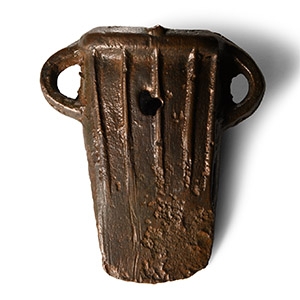
Bronze Age Socketted Axehead
10th-9th century B.C.Sold for (Inc. bp): £182
With rectangular-section mouth, integral collar developing to five vertical ribs on each broad face, two lateral loops; vent to each broad face, remains at casting sprue at collar. 172 grams, 72 mm
Private collection of Mr S.A., Switzerland, 1990s, thence by descent.
The form with two lateral loops is unusual. -
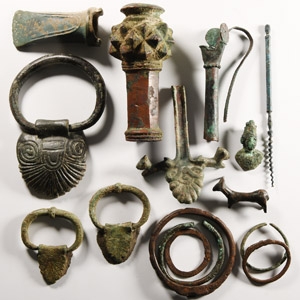
Group of Bronze Age and Other Objects
2nd millennium B.C.-circa 4th century A.D.Sold for (Inc. bp): £416
Comprising: a Luristan macehead; European socketted axehead; Greek vessel handles; bracelets, and other items. 1.36 kg total, 4.5-15.5 cm
The macehead with Sotheby's, May 1993; the handles ex Horatio and Patsy Melas collection. with Roseberys, London, 26 October 2021, the majority of no.12. Accompanied by a copy of the Roseberys catalogue listing. -
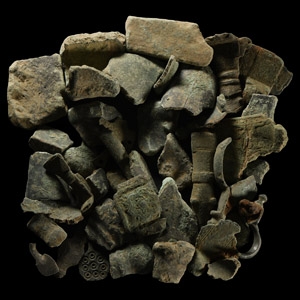
Bronze Age and Later Metal Artefact Group
2nd millennium B.C. and laterSold for (Inc. bp): £39
Including cruciform and other brooch fragments, pots and other items. 473 grams total, 14-51 mm
Found UK. Property of a Scottish collector, acquired in 2013.
