
Loading, please wait...
LOT 0342
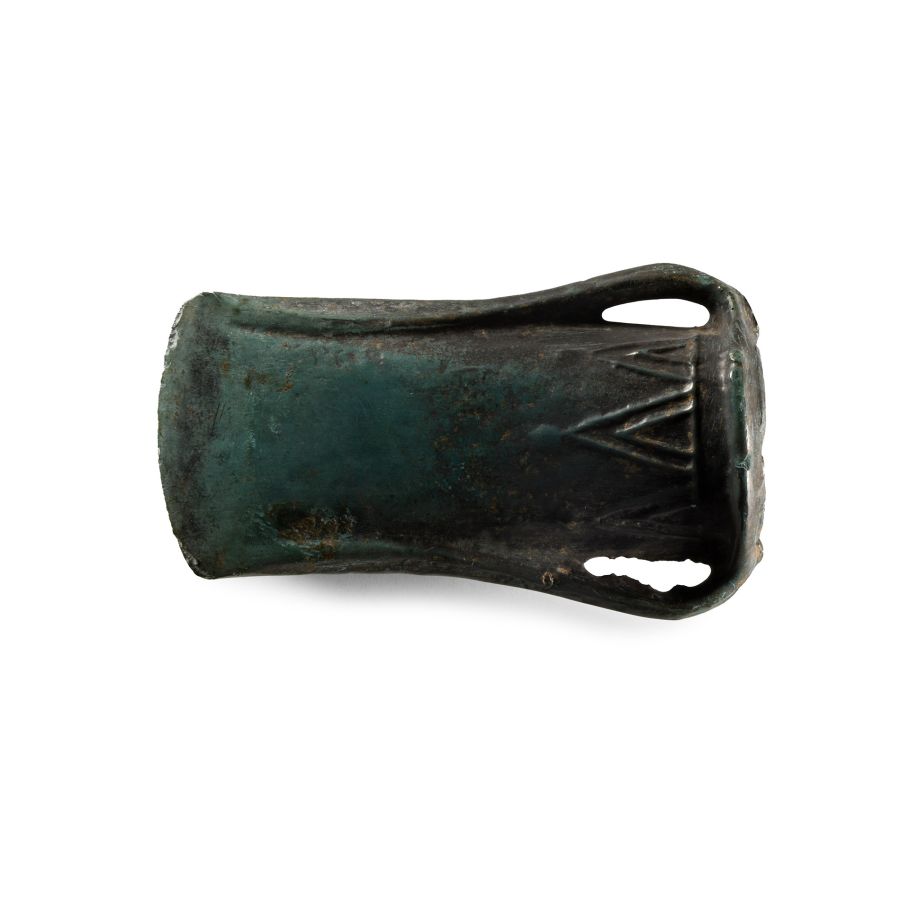
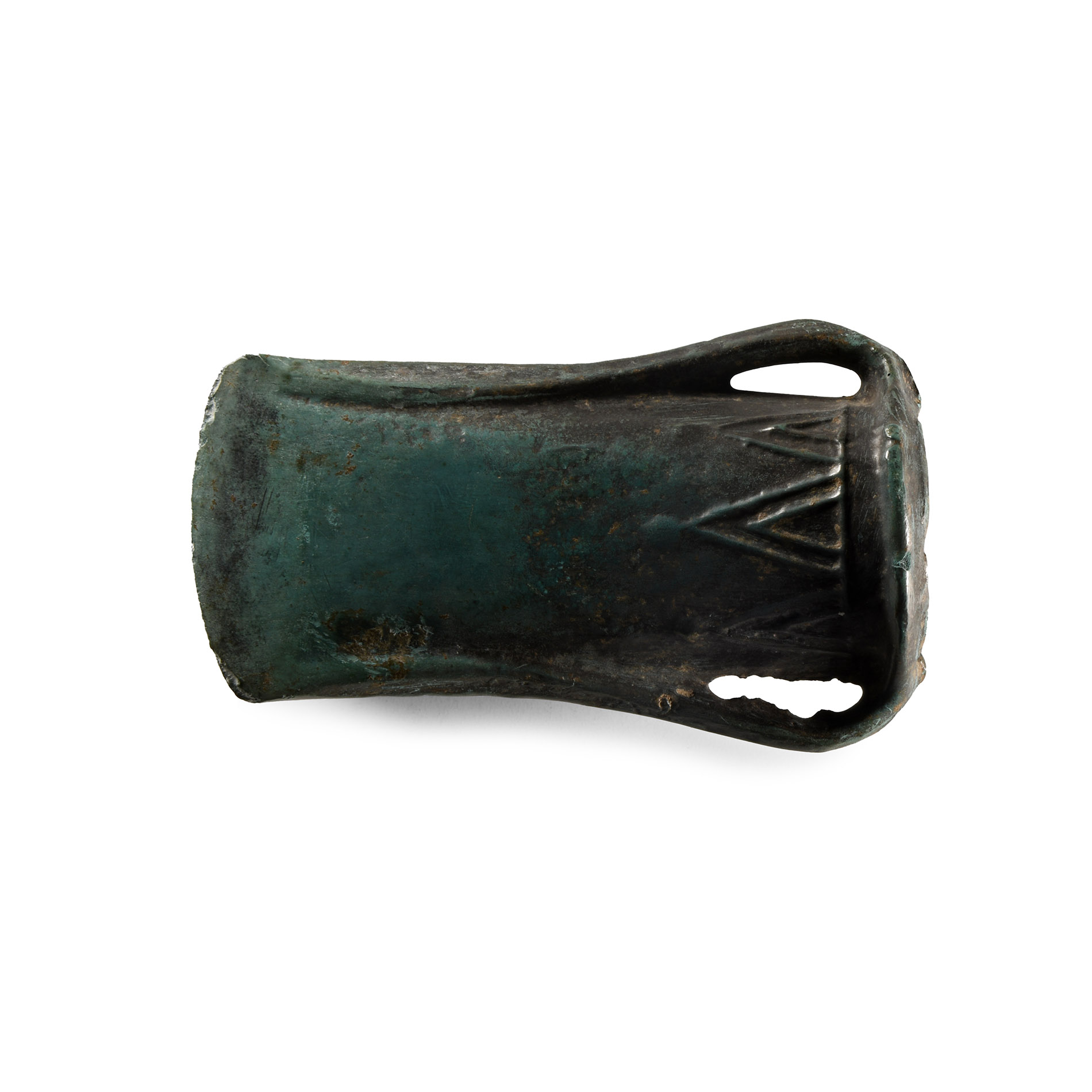
Bronze Age Double Looped and Socketted Axehead
CIRCA 2ND MILLENNIUM B.C.
3 1/4 in. (158 grams, 84 mm).
With a slightly curved cutting edge, chevron decoration to the shaft; thickened collar below the socket with two lateral loops joining the collar.
ProvenanceNumisart collection, Munich, Germany, 1990s.
Acquired in the 2000s.
From the private collection of John Lawton, Surrey, UK.
Accompanied by a copy of a previous catalogue information page.
TimeLine Auctions follows a vetting process to ensure the authenticity and legality of all items, reinforcing our commitment to integrity and responsible trading. Each antiquity, antique, and coin lot undergoes thorough examination by a vetting committee of at least ten external specialists, professional trade association members, scientists, and archaeologists: Our Vetting Process
AUCTIONS:
TimeLine is a leading auction house specialising in antiquities, ancient art, collectables, natural history, coins, medals, and books. Our auctions offer museums, collectors, historians, and enthusiasts the opportunity to acquire unique and historically significant pieces.
LOT 0342
Bronze Age Double Looped and Socketted Axehead
Estimate £400 - 600€460 - 700 (for guidance only)$540 - 810 (for guidance only)
-
Bronze Age Ceramic Vessel
Middle Bronze Age, circa 1200-800 B.C.Sold for (Inc. bp): £208
Squat jar with burnished surface, low rim to the neck. 450 grams, 14 cm wide
Found Norfolk, UK. Ex Clare Morris, UK, 2012. From an important Cambridgeshire estate; thence by descent. Accompanied by a certificate of authenticity from Clare Morris. -
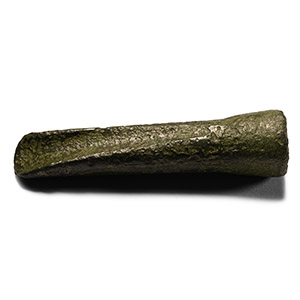
Bronze Age Socketted Gouge
Early 1st millennium B.C.Sold for (Inc. bp): £65
Of cylindrical form with tubular socket, with U-section balde to one face. 56 grams, 79 mm
Found Hertfordshire, UK. -
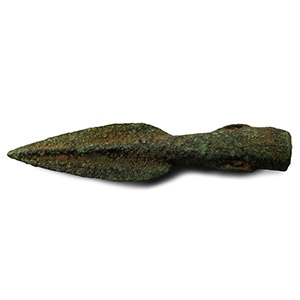
British Bronze Age Basal-Looped and Socketed Spearhead
1800-1500 B.C.Sold for (Inc. bp): £156
A substantial leaf-shaped blade with lozenge-section midrib, small lateral loop to the base of each blade with lozengiform plaque; chip to socket. 93 grams, 12.9 cm
Found near Langley, Norfolk, UK.
