
Loading, please wait...
LOT 0347
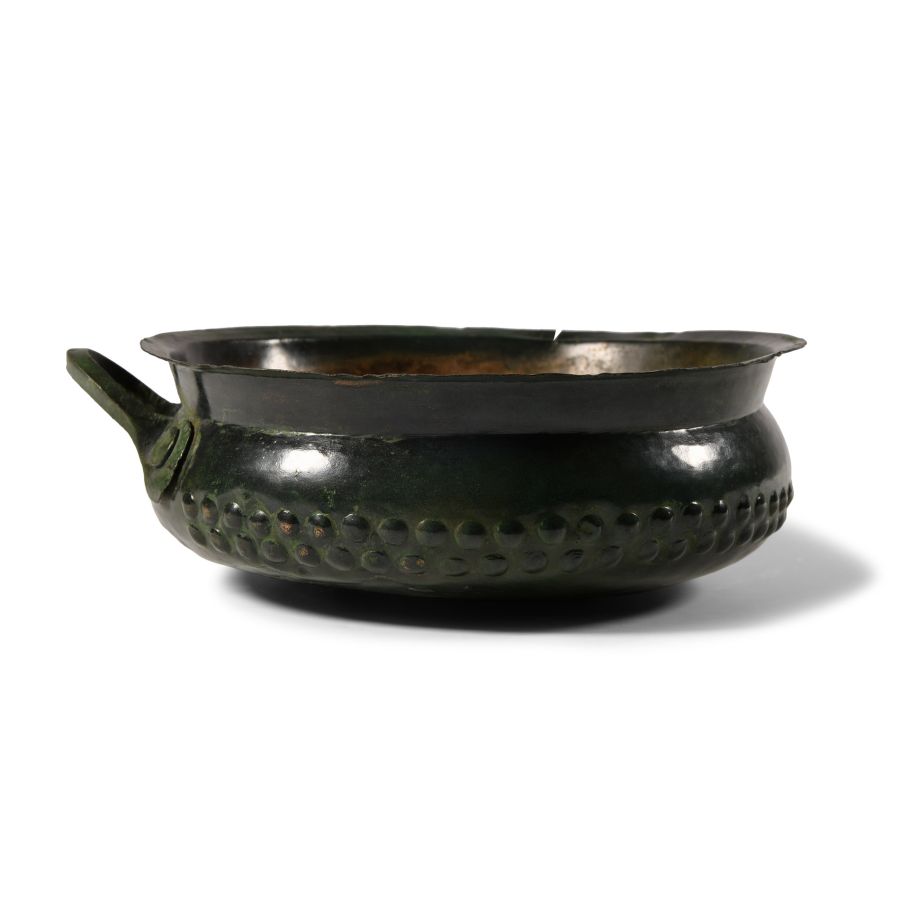
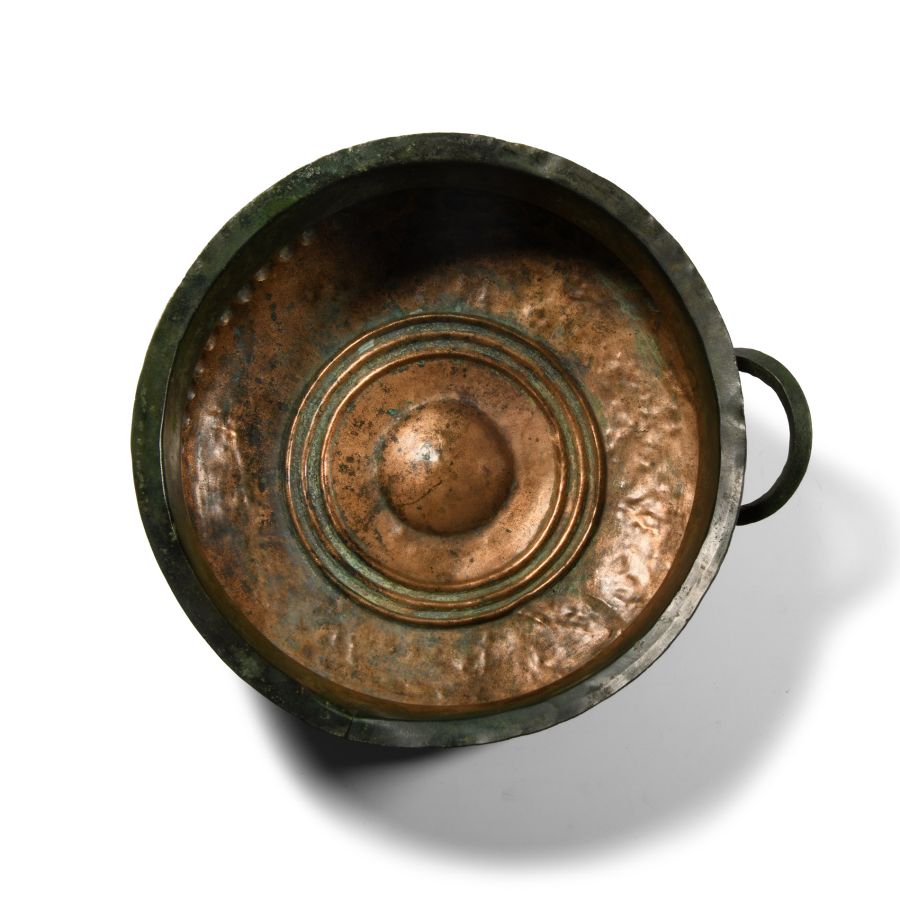
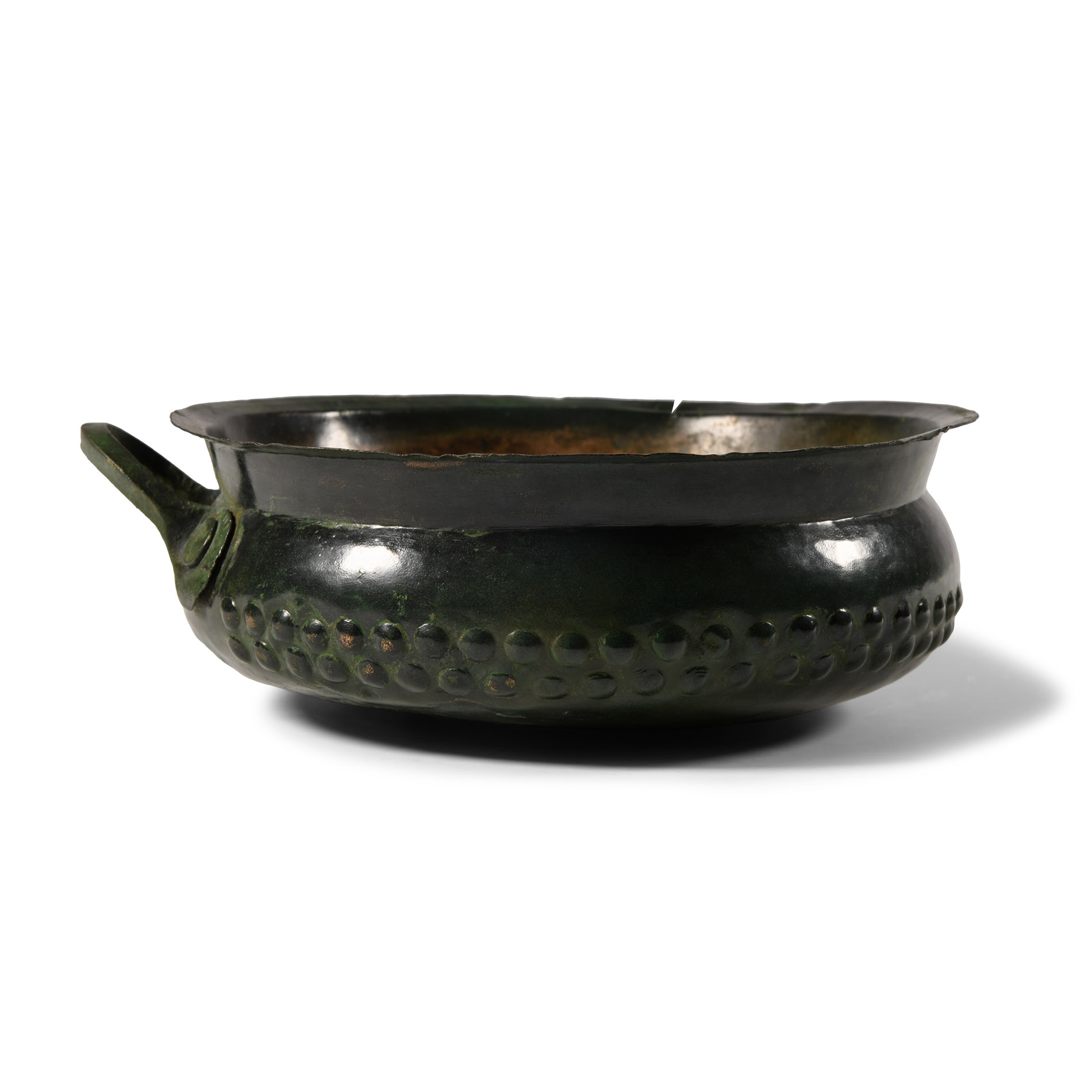
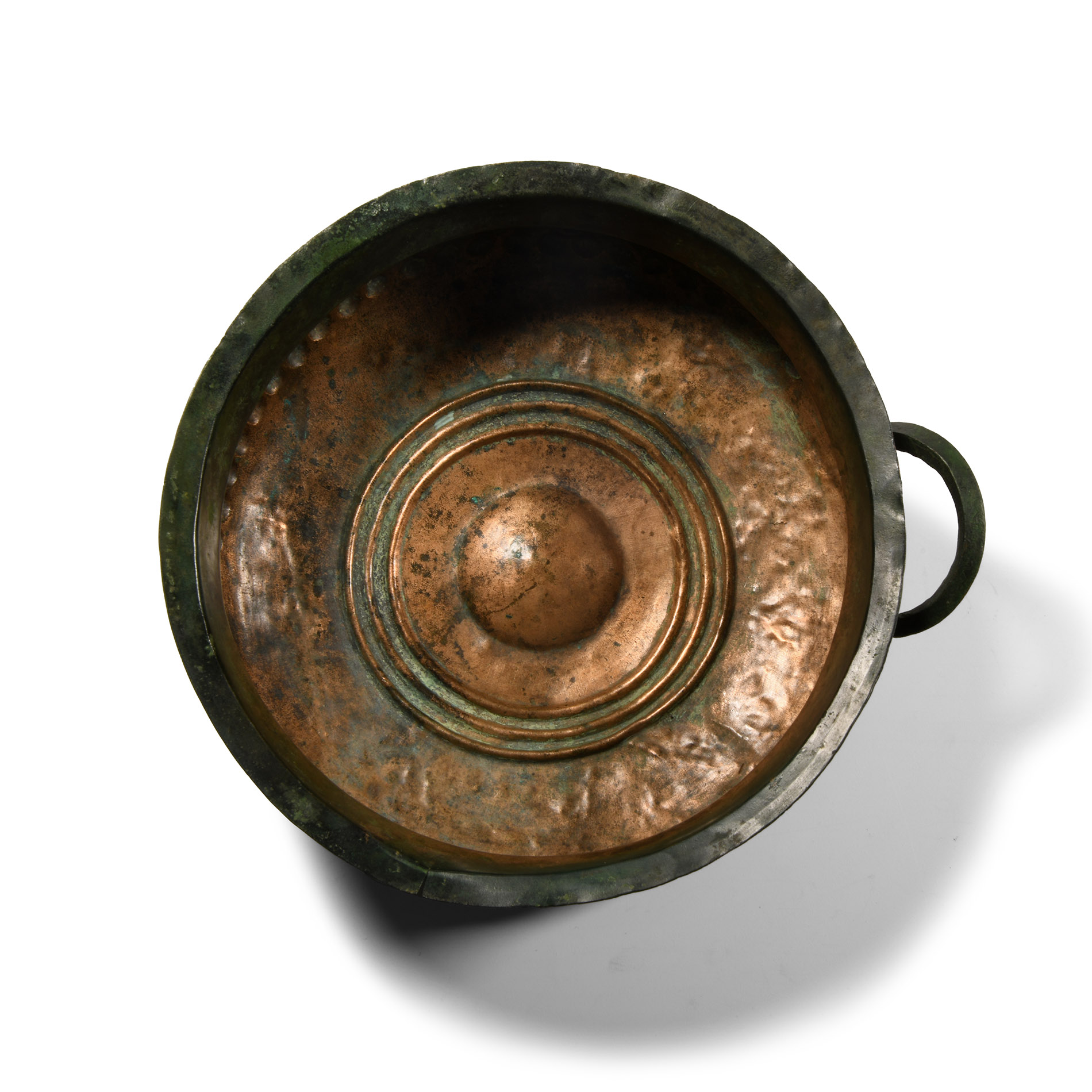
Bronze Age Decorated Bowl with Handle
CIRCA 1ST MILLENNIUM B.C.
6 3/4 in. (202 grams, 17 cm).
With a single loop handle rivetted to the body, rounded body decorated with raised bosses in two rows, short neck and everted rim; the dimpled base with decorative concentric circles.
ProvenanceEx private collection, Walton on Thames, UK, 1970s.
From the private collection of John Lawton, Surrey, UK.
This lot has been checked against the Interpol Database of stolen works of art and is accompanied by search certificate no.12060-214203.
TimeLine Auctions follows a vetting process to ensure the authenticity and legality of all items, reinforcing our commitment to integrity and responsible trading. Each antiquity, antique, and coin lot undergoes thorough examination by a vetting committee of at least ten external specialists, professional trade association members, scientists, and archaeologists: Our Vetting Process
AUCTIONS:
TimeLine is a leading auction house specialising in antiquities, ancient art, collectables, natural history, coins, medals, and books. Our auctions offer museums, collectors, historians, and enthusiasts the opportunity to acquire unique and historically significant pieces.
-
Bronze Age Bronze Spectacle Pendant
16th-10th century B.C.Sold for (Inc. bp): £234
Formed as two coils of round-section rod with a loop between. 30.7 grams, 79 mm
Formerly in a Munich, Germany collection, formed in the 1970s. From a private UK collection. From the Horton collection, UK. -
Bronze Age Socketted Spearhead
Circa 1000 B.C.Estimate: £800 - 1,000 (‡+bp*)
Opening Bid: £400
With flared socket developing to a midrib with scooped ribbing in a leaf-shaped blade; opposed lateral holes to accept attachment pegs, and casting flaw close to the mouth; mounted on a custom-made stand. 92 grams, 14.6 cm (152 grams total, 20.6 cm including stand)
Acquired on the German art market, from Gallery Christian Niederhuber, 2000. European private collection. -
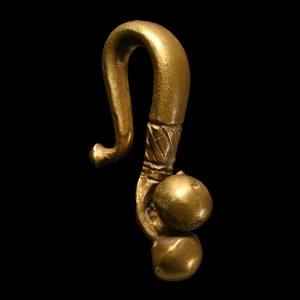
Bronze Age Solid Gold Earring
Circa 2nd-1st millennium B.C.Estimate: £350 - 450 (+bp*)
Opening Bid: £185
S-shaped with fine decoration, the finial formed of two large spheres, incised decoration above. 4.61 grams, 23.90 mm
From a late Japanese specialist collector, 1970-2000s.
