
Loading, please wait...
LOT 1519
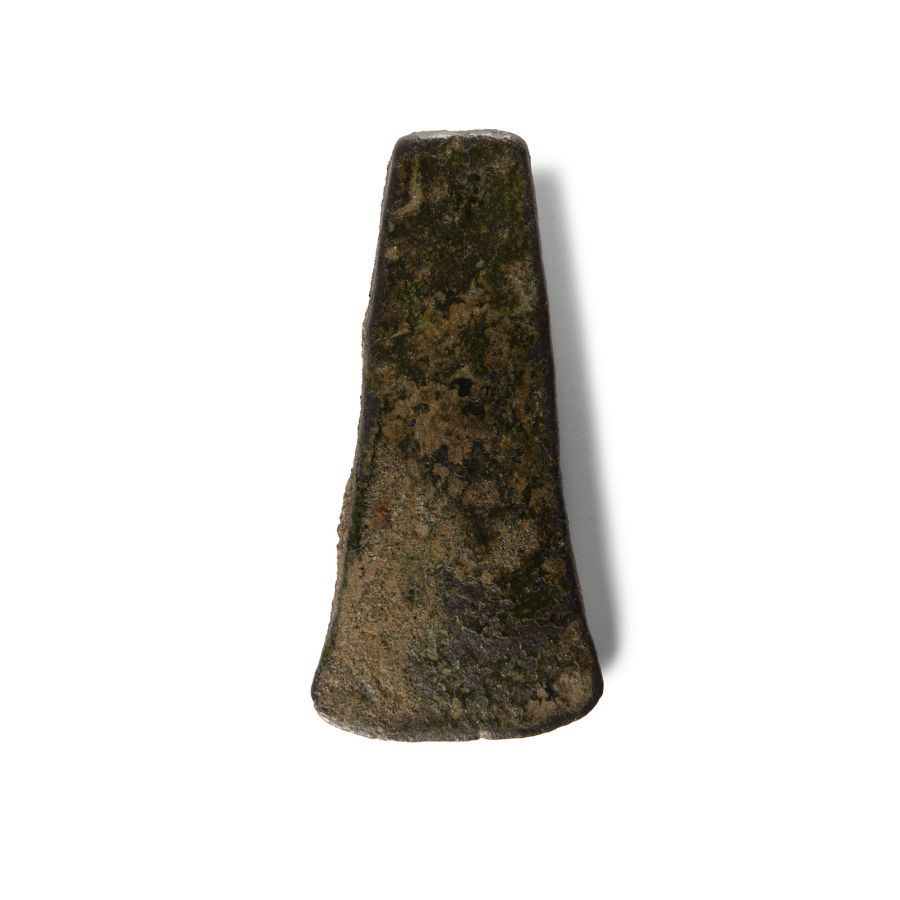
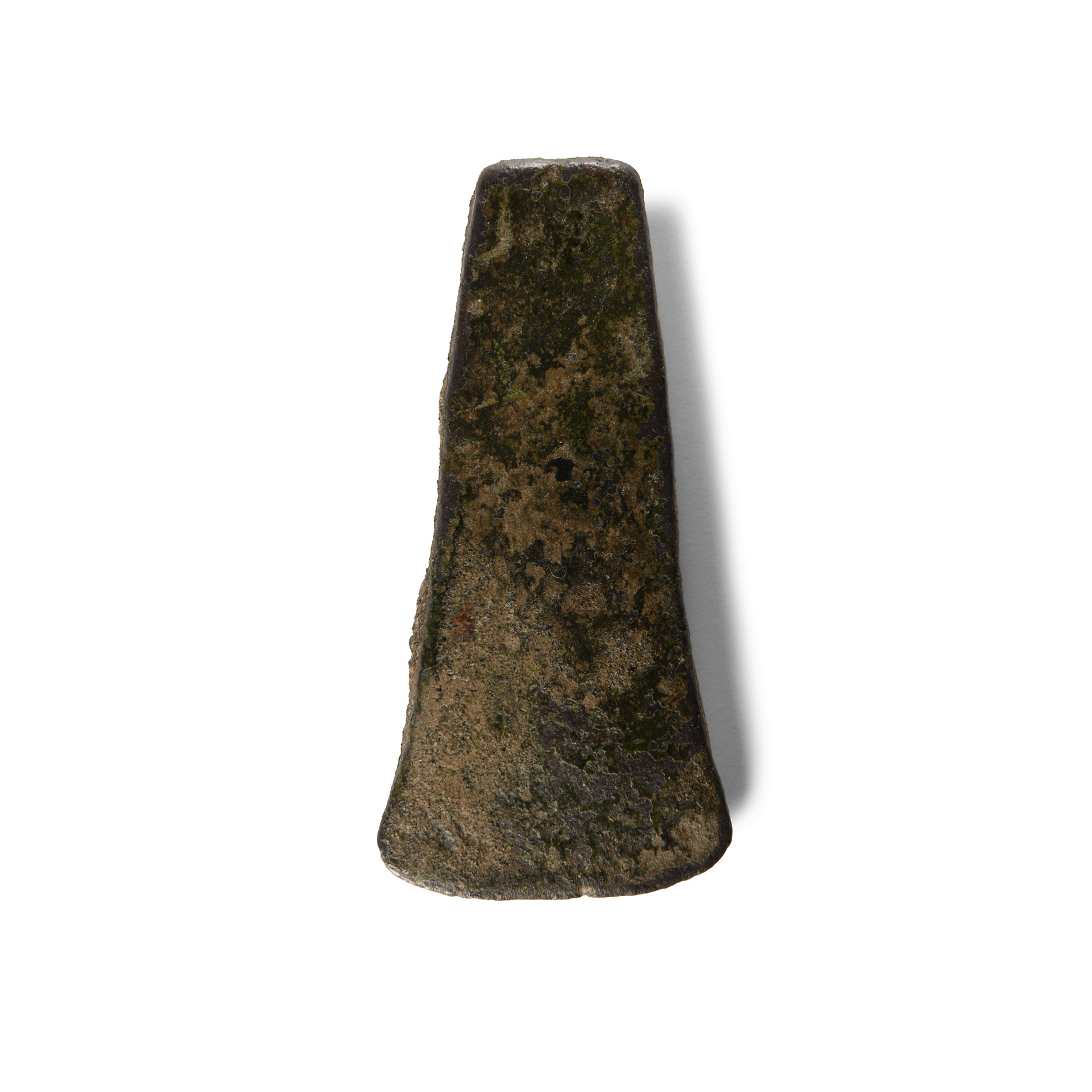
Bronze Age Copper Flataxe
2ND MILLENNIUM B.C.
3 1/8 in. (127 grams, 81 mm).
With a gently curving blade and tapering profile. [No Reserve]
ProvenanceFrom a North Yorkshire, UK, collection formed since the 1980s; thence by descent.
CONDITIONTimeLine Auctions follows a vetting process to ensure the authenticity and legality of all items, reinforcing our commitment to integrity and responsible trading. Each antiquity, antique, and coin lot undergoes thorough examination by a vetting committee of at least ten external specialists, professional trade association members, scientists, and archaeologists: Our Vetting Process
AUCTIONS:
TimeLine is a leading auction house specialising in antiquities, ancient art, collectables, natural history, coins, medals, and books. Our auctions offer museums, collectors, historians, and enthusiasts the opportunity to acquire unique and historically significant pieces.
-
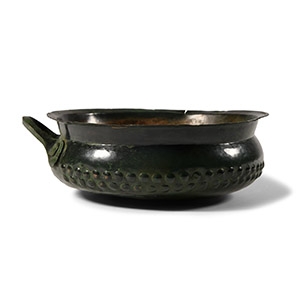
Bronze Age Decorated Bowl with Handle
Circa 1st millennium B.C.Sold for (Inc. bp): £3,380
With a single loop handle rivetted to the body, rounded body decorated with raised bosses in two rows, short neck and everted rim; the dimpled base with decorative concentric circles. 202 grams, 17 cm
Ex private collection, Walton on Thames, UK, 1970s. From the private collection of John Lawton, Surrey, UK. This lot has been checked against the Interpol Database of stolen works of art and is accompanied by search certificate no.12060-214203. -
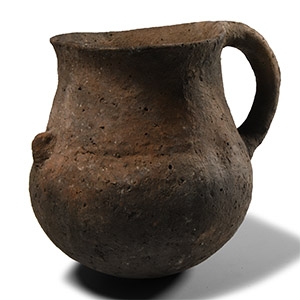
Bronze Age Round-Bottomed Terracotta Jug
2nd millennium B.C.Sold for (Inc. bp): £104
With broad mouth and everted rim, narrow shoulder, rounded underside, spur to the forward edge of the shoulder, strap handle to the rear. 553 grams, 16 cm
From a collection acquired on the UK art market from various auction houses and collections mostly before 2000. From an important Cambridgeshire estate; thence by descent. -
.jpg)
Bronze Age Sickle Blade
Circa 2nd millennium B.C.Sold for (Inc. bp): £1
A lanceolate blade with ribbed detail on upper surface, plain reverse; a fixing peg formed from the casting sprue at the broad end. 138 grams, 16 cm
Ex Cummings collection, UK, 1990s.
