
Loading, please wait...
LOT 1166
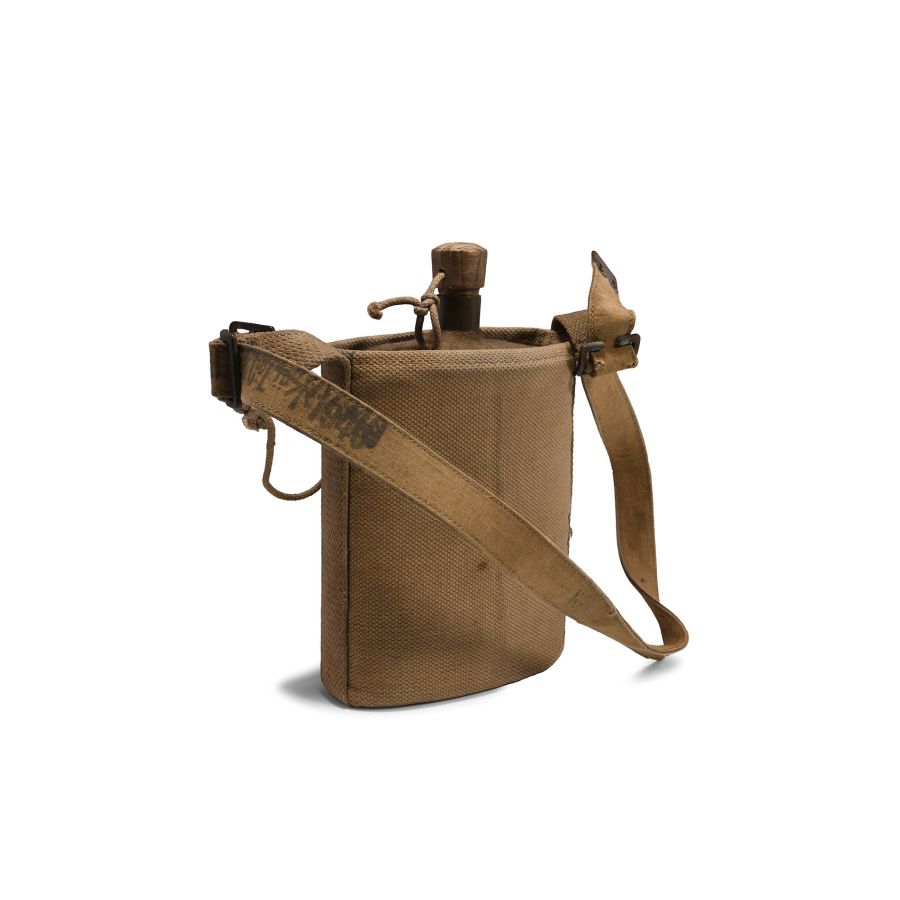
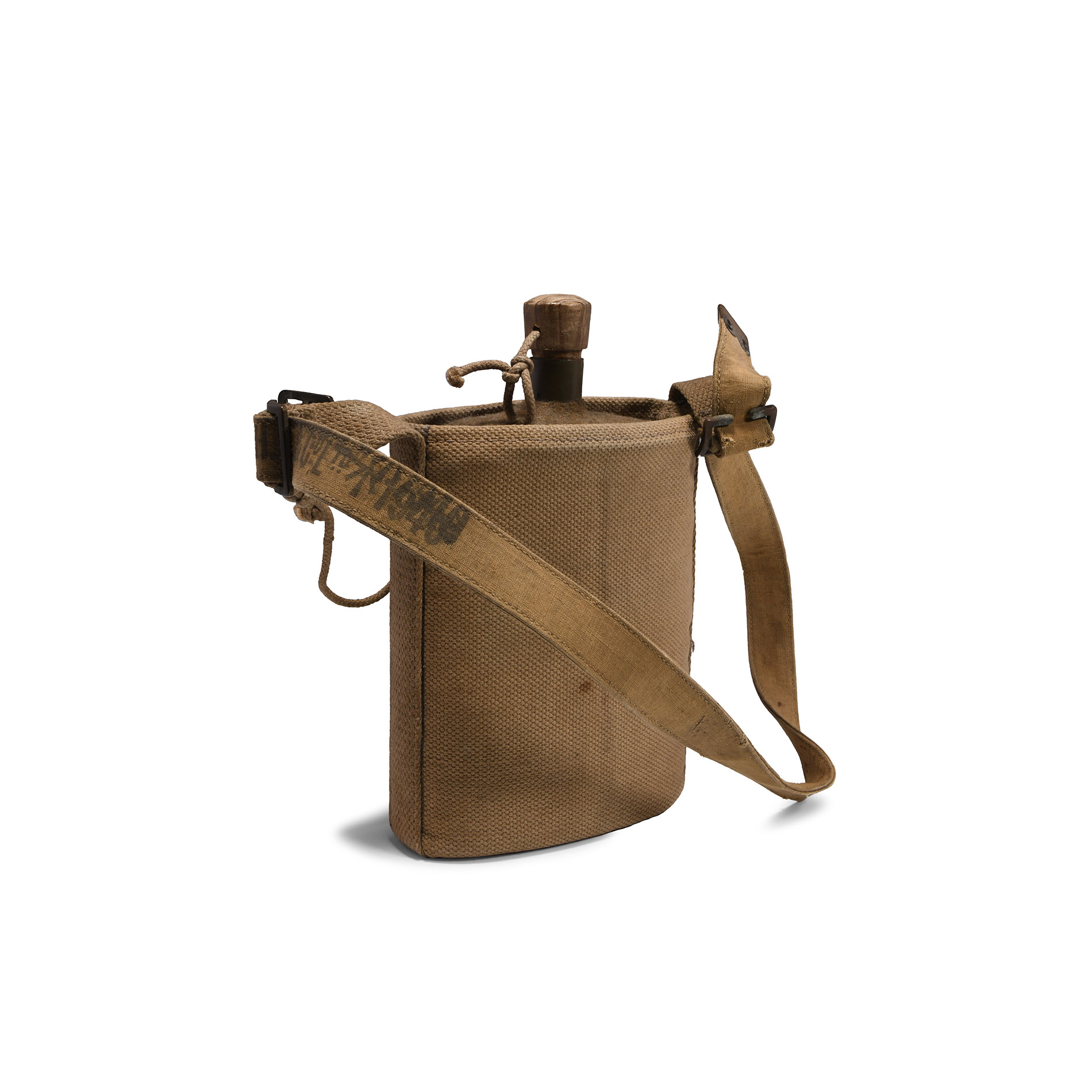
British WWII Water Bottle
DATED 1940 A.D.
9 1/4 in. (592 grams, bottle 23.5 cm high).
Felt covered steel water bottle of oval cylindrical shape with wood plug stopper with cord retainer and fitted with canvas carry cover and shoulder strap with printed 'H S & CO Ltd ' maker name and War Department 'broad arrow' mark and date. [No Reserve]
ProvenanceThe Kusmirek Collection, UK.
CONDITIONTimeLine Auctions follows a vetting process to ensure the authenticity and legality of all items, reinforcing our commitment to integrity and responsible trading. Each antiquity, antique, and coin lot undergoes thorough examination by a vetting committee of at least ten external specialists, professional trade association members, scientists, and archaeologists: Our Vetting Process
AUCTIONS:
TimeLine is a leading auction house specialising in antiquities, ancient art, collectables, natural history, coins, medals, and books. Our auctions offer museums, collectors, historians, and enthusiasts the opportunity to acquire unique and historically significant pieces.
-
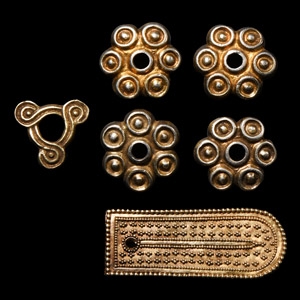
Avar-Byzantine Silver-Gilt Sword Belt Mount Group
7th century A.D.Estimate: £200 - 300 (+bp*)
Opening Bid: £80
Comprising six mounts: four 'floral' plates composed of six raised pellet-in-ring motifs arranged around a central hole, some mounting lugs remaining to the reverses; an openwork knotwork type with three mounting lugs to reverse; a hollow-formed rectangular plate with one rounded end, granulated borders framing granulated clusters arranged in orderly rows around a central arm and piercing; granulated border to reverse. 25.1 grams total, 18-48 mm
Fine condition.
Acquired in the 1980s-1990s. Ex an important central London gallery, London W1.
This type of belt element decorated with granulation, is present in the Avar graves of the second half of the 7th century, and was most likely produced in the workshops of the Eastern Roman Empire, from where they reached the Avar lands as imperial gifts (tomb of Kunbàboni) or spoils of war. They were part of multiple belts, to which sabers and knives were attached, commonly used among Avars, Bulgars and Romans during the 7th and 8th centuries AD. -
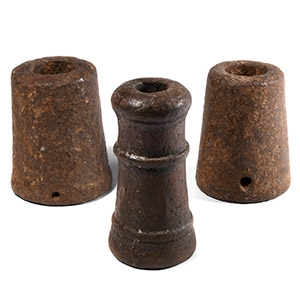
Medieval Iron Hand Cannon Collection
15th century A.D.Sold for (Inc. bp): £572
Each comprising a touch hole to base. 5.6 kg total. 9.5-12 cm
Acquired 1990s-early 2000s. East Anglian private collection.
At the beginning of the 14th century, among the infantry troops of the Western Middle Ages, developed the use of manual cannons (such as the Italian schioppetti, spingarde, and the German Fusstbusse). The new weapon had, compared to the bow and the crossbow, the advantage of not needing any particular care, of being manufactured more quickly and of being cheaper. -
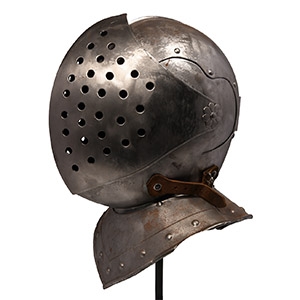
Italian Foot-Combat Helm
21st century A.D.Sold for (Inc. bp): £169
Comprising a pivoting visor, one piece skull raising to a small medial comb and fitted at the nape with a plume holder, flower-shaped pivots, front and rear gorget formed of a single plate. 3.9 kg, 37 cm high
The Kusmirek Collection, UK.
The helmet is a reproduction of a foot-combat helm, or great bascinet, used between the end of 15th and the first half of 16th century in the battles and tournaments. A similar helmet is that of Sir Giles Capel (1485-1556), a prominent figure at Henry VIII's court. These helmets were characterised by a unique rounded pierced visor with (here 60) slots for sight and ventilation. Helmets of this massive size and distinctive type were intended for foot-combat, a sporting contest fought by two fully armoured warriors armed with poleaxes, spears or swords. However, in this reproduction the visor has been mounted upon a separated collar.
