
Loading, please wait...
LOT 1174
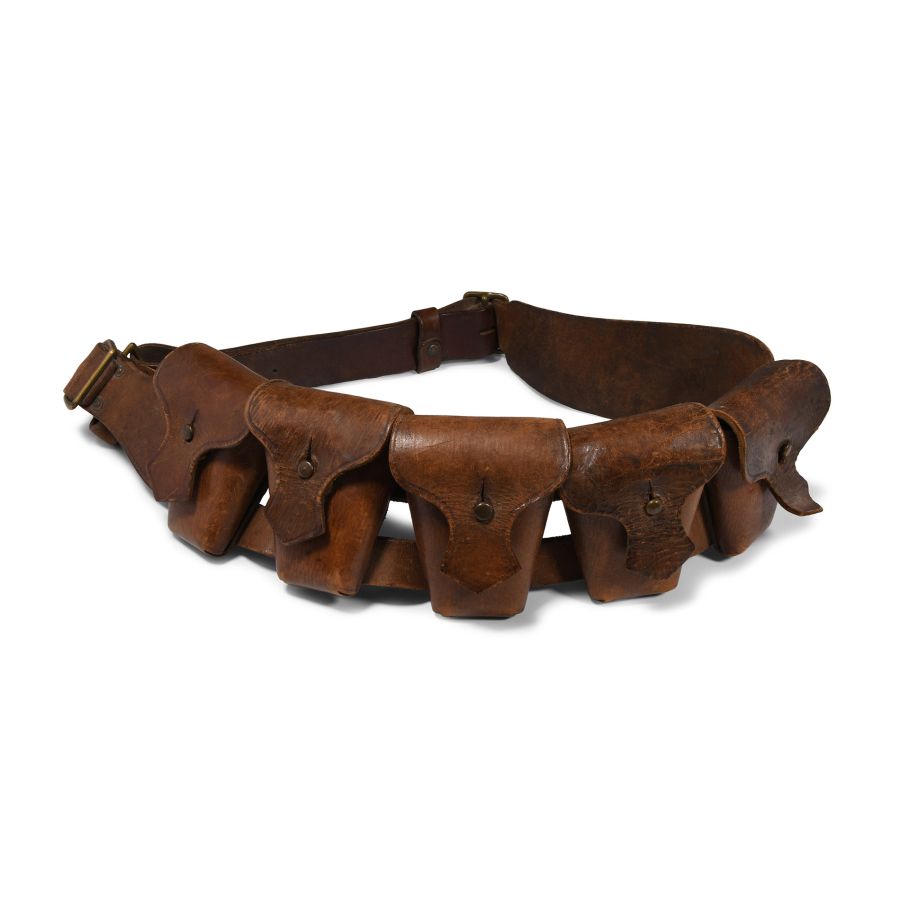
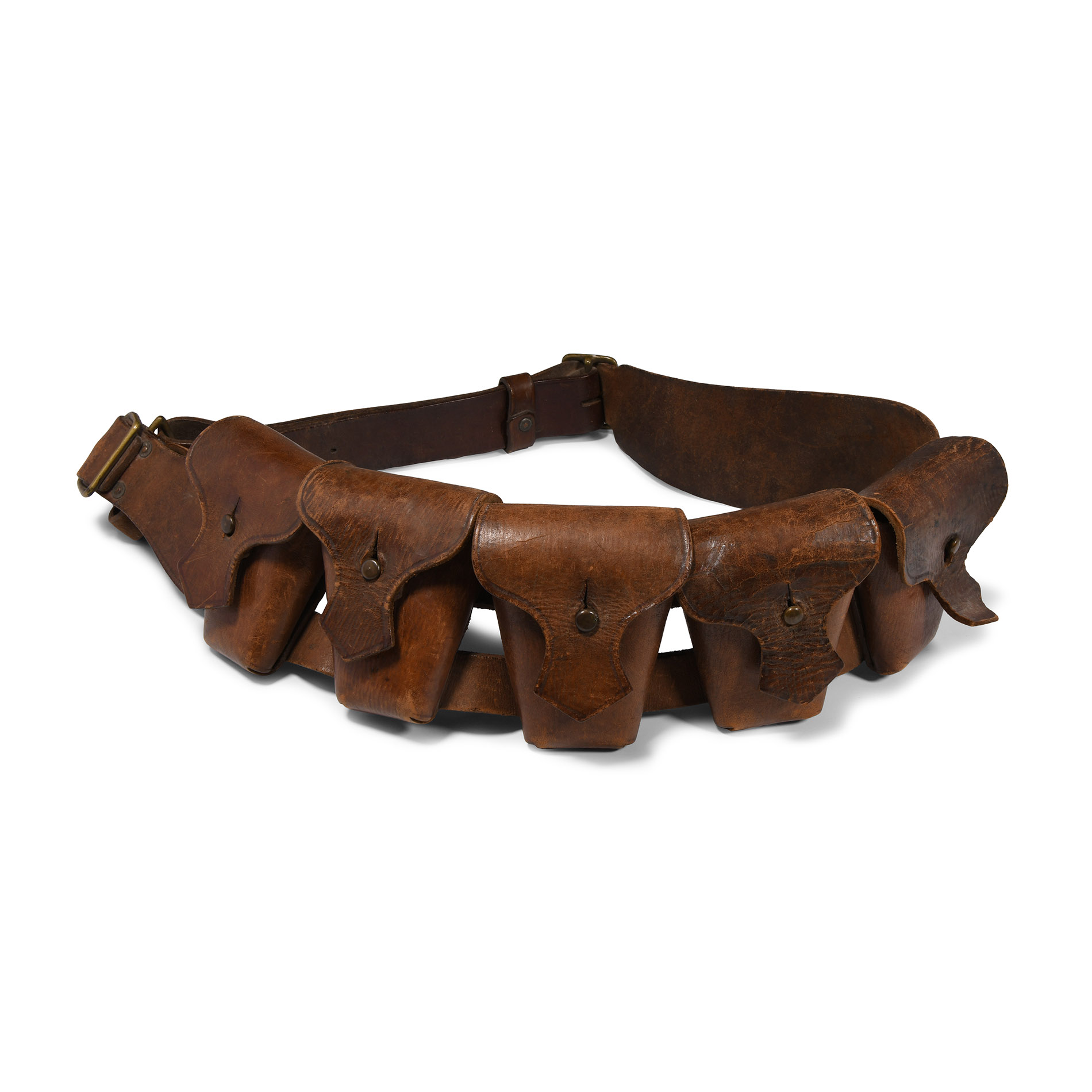
British Leather Ammunition Pouch Belt
1940S A.D.
35 1/2 in. (591 grams, 90 cm long).
A leather belt with brass buckles to which are rivetted five leather cartridge holders each with internal retaining strap and cover; the reverse of the belt stamped '2575665'. [No Reserve]
ProvenanceThe Kusmirek Collection, UK.
CONDITIONTimeLine Auctions follows a vetting process to ensure the authenticity and legality of all items, reinforcing our commitment to integrity and responsible trading. Each antiquity, antique, and coin lot undergoes thorough examination by a vetting committee of at least ten external specialists, professional trade association members, scientists, and archaeologists: Our Vetting Process
AUCTIONS:
TimeLine is a leading auction house specialising in antiquities, ancient art, collectables, natural history, coins, medals, and books. Our auctions offer museums, collectors, historians, and enthusiasts the opportunity to acquire unique and historically significant pieces.
-
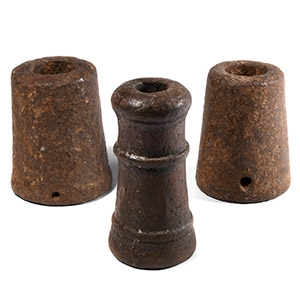
Medieval Iron Hand Cannon Collection
15th century A.D.Sold for (Inc. bp): £572
Each comprising a touch hole to base. 5.6 kg total. 9.5-12 cm
Acquired 1990s-early 2000s. East Anglian private collection.
At the beginning of the 14th century, among the infantry troops of the Western Middle Ages, developed the use of manual cannons (such as the Italian schioppetti, spingarde, and the German Fusstbusse). The new weapon had, compared to the bow and the crossbow, the advantage of not needing any particular care, of being manufactured more quickly and of being cheaper. -
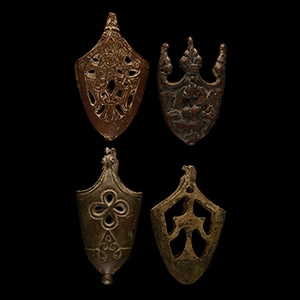
Viking Age Bronze Sword Scabbard Chape Collection
9th-11th century A.D.Sold for (Inc. bp): £715
Comprising: one heater-shaped with openwork raven motif to each face; one similar with openwork raven enmeshed in tendrils; one with fleur-de-lys to the centre of each upper edge and a lobed spur to each side; one with openwork quatrefoil to each face and knop finial to the apex. 145 grams total, 55-85 mm
From the collection of a North American gentleman, formed in the 1990s. -
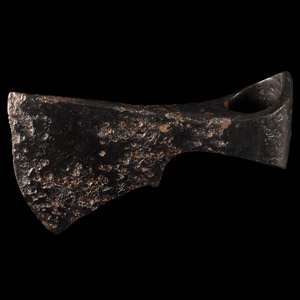
Viking Iron Bearded Axehead
9th-12th century A.D.Sold for (Inc. bp): £234
Composed of a flanged and rounded butt, shaped lower edge and convex cutting edge. 688 grams, 16.2 cm
Ex American collection, acquired 1980-200. The Kusmirek Collection, UK.
