
Loading, please wait...
LOT 1245
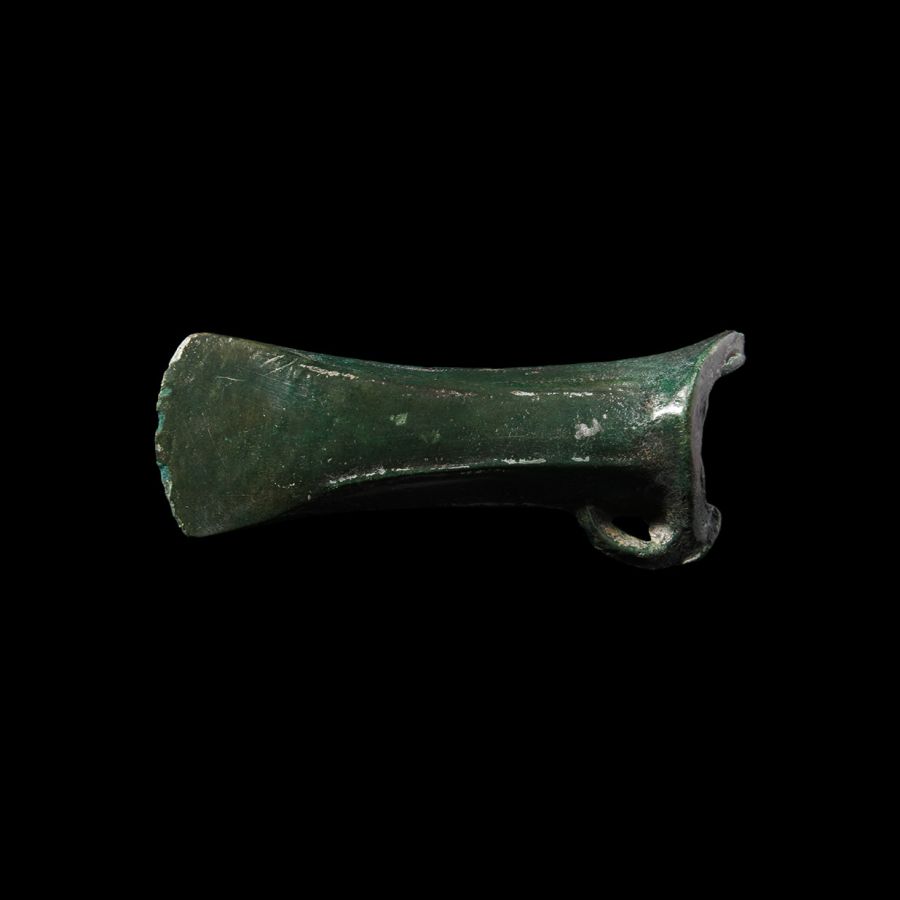
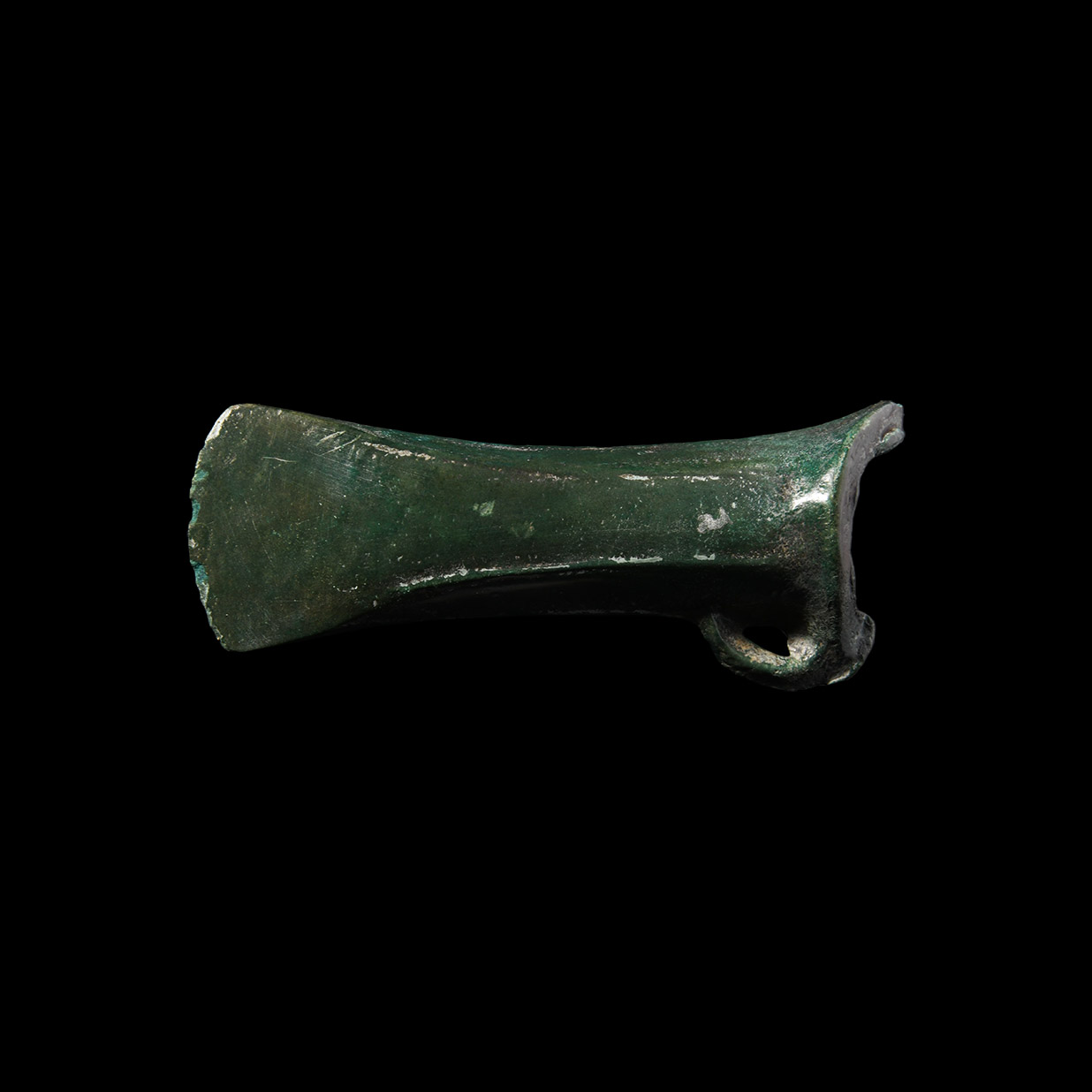
British Bronze Age Looped and Socketted Axehead
12TH-8TH CENTURY B.C.
5 1/2 in. (300 grams, 14 cm).
With round-section barrel and two parallel ribs, flared cutting edge, small loop below.
ProvenanceJohn Lawton collection, Surrey, UK.
London Mayfair gallery, UK.
Dr D.G. collection, 1990s-2019.
Accompanied by an old typed catalogue slip with provenance.
Cf. MacGregor, A., Antiquities from Europe and the Near East in the collection of the Lord MacAlpine of West Green, Ashmolean Museum, 1987, no.11.19.
FootnotesThis very fine British specimen of Bronze Age axe still has the loop used for securing it to the wooden handle. This type has some features in common with a number of specimens from the Little Coombe Hoard (BM no.1894, 0803.4) and can be dated to the Late Bronze Age.
CONDITIONTimeLine Auctions follows a vetting process to ensure the authenticity and legality of all items, reinforcing our commitment to integrity and responsible trading. Each antiquity, antique, and coin lot undergoes thorough examination by a vetting committee of at least ten external specialists, professional trade association members, scientists, and archaeologists: Our Vetting Process
AUCTIONS:
TimeLine is a leading auction house specialising in antiquities, ancient art, collectables, natural history, coins, medals, and books. Our auctions offer museums, collectors, historians, and enthusiasts the opportunity to acquire unique and historically significant pieces.
LOT 1245
British Bronze Age Looped and Socketted Axehead
Estimate £250 - 350€290 - 410 (for guidance only)$340 - 470 (for guidance only)
-
Bronze Age Socketted Axehead
2nd millennium B.C.Estimate: £150 - 200 (+bp*)
Opening Bid: £75
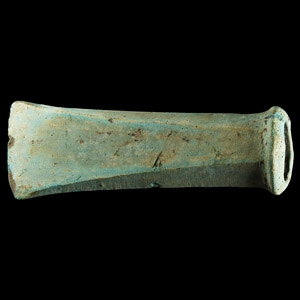
Wedge-shaped cheeks with faceted upper and lower faces, roughly round-section socket with gently facetted collar and inverted rim; slightly convex cutting edge. 151 grams, 99 mm
Acquired on the EU art market around 2000. From the collection of a North American gentleman. -
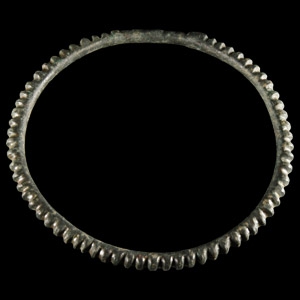
European Bronze Age Decoratively Notched Arm-Ring
Circa 8th-6th century B.C.Sold for (Inc. bp): £104
The annular ornament with round-section body and decoratively notched outer face. 134 grams, 13 cm wide
UK collection, early 1990s and before. Acquired on the UK art market since the early 2000s. From a private collection, Lancashire, UK. -
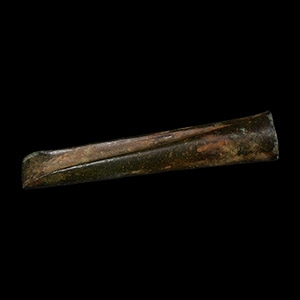
Bronze Age Socketted Gouge
Late 2nd millennium B.C.Sold for (Inc. bp): £111
Of cylindrical form with cylindrical socket, with flaring U-section gouge to one face. 70 grams, 93 mm
From an old collection. Acquired from Lockdales, Suffolk, UK, 15 November 2009, lot 652. Property of an Oxfordshire, UK, collector. Accompanied by a copy of the Lockdales invoice.
