
Loading, please wait...
LOT 1536
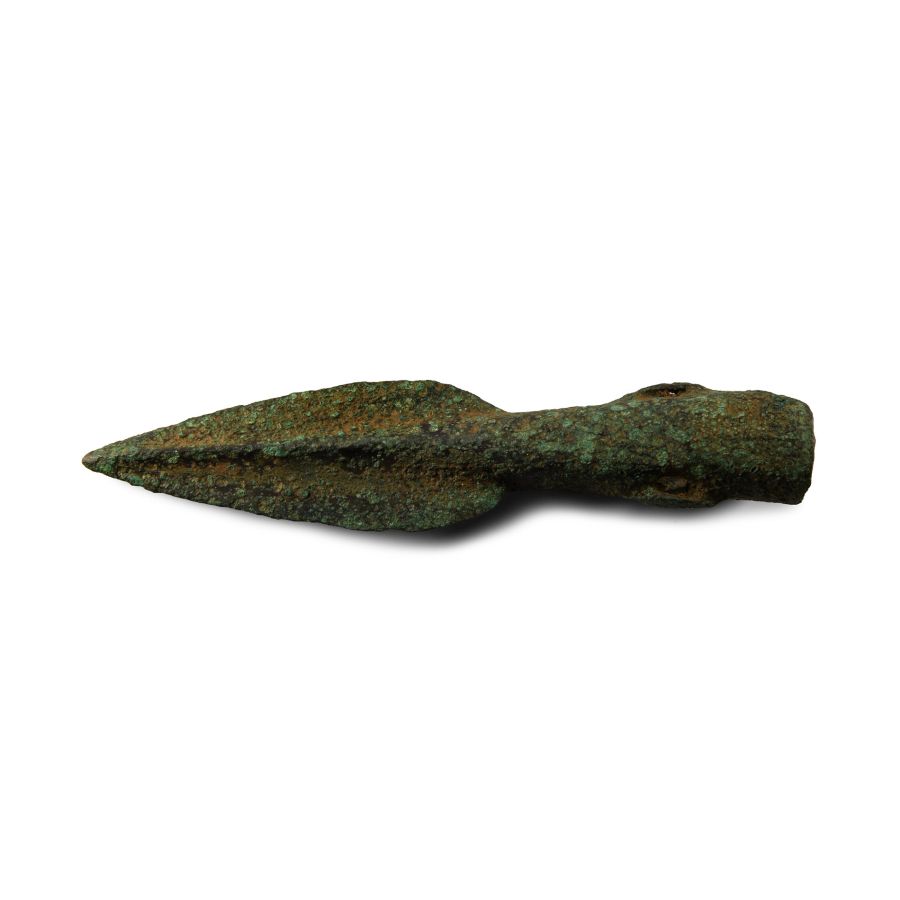
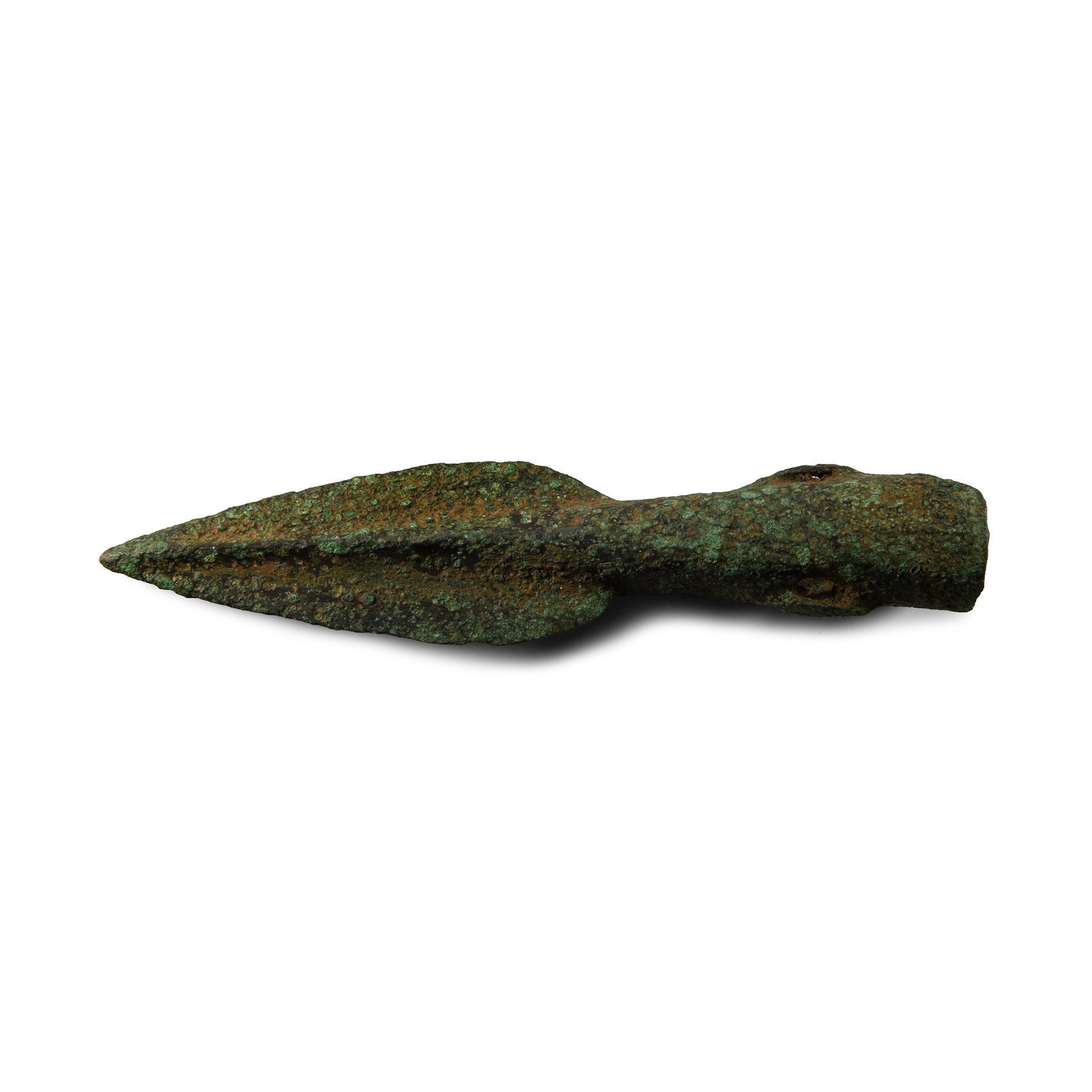
British Bronze Age Basal-Looped and Socketed Spearhead
1800-1500 B.C.
5 in. (93 grams, 12.9 cm).
A substantial leaf-shaped blade with lozenge-section midrib, small lateral loop to the base of each blade with lozengiform plaque; chip to socket. [No Reserve]
ProvenanceFound near Langley, Norfolk, UK.
LiteratureCf. Evans, J., The Ancient Bronze Implements, Weapons and Ornaments of Great Britain and Ireland, London, 1881, item 408; and see Davis, R., Basal-Looped Spearheads, BAR International Series no.1497, Oxford, 2006.
CONDITIONTimeLine Auctions follows a vetting process to ensure the authenticity and legality of all items, reinforcing our commitment to integrity and responsible trading. Each antiquity, antique, and coin lot undergoes thorough examination by a vetting committee of at least ten external specialists, professional trade association members, scientists, and archaeologists: Our Vetting Process
AUCTIONS:
TimeLine is a leading auction house specialising in antiquities, ancient art, collectables, natural history, coins, medals, and books. Our auctions offer museums, collectors, historians, and enthusiasts the opportunity to acquire unique and historically significant pieces.
-
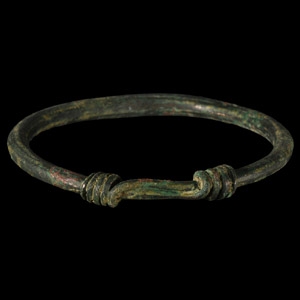
Bronze Age Arm Ring
1st millennium B.C.Sold for (Inc. bp): £247
With a round-section body, overlapping tapering terminals wound around the body. 100 grams, 10.2 cm
Ex old English collection. London art market, pre 2000. Property of a London, UK, gentleman. -
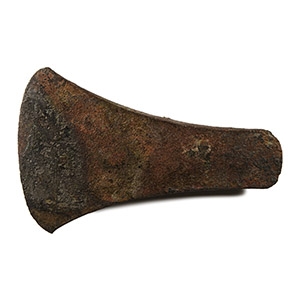
Bronze Age Copper Flat Axe
Circa 2000-1500 B.C.Sold for (Inc. bp): £111
With lentoid-section, narrow rounded butt and broad curved cutting edge. 452 grams, 14.5 cm
From a collection acquired on the UK art market from various auction houses and collections mostly before 2000. From an important Cambridgeshire estate; thence by descent. -
.jpg)
Bronze Age Sickle Blade
Circa 2nd millennium B.C.Sold for (Inc. bp): £1
A lanceolate blade with ribbed detail on upper surface, plain reverse; a fixing peg formed from the casting sprue at the broad end. 138 grams, 16 cm
Ex Cummings collection, UK, 1990s.
