
Loading, please wait...
LOT 1833
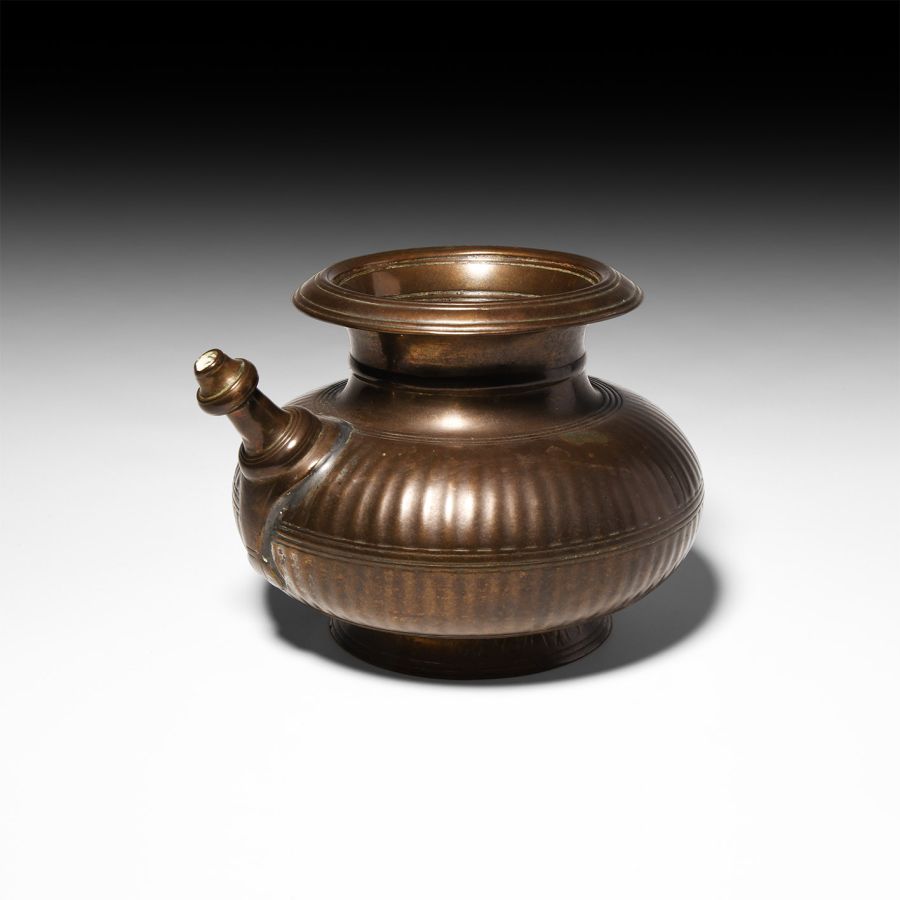
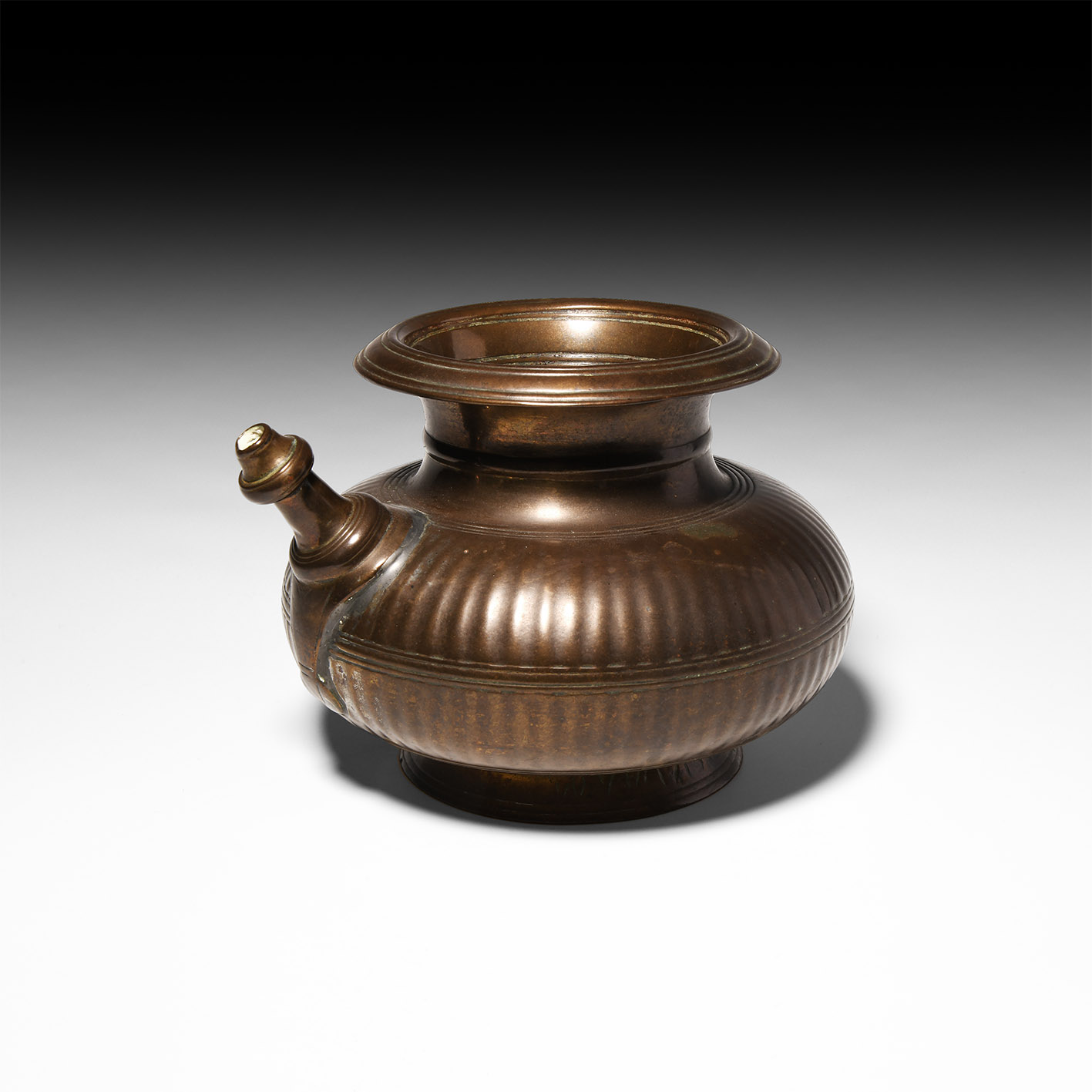
Brass Spouted Lota
MUGHAL, 18TH-19TH CENTURY A.D.
6 3/4 in. (1.2 kg, 17 cm wide).
Composed of a squat body with raised medial bands, vertical ribbing above and below, broad neck with everted rim, splayed foot and collared spout; maker's mark or other motif to base.
ProvenanceChristie's South Kensington, 29 April 2005, no.369.
Property of a Suffolk gentleman.
TimeLine Auctions follows a vetting process to ensure the authenticity and legality of all items, reinforcing our commitment to integrity and responsible trading. Each antiquity, antique, and coin lot undergoes thorough examination by a vetting committee of at least ten external specialists, professional trade association members, scientists, and archaeologists: Our Vetting Process
AUCTIONS:
TimeLine is a leading auction house specialising in antiquities, ancient art, collectables, natural history, coins, medals, and books. Our auctions offer museums, collectors, historians, and enthusiasts the opportunity to acquire unique and historically significant pieces.
LOT 1833
Brass Spouted Lota
Estimate £150 - 240€170 - 280 (for guidance only)$200 - 320 (for guidance only)
-
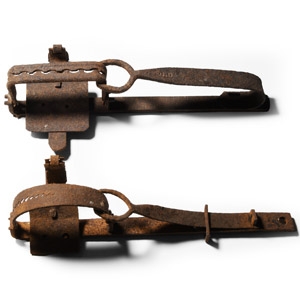
Iron Gin Trap Group
19th century A.D.Sold for (Inc. bp): £16
Comprising two traps, one with small serrated teeth and the other with larger teeth. 904 grams total, 28-30 cm
Property of a Kent, UK, collector.
The gin traps were used to trap animals such as rabbits for food, and also to protect food stores from animals. -
.jpg)
Post Medieval 'Thames' Bone Dominoes Gaming Piece
Circa 18th century A.D.Sold for (Inc. bp): £52
Rectangular in form with shallow circular dot numerals showing 4 and 5; blank reverse. 3 grams, 3 cm
Found near Custom House Quay on the Thames foreshore, London, UK. -
.jpg)
Gold Engraved Touchpiece
17th century A.D. or earlierSold for (Inc. bp): £156
Barrel-shaped with two impressed flat faces, one with a later engraving of a guilloche border and looped tendrils framing reserved initials 'PO P[R]' above and lower 'NU [.]M'; possibly a touchpiece or love token. 5.53 grams, 17 mm
Acquired since the 1970s. From the private collection of a Surrey, UK, gentleman. Accompanied by a copy of the article 'A Roman or Anglo-Saxon Fertility Amulet?' published in Treasure Hunting Magazine.
The design is reserved and very faint; the outer guilloche is quite convincing but the details of the design are hard to determine, and may always have been quite indistinct. The impression is of a 17th century love token with the initials of the couple. The finder's article implies an Anglo-Saxon date, probably on the strength of the guilloche which was often use on early Saxon metalwork - but it is a long-lived motif and not specific to that one period.
