
Loading, please wait...
LOT 2359
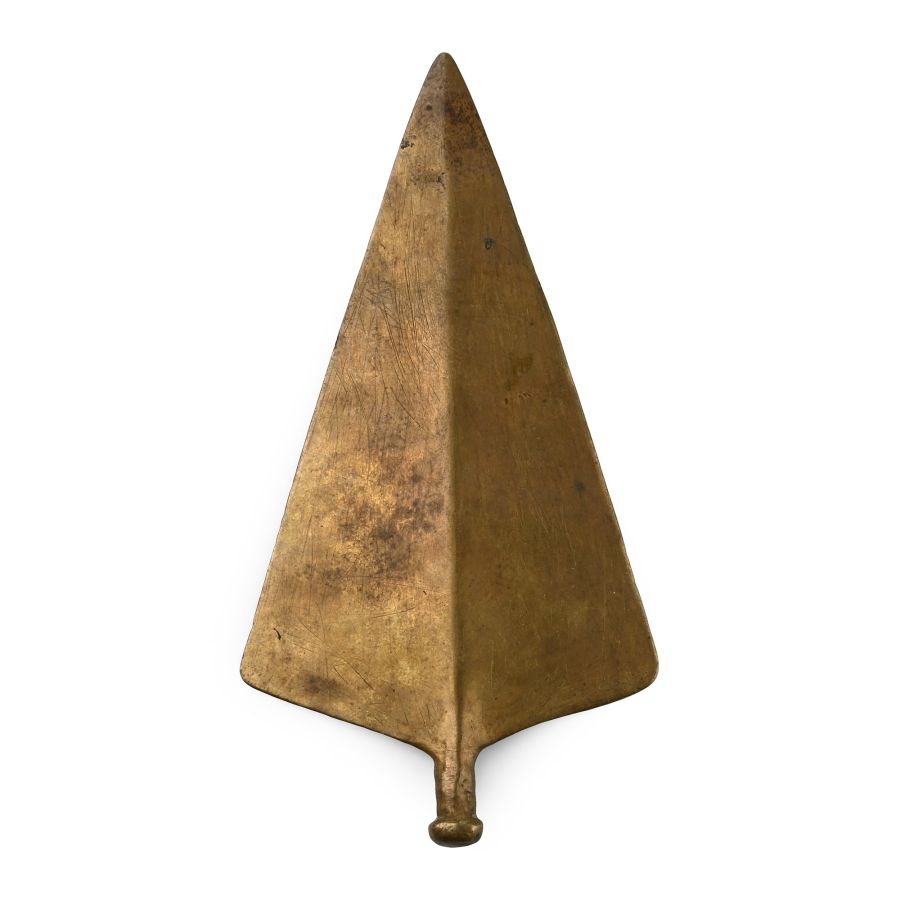
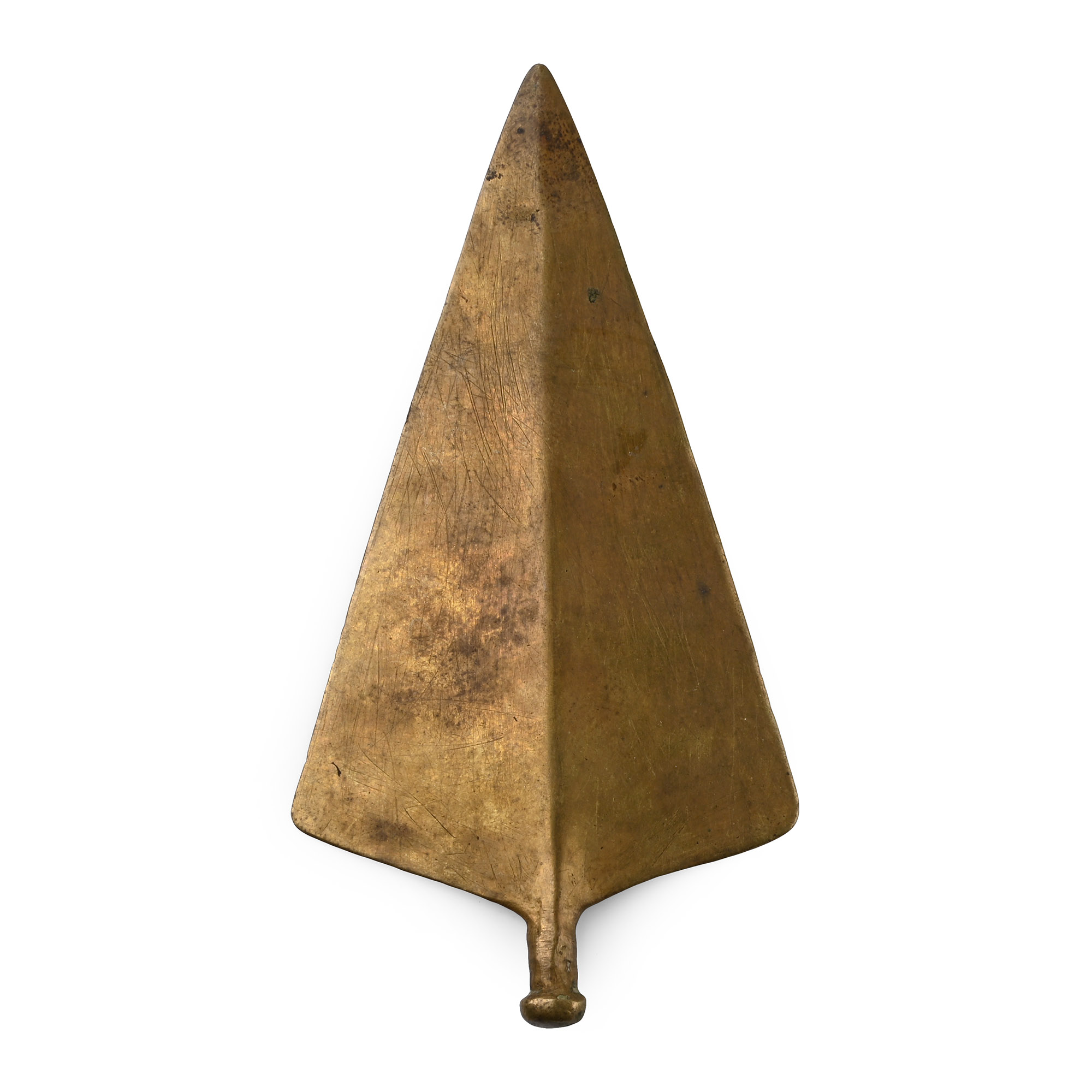
Brass Kano Pendant
LOBI TRIBE, MID 20TH CENTURY A.D.
3 7/8 in. (21 grams, 98 mm).
Deltoid in plan and with slight midrib, shank with knop finial for attachment. [No Reserve]
ProvenanceFrom Côte d'Ivoire, West Africa.
From an old Derby, UK, specialist collection.
From the property of a late Lincolnshire, UK, gentleman.
Lobi arts also include a wide variety of small human and animal images, implements, and more abstract symbols in copper alloy and iron. Some of these are worn as jewelry and some appear on shrines.
CONDITIONTimeLine Auctions follows a vetting process to ensure the authenticity and legality of all items, reinforcing our commitment to integrity and responsible trading. Each antiquity, antique, and coin lot undergoes thorough examination by a vetting committee of at least ten external specialists, professional trade association members, scientists, and archaeologists: Our Vetting Process
AUCTIONS:
TimeLine is a leading auction house specialising in antiquities, ancient art, collectables, natural history, coins, medals, and books. Our auctions offer museums, collectors, historians, and enthusiasts the opportunity to acquire unique and historically significant pieces.
-
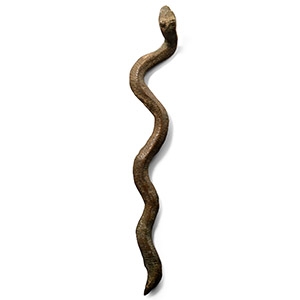
African Ashanti Bronze Snake Gold Weight
Akan Tribe, 19th-20th century A.D.Sold for (Inc. bp): £26
D-shaped in section with impressed segmentation to the back, raised head. 144 grams, 25 cm
From an old Oxford, UK, collection. From the property of a late Lincolnshire, UK, gentleman. -
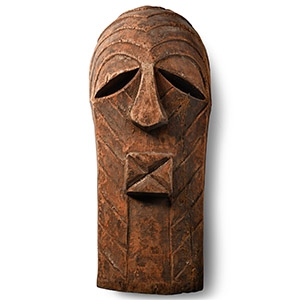
African Wooden Ceremonial Face Mask
Kamba Tribe, mid-late 20th century A.D.Sold for (Inc. bp): £98
Carved wooden mask, leaf-shaped in plan with reserved nose and mouth, angled elliptical slots to the eyes, remains of pigment. 802 grams, 45 cm
From Kenya, East Africa. From the private collection of Mr N.J., Leicester, UK; acquired circa 2010. From the property of a late Lincolnshire, UK, gentleman. -
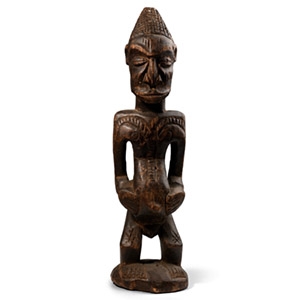
African Wooden Fertility Figure
Yoruba Tribe, mid 20th century A.D.Sold for (Inc. bp): £39
Carved in the round standing male figures with tall hatched headdress extending to the rear, hands placed either side of his distended abdomen, knees flexed, standing on a plano-convex base. 1.1 kg, 48.5 cm
From South West Nigeria, West Africa. From the property of a late Lincolnshire, UK, gentleman.
The Yoruba are the largest nation in Africa with an art-producing tradition. Their figures, more often of Shango (also spelled Sango and Sagoe), deity of thunder and lightning are carved from wood and kept in shrines.
