
Loading, please wait...
LOT 0527
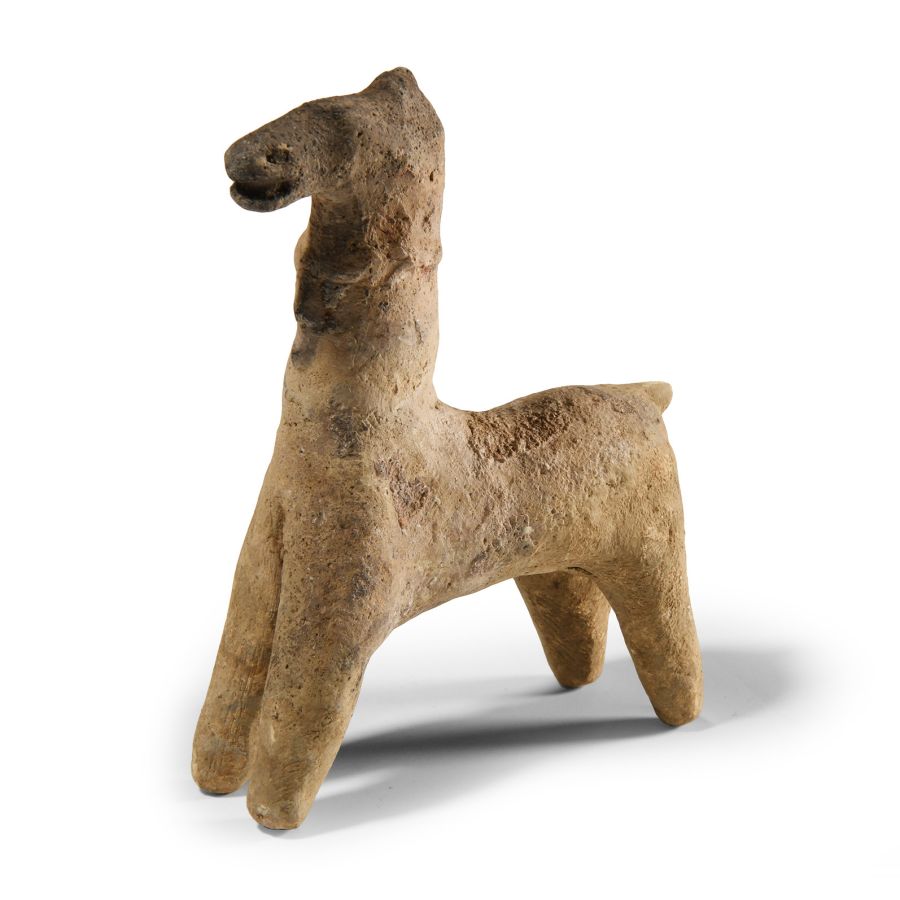
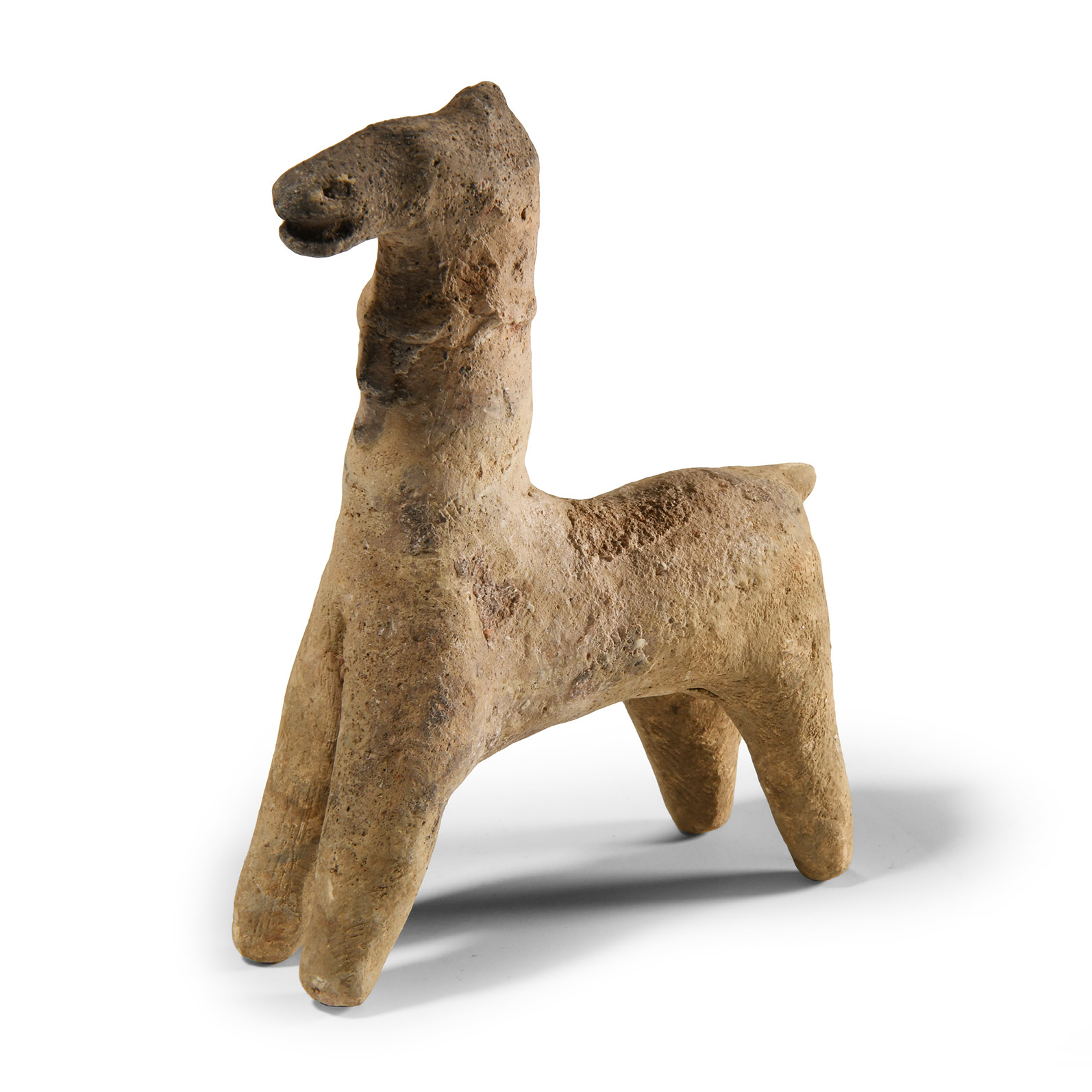
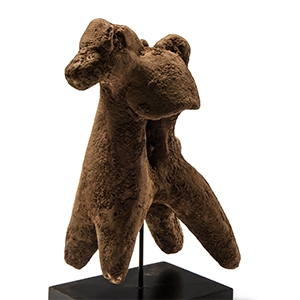
Boeotian Terracotta Horse Statuette
6TH CENTURY B.C.
4 3/8 in. (130 grams, 11.1 cm high).
In static stance with forelegs straight and head erect, applied harness detailing. [No Reserve]
ProvenanceFrom a collection acquired on the UK art market from various auction houses and collections mostly before 2000.
From an important Cambridgeshire estate; thence by descent.
Cf. similar item in the British Museum under accession no.1875,0309.12.
CONDITIONTimeLine Auctions follows a vetting process to ensure the authenticity and legality of all items, reinforcing our commitment to integrity and responsible trading. Each antiquity, antique, and coin lot undergoes thorough examination by a vetting committee of at least ten external specialists, professional trade association members, scientists, and archaeologists: Our Vetting Process
AUCTIONS:
TimeLine is a leading auction house specialising in antiquities, ancient art, collectables, natural history, coins, medals, and books. Our auctions offer museums, collectors, historians, and enthusiasts the opportunity to acquire unique and historically significant pieces.
-
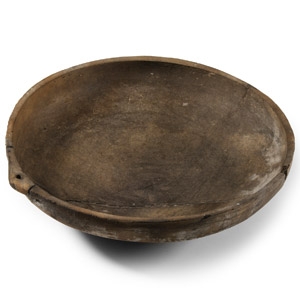
Cypriot Grey Ware Pottery Bowl
Iron Age, Cypro-Geometric, 950-850 B.C.Sold for (Inc. bp): £98
Broad shallow body with disc base, thick rim with pierced lug handle; repaired. 635 grams, 24.5 cm wide
From a collection acquired on the UK art market from various auction houses and collections mostly before 2000. From an important Cambridgeshire estate; thence by descent.
Important Cypro-Geometric ceramic types include white-painted and bichrome wares, often decorated with geometric motifs and showing inventive shapes; slightly later, a distinctive black-on-red wares was developed on Cyprus, partly as a result of contact with the Levant. -
.jpg)
Cypriot Stone Goddess and Child Statue
Iron Age, 6th century B.C.Sold for (Inc. bp): £520
The female seated on a chair with arm-supports at the sides, wearing a long robe with ruched panel to the chest and pleated sleeves, the hair drawn up into a transverse band above the brow, surmounted by a tiara; hands across the waist holding an infant with head erect; mounted on a custom-made stand; repaired. 1.54 kg total, 24 cm high including stand
From a collection acquired on the UK art market from various auction houses and collections mostly before 2000. From an important Cambridgeshire estate; thence by descent.
The statuette probably represents the goddess of fertility, originally imported from Crete in the 11th century B.C. but whose iconography survived in Cyprus until the 5th century B.C. The tiara is a characteristic attribute of this divinity, related to the Greek Demeter. The statue is probably a votive statue propitiatory for births. -
Archaic Greek Terracotta Figure of Mounted Warrior with Shield
7th-5th century B.C.Sold for (Inc. bp): £156
Comprising a stylised horse with elongated neck, mounted by a bearded rider figure holding a shield with right arm bent, restored; mounted on a custom-made display stand. 220 grams total, 13 cm including stand
Acquired before 1990. From an old German collection.
