
Loading, please wait...
LOT 0046
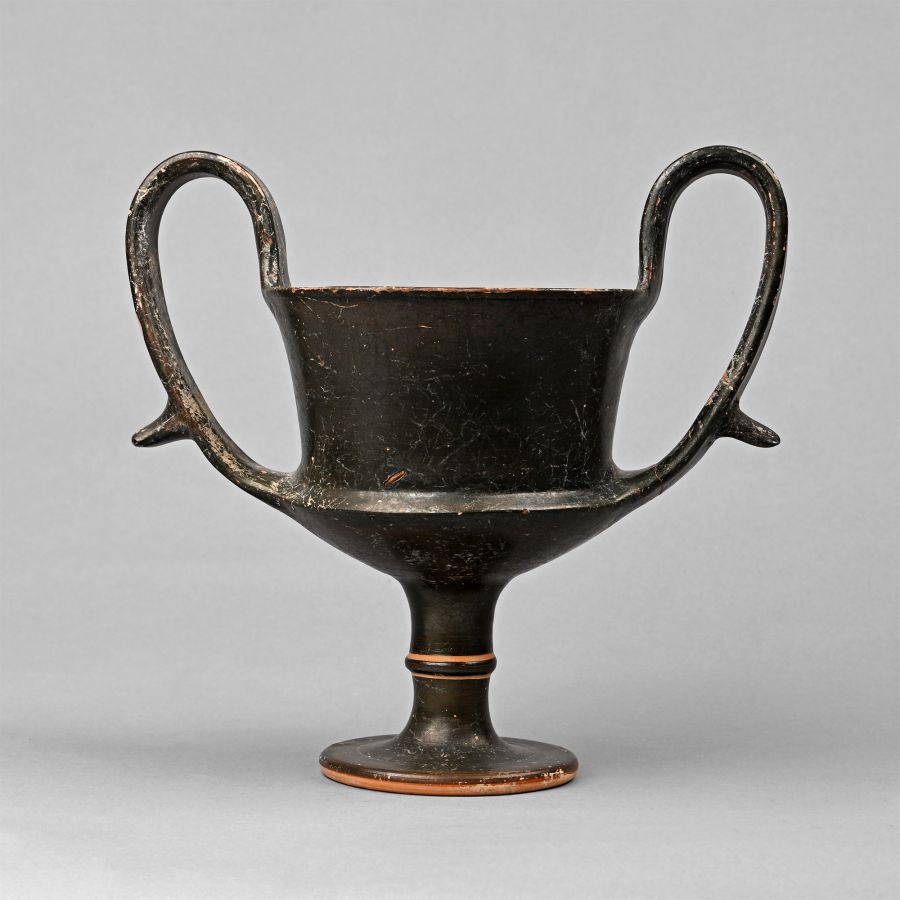
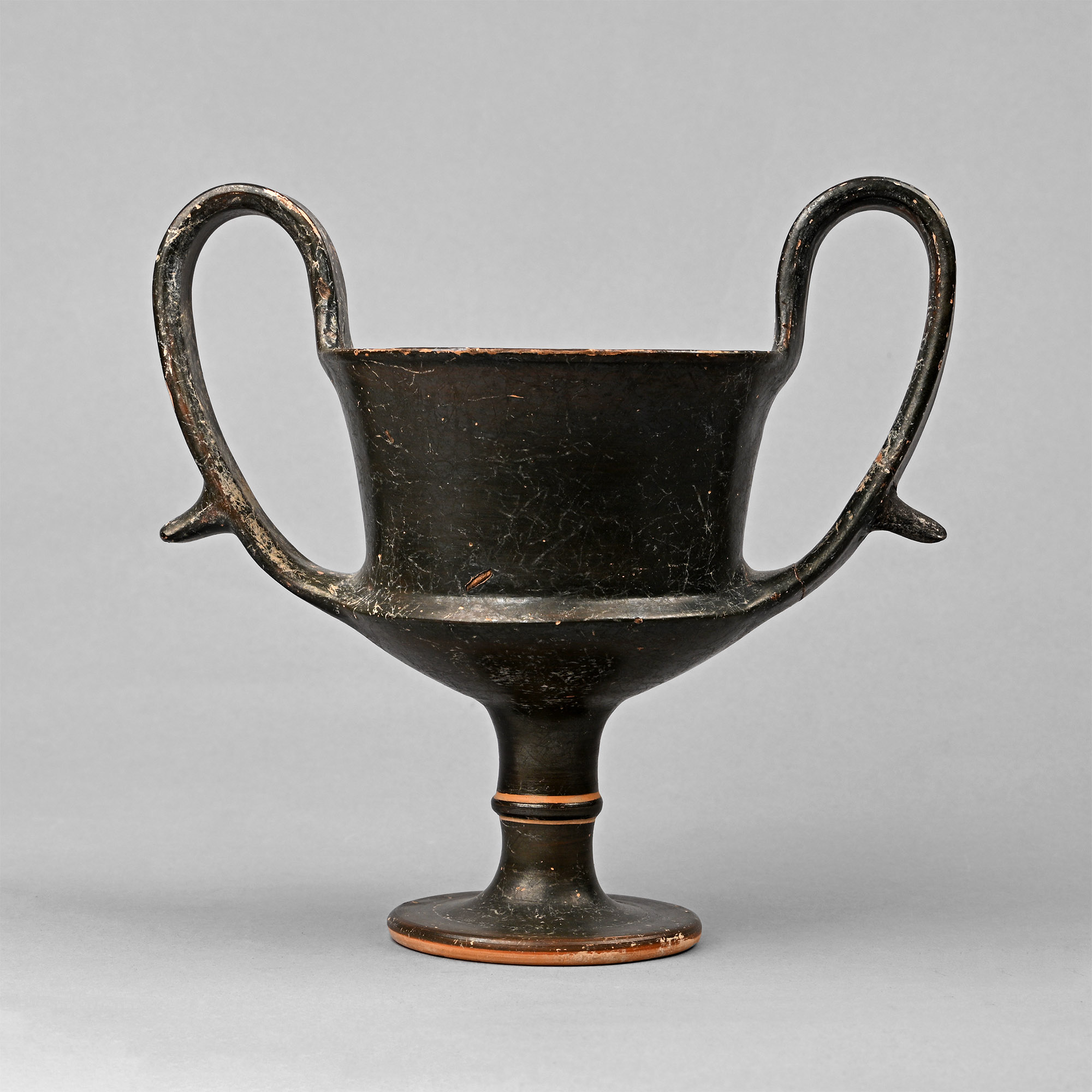
Boeotian Black-Glazed Terracotta Kantharos
CIRCA 5TH CENTURY B.C.
7 1/2 in. (310 grams, 19 cm wide).
The high-handled drinking cup with carinated lower body and a tall offset foot with a collar.
ProvenanceEx Galleria Serodine, Arte Antichità, Fritz Huchelmann-Tieche, Ascona 13 November 1987.
Private collection, Bern, Switzerland.
Cf. The Metropolitan Museum, New York, accession number 1993.197, for a similar with vine-leaf decoration.
CONDITIONTimeLine Auctions follows a vetting process to ensure the authenticity and legality of all items, reinforcing our commitment to integrity and responsible trading. Each antiquity, antique, and coin lot undergoes thorough examination by a vetting committee of at least ten external specialists, professional trade association members, scientists, and archaeologists: Our Vetting Process
AUCTIONS:
TimeLine is a leading auction house specialising in antiquities, ancient art, collectables, natural history, coins, medals, and books. Our auctions offer museums, collectors, historians, and enthusiasts the opportunity to acquire unique and historically significant pieces.
-
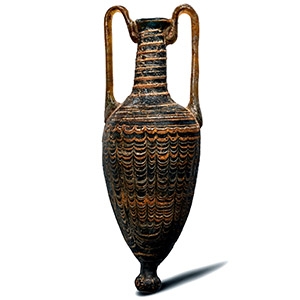
Greek Core-Formed Glass Amphoriskos
5th-3rd century B.C.Estimate: £2,500 - 3,500 (+bp*)
Opening Bid: £1,200
Elongated piriform amphora shape, tubular neck and everted rim, decorated with polychrome festooning and trails, applied amber-green handles and knop foot. 152 grams, 18 cm high
Acquired early 1990s. Ex private American collection; thence by descent. Private collection since 1998. This lot has been checked against the Interpol Database of stolen works of art and is accompanied by search certificate number no.12206-222129. -
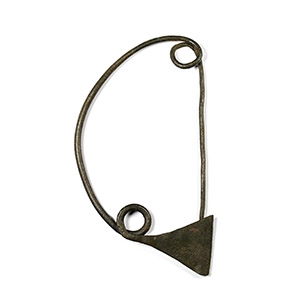
Large Greek Bronze Fibula
Iron Age, 8th-4th century B.C.Sold for (Inc. bp): £111
Single-piece fibula comprising a curved bow with integral coiled spring to one end developing to a sturdy pin; to the other end, a flared catchplate on a single-coil spring. 15.7 grams, 10 cm
Ex important German collection of brooches, 1980s. This lot is accompanied by an illustrated lot declaration signed by the Head of the Antiquities Department, Dr Raffaele D'Amato. -
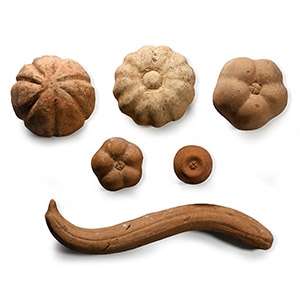
Greek Terracotta Model Fruit and Vegetable Group
4th century B.C.Estimate: £800 - 1,000 (‡+bp*)
Opening Bid: £444
Including pomegranates, apples and a gourd. 989 grams total, 4.5-18.7 cm
Estate of Mr Bruno Fellinger (1926-2016), Küsnacht, Switzerland. with Galerie Rhéa, Zurich, Switzerland.
