
Loading, please wait...
LOT 1345
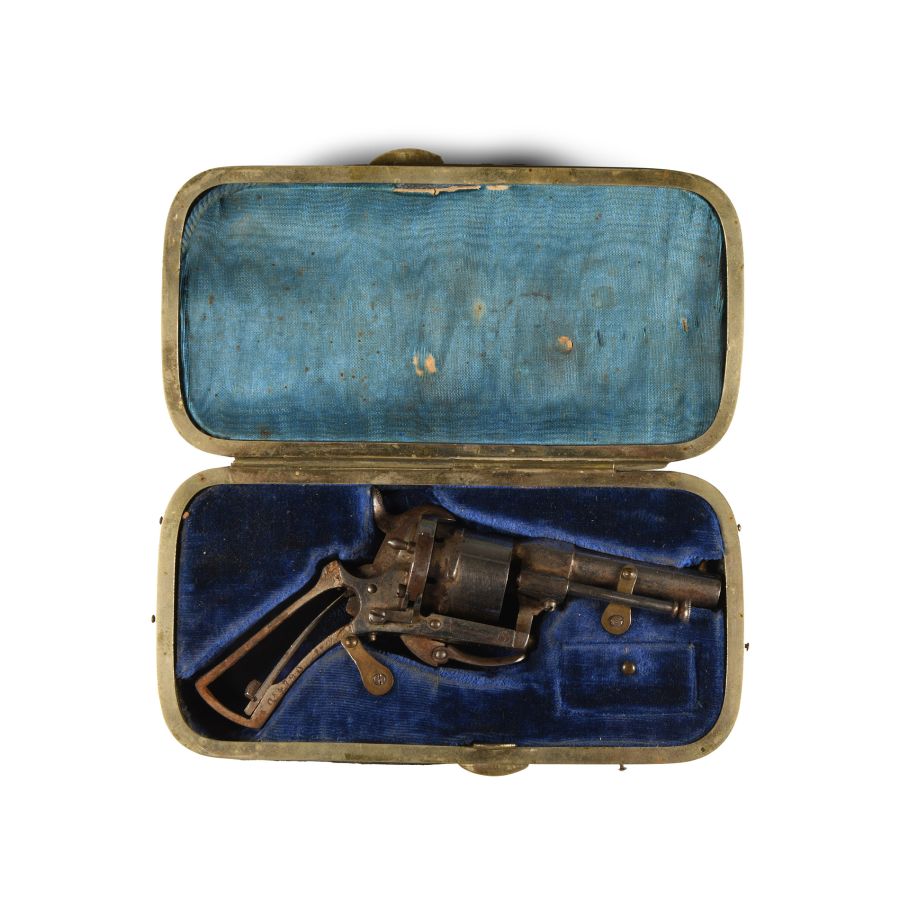
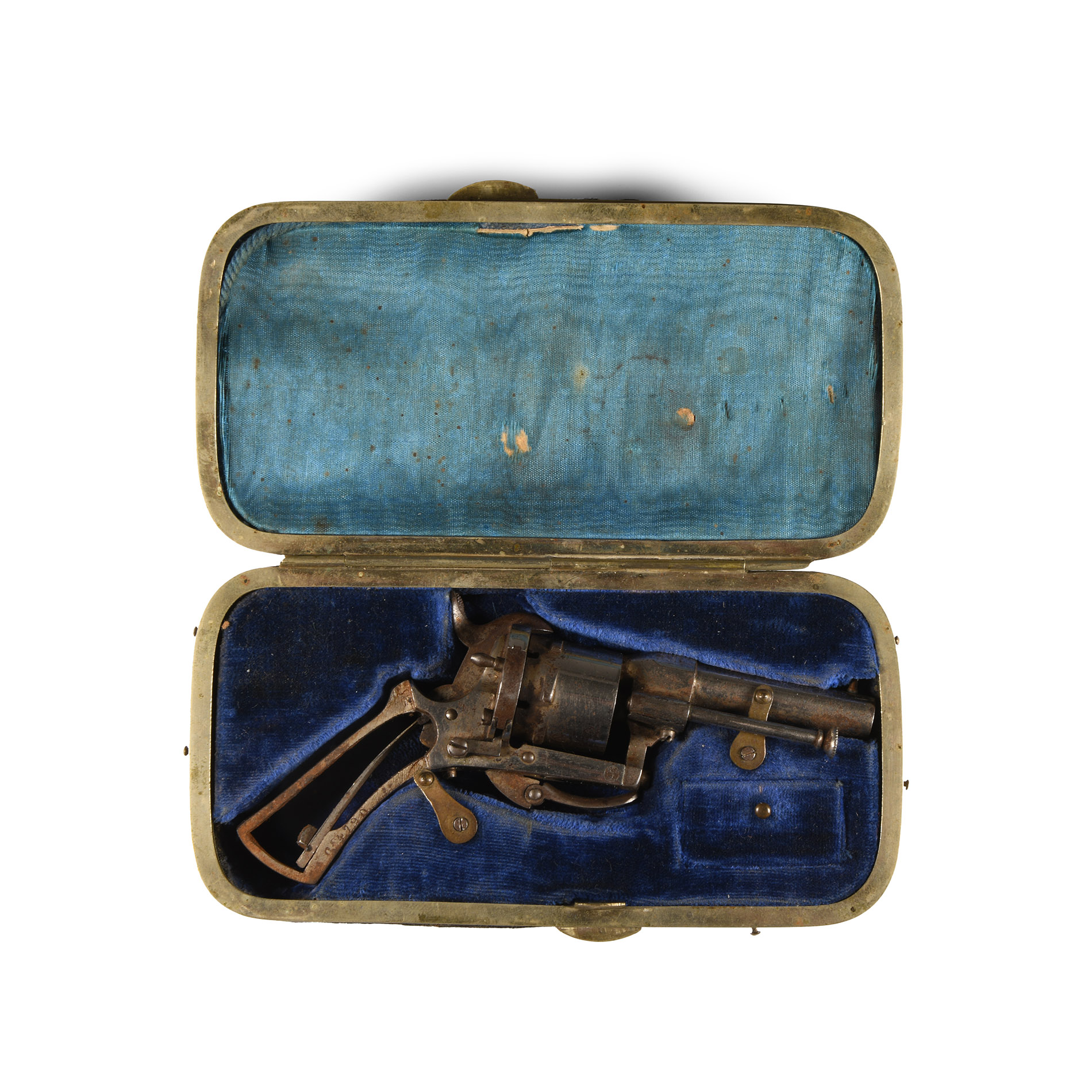
Belgian Lady's Purse Revolver
19TH CENTURY A.D.
5 1/2 in. (143 grams, 14cm long).
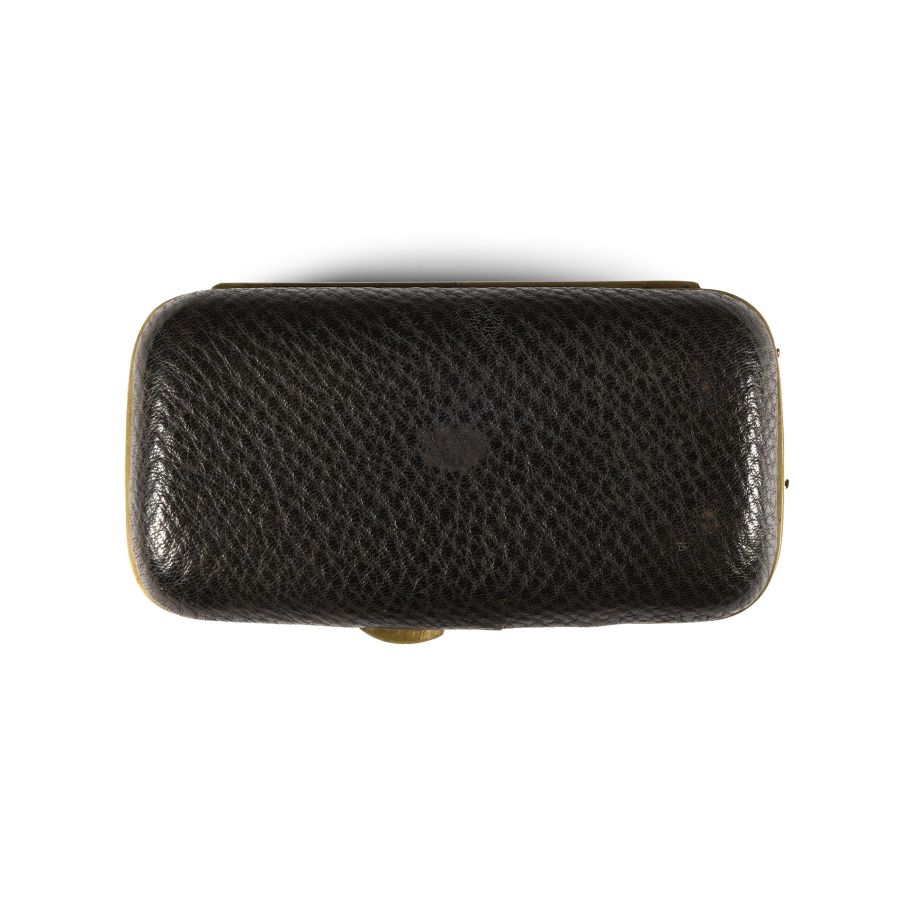
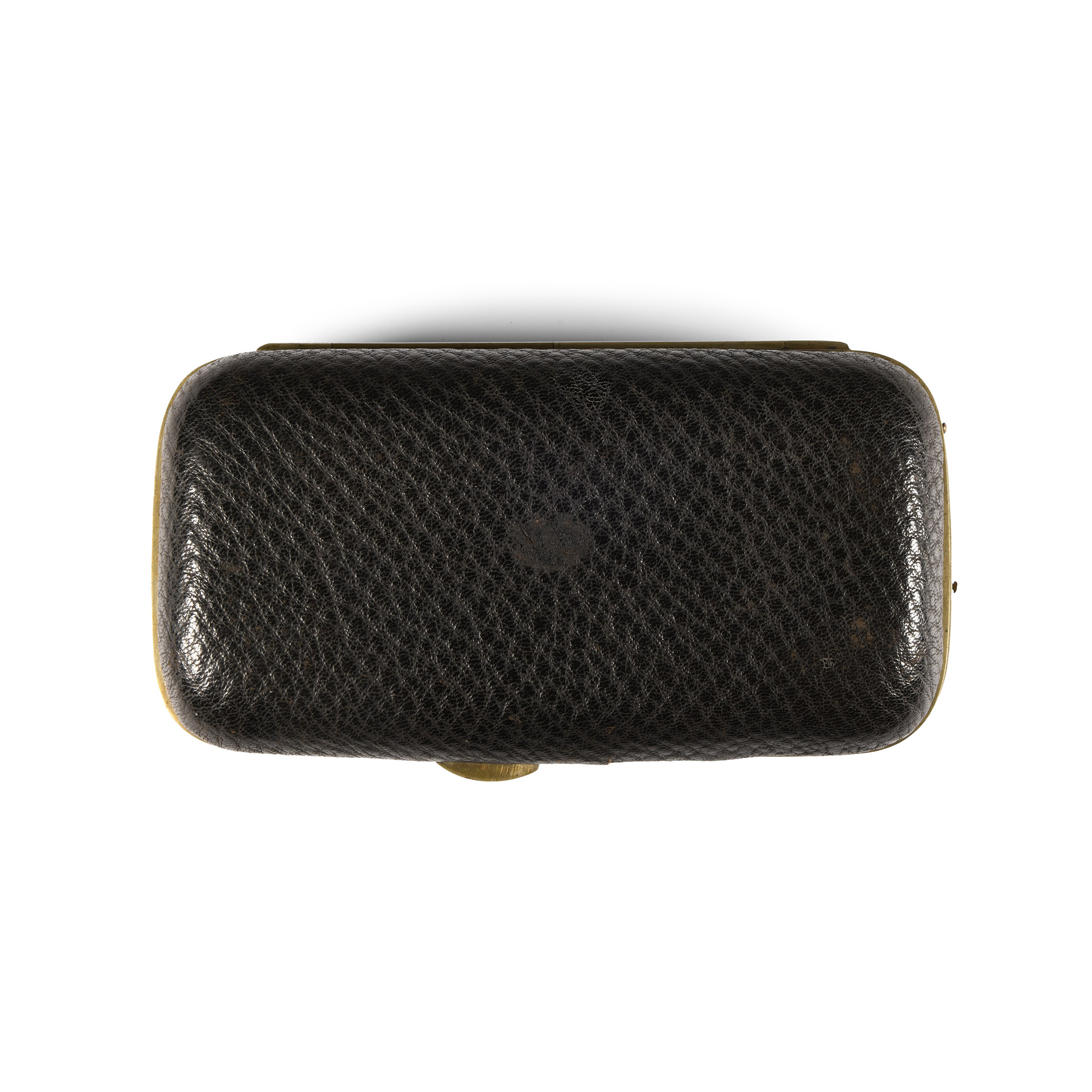
A Belgian-made six-shot, 5mm double action Lefaucheux type pinfire purse revolver with 52mm rifled barrel, loading gate and extractor rod to right of frame, nickel plated, folding trigger, grip scales absent; Liege proof marks to cylinder; contained in the original leather-covered twin hinged compartment purse case, one side velvet lined and moulded to receive revolver, the other with leather compartments to receive lady's accessories.
ProvenanceAcquired from J. C. Militaria.
Ex property of a Kent collector.
See Winant, L., Firearms Curiosa, New York, 1955, p.157 and fig.180.
FootnotesSold as an exempt item under Section 58 (2) of the Firearms Act, 1968, to be held as a curiosity or ornament. No license required but buyer must be over 18 years of age.
CONDITIONTimeLine Auctions follows a vetting process to ensure the authenticity and legality of all items, reinforcing our commitment to integrity and responsible trading. Each antiquity, antique, and coin lot undergoes thorough examination by a vetting committee of at least ten external specialists, professional trade association members, scientists, and archaeologists: Our Vetting Process
AUCTIONS:
TimeLine is a leading auction house specialising in antiquities, ancient art, collectables, natural history, coins, medals, and books. Our auctions offer museums, collectors, historians, and enthusiasts the opportunity to acquire unique and historically significant pieces.
-
North-West Persian Bronze Short Sword with Integral Grip and Horns
Circa 1st millennium B.C.Estimate: £300 - 400 (+bp*)
Opening Bid: £150
With curved 'horns' projecting on either side at the top of waisted grip, blade with flat mid-rib. 242 grams, 41.5 cm
Acquired 1980-2015. Ex Abelita family collection.
The Luristani people produced a quantity of fine metalwork, which according to Dr Khorasani, could be due to a settled period which arose as a result of the defeat of the Elamites by the Babylonians, leaving the Luristani people in relative peace for a period of time after 1200 B.C. According to Khorasani, 'A culture of innovation and experimentation flourished, and the repertoire of the Luristan smiths expanded in the period between 1150-1050 BC.' -
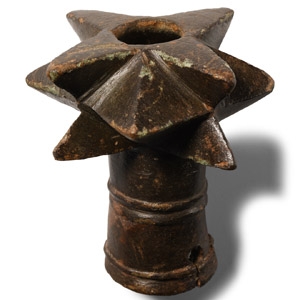
'The Farnham Castle' English Medieval Socketted Macehead
13th-14th century A.D.Sold for (Inc. bp): £2,600
With a long tubular socket and raised circumferential ribs, three tiers of radiating spikes; found with remains of wooden haft in situ. 312 grams, 80 mm
Found near Farnham Castle, Farnham, Surrey, UK. From the private collection of a Surrey, UK, gentleman.
Maces were in use since the Bronze Age. In the Medieval Western Europe, maces are attested in England as throwing weapons at the Battle of Hastings in 1066. At the end of 12th century A.D., the mace head was made of metal and was, under the influence of Byzantium, one of the weapons of the armoured knight. Originally of round section and armed with strong pyramidal spikes, the mace head evolved into a cylindrical shape, sometimes reinforced with spikes, most often with flanges. -
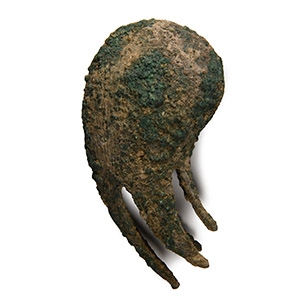
Bactrian Bronze Claw Axehead-Mace
2nd-1st millennium B.C.Sold for (Inc. bp): £130
Egg-shaped with spiked sleeves or prongs, the top of the weapon with a narrow edge, the sleeves with small internal tangs for mounting. 127 grams, 10.1 cm
Acquired 1980-2015. Ex Abelita family collection.
The 'claw mace' was an enigmatic ancient bronze weapon from the Bronze Age Near East. The hollow bulbous head was trailed by tines of varying lengths. It is believed that it was affixed over a wooden shaft and used like a club in combat, and not necessarily used as ceremonial weapon. The knife edge bulb end could have broken bones and proven to be a formidable striking weapon requiring no skill to wield. The tines would have not only been decorative, but have served to add strength below the striking end to prevent breakage. In battle, maces were often used by commanders to display rank when giving orders in battle and leading soldiers, inspiring leadership and power.
