
Loading, please wait...
LOT 2004
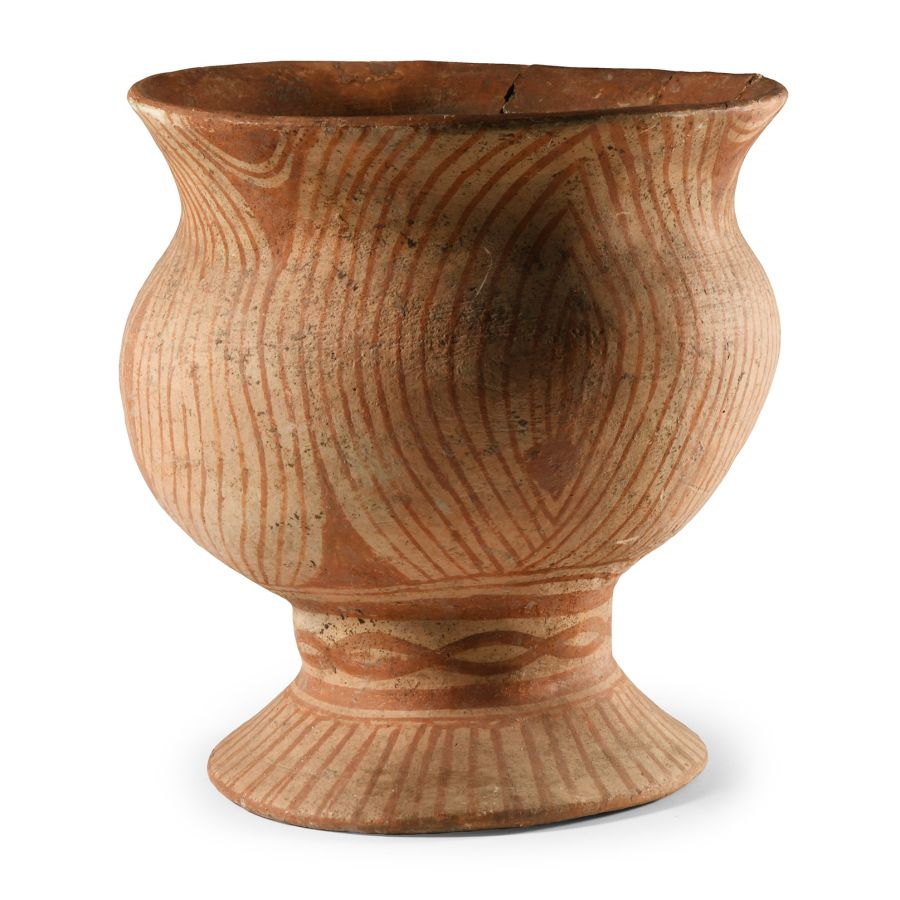
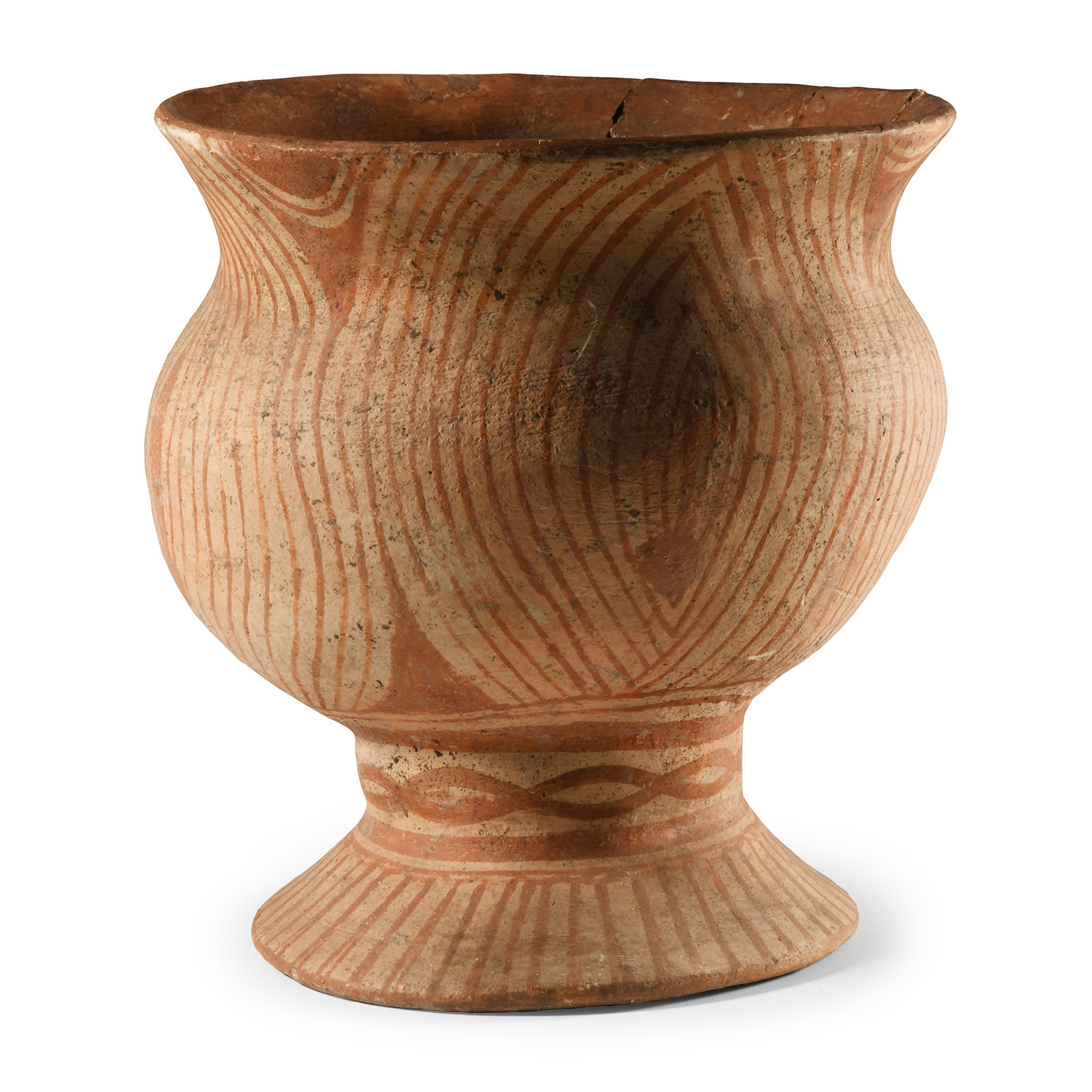
Ban Chiang Period Painted Storage Jar
MIDDLE PERIOD, 900-300 B.C.
8 1/4 in. (1.6 kg, 21 cm high).
With ovate body and flared rim, domed foot; decorated with series of interlocking linear and spiral motifs; rim repaired. [No Reserve]
ProvenanceFrom a collection acquired on the UK art market from various auction houses and collections mostly before 2000.
From an important Cambridgeshire estate; thence by descent.
Cf. McGovern, P.E., White, J., ‘Ceramic Technology at Prehistoric Ban Chiang, Thailand: Psycochemical Analyses’, in Masca Journal, volume 3, no.4, June, 1985, pp.104-113, figs.BC2, BC9, for similar pottery; see also Labbe, A., Prehistoric Thai Ceramics: Ban Chiang in Regional Cultural Perspectives, Bangkok, 2002.
FootnotesBan Chiang, on Thailand’s Khorat Plateau, offers interesting archaeological remains dating from the 4th millennium B.C. onwards. The artificial inventory is dominated by ceramic assemblages characterised by highly aesthetic forms and decorations. They show surface colour variations, particularly in black, white and red hues.
CONDITIONTimeLine Auctions follows a vetting process to ensure the authenticity and legality of all items, reinforcing our commitment to integrity and responsible trading. Each antiquity, antique, and coin lot undergoes thorough examination by a vetting committee of at least ten external specialists, professional trade association members, scientists, and archaeologists: Our Vetting Process
AUCTIONS:
TimeLine is a leading auction house specialising in antiquities, ancient art, collectables, natural history, coins, medals, and books. Our auctions offer museums, collectors, historians, and enthusiasts the opportunity to acquire unique and historically significant pieces.
-
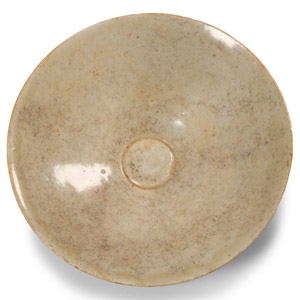
Chinese Tang Glazed Terracotta Dish
Tang Dynasty, 618-907 A.D. or laterSold for (Inc. bp): £39
Of low profile with circumferential rings, basal ring. 135 grams, 13 cm wide
Ex West Country, UK, collection, 1980-1990s. -
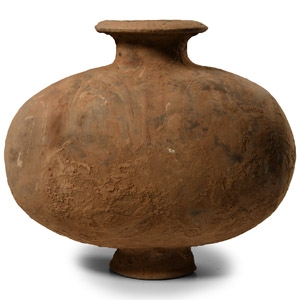
Chinese Han Terracotta Cocoon Jar
Han Dynasty, 206 B.C.-220 A.D.Estimate: £250 - 350 (+bp*)
Opening Bid: £139
With vertical painted bands, flared base, ribbed neck and chamfered rim 2.5 kg, 31 cm wide
Ex The C. Roger Moss OBE collection.
The late C. Roger Moss OBE was a renowned art collector who, throughout the years, thanks to his determination and enthusiasm, was able to create an outstanding collection of artworks, most prominently from China and the Orient, but also from other cultures. -
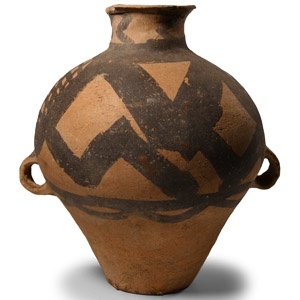
Chinese Painted Neolithic Jar
3rd-2nd millennium B.C.Sold for (Inc. bp): £312
With piriform body, waisted neck, everted rim and integral rectangular-section loop handles, circumferential bands of painted geometric motifs of hatched circles, zigzags and chevrons; rim chipped. 2.6 kg, 31 cm
Ex West Country, UK, collection, 1980-1990s.
