
Loading, please wait...
LOT 2352
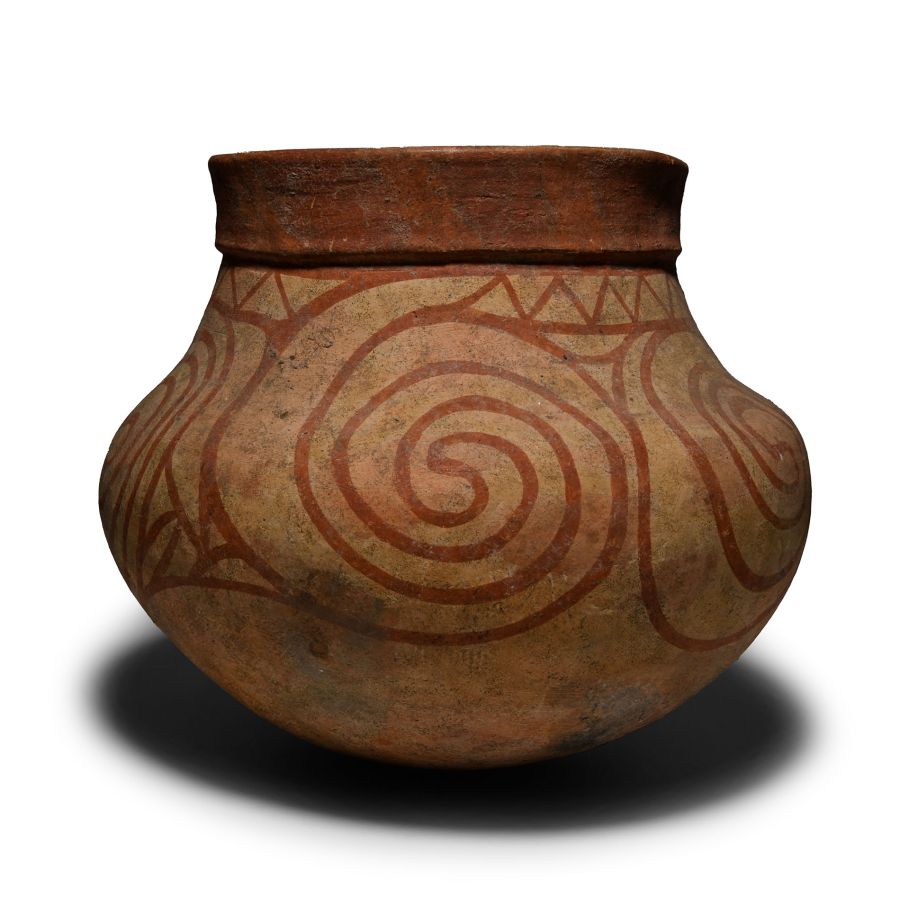
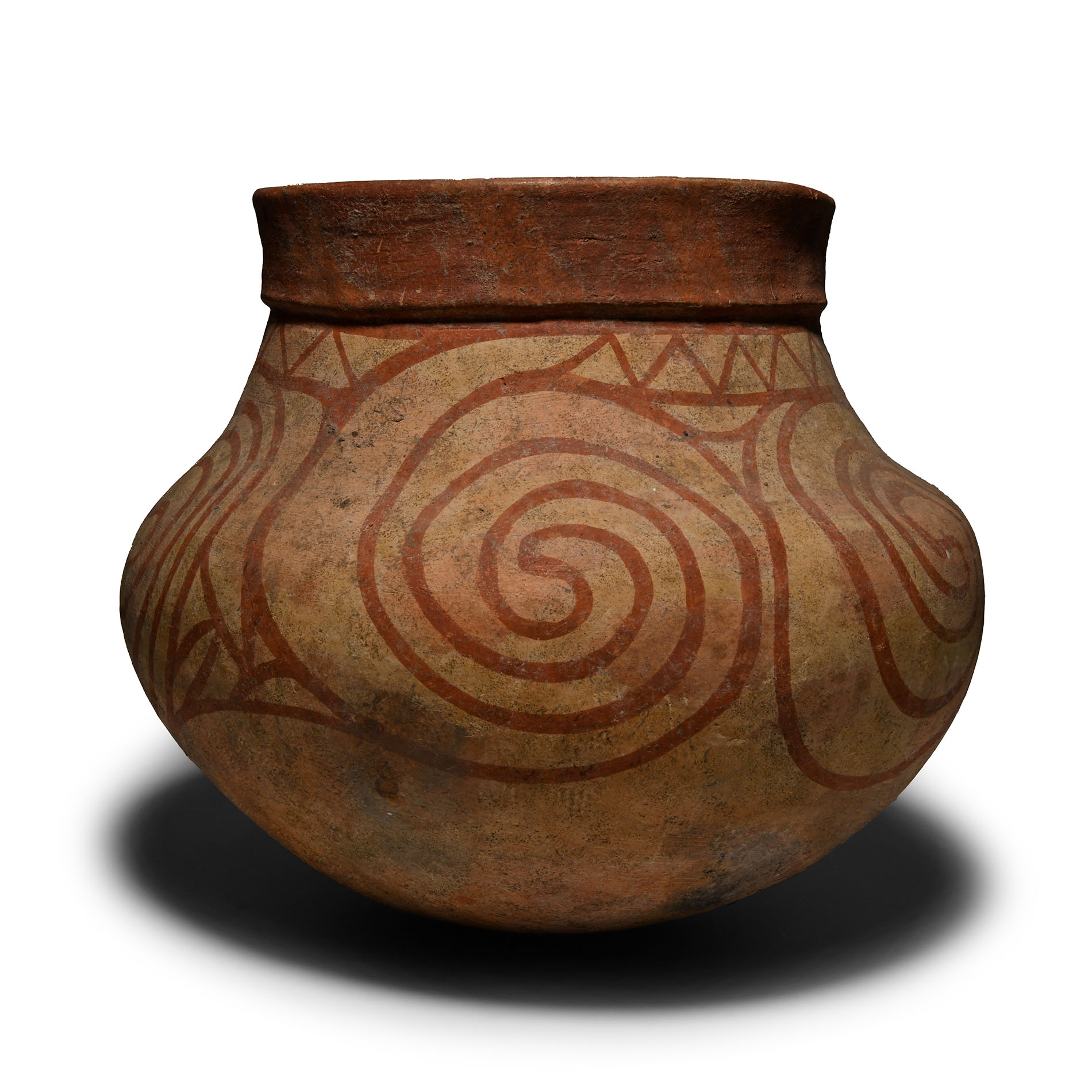
Ban Chiang Period Painted Round Bottomed Terracotta Jar
MIDDLE PERIOD, 900-300 B.C.
12 1/4 in. (3.35 kg, 32 cm wide).
Globular jar with carinated rim to the large mouth, decorated with series of spiral motifs. [No Reserve]
ProvenanceFrom a collection acquired on the UK art market from various auction houses and collections mostly before 2000.
From an important Cambridgeshire estate; thence by descent.
See Labbe, A., Prehistoric Thai Ceramics: Ban Chiang in Regional Cultural Perspectives, Bangkok, 2002.
CONDITIONTimeLine Auctions follows a vetting process to ensure the authenticity and legality of all items, reinforcing our commitment to integrity and responsible trading. Each antiquity, antique, and coin lot undergoes thorough examination by a vetting committee of at least ten external specialists, professional trade association members, scientists, and archaeologists: Our Vetting Process
AUCTIONS:
TimeLine is a leading auction house specialising in antiquities, ancient art, collectables, natural history, coins, medals, and books. Our auctions offer museums, collectors, historians, and enthusiasts the opportunity to acquire unique and historically significant pieces.
LOT 2352
Ban Chiang Period Painted Round Bottomed Terracotta Jar
Sold for (Inc. bp): £234
-
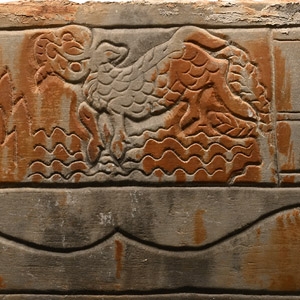
Chinese Ming Marble Panel with Horses
Ming Dynasty, 1368-1644 A.D. or earlierSold for (Inc. bp): £234
Rectangular slab with incised imagery in two registers: above, rectangular panels with horse, stag and bull; below broad scrolled arch flanked by two smaller versions, based on the chaitya of Buddhist temples; edges chipped. 10.85 kg, 76 cm
From a West Country, UK, collection, 1990s. -
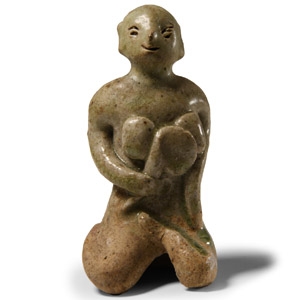
Thai Green Glazed Mother and Child Figurine
14th-16th century A.D.Sold for (Inc. bp): £39
Modelled in the round with celadon glaze, a nursing mother kneeling and naked with suckling child held to the left breast, the hair drawn back into a topknot, impressed eyes and mouth. 129 grams, 10 cm
Acquired on the UK art market from various auction houses and collections mostly before 2000. From an important Cambridgeshire estate; thence by descent.
The Si Satchanalai figurines were one of the ceramic products produced by Si Satchanalai kilns located in the present-day area of Si Satchanalai district, Sukhothai province in the upper part of central Thailand. The characteristic features related to maternity and parenthood were represented in figurines of pregnant females and of couples (mother and father) with a baby. -
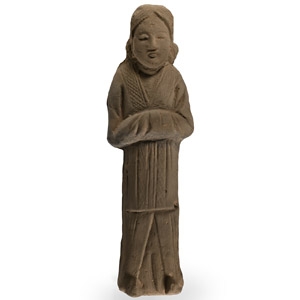
Chinese Wei Terracotta Female Attendant Figure
Northern Wei, 386-534 A.D. or laterEstimate: £200 - 300 (+bp*)
Opening Bid: £100
Unglazed female figure modelled in the half-round, dressed in long robes with her hands held inside the wide sleeves, rounded face with stylised detailing; plain dorsal pillar. 1.19 kg, 31.5 cm
From a West Country, UK, collection, 1990s.
