
Loading, please wait...
LOT 2259
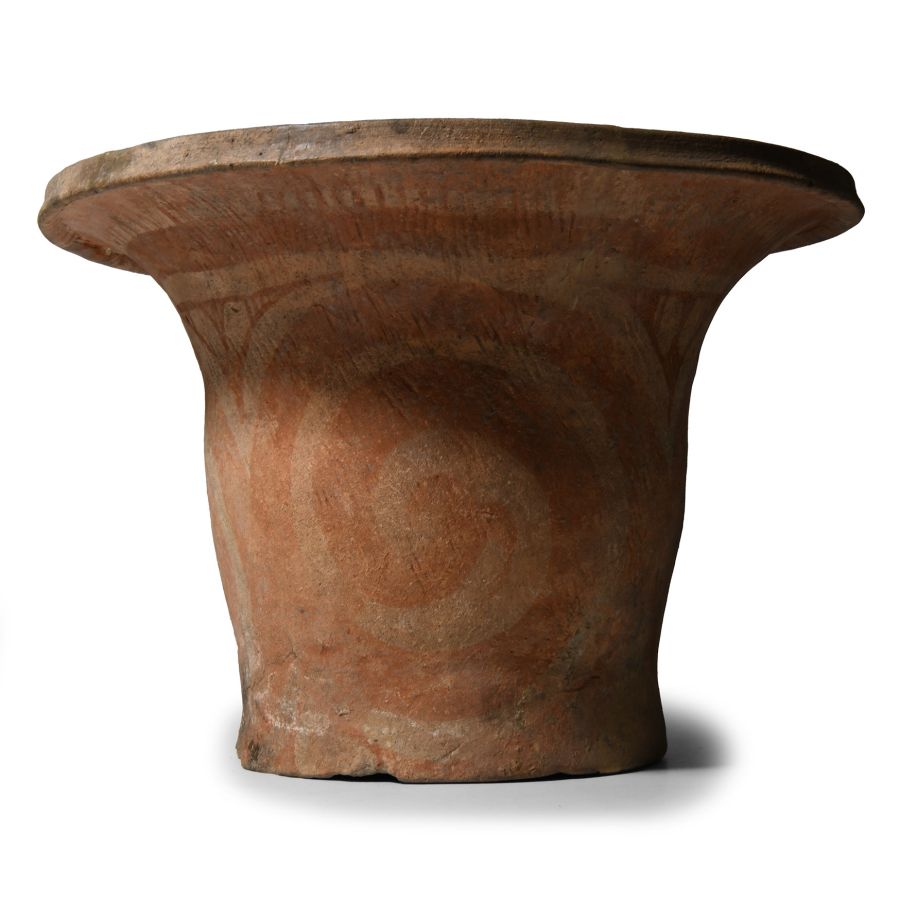
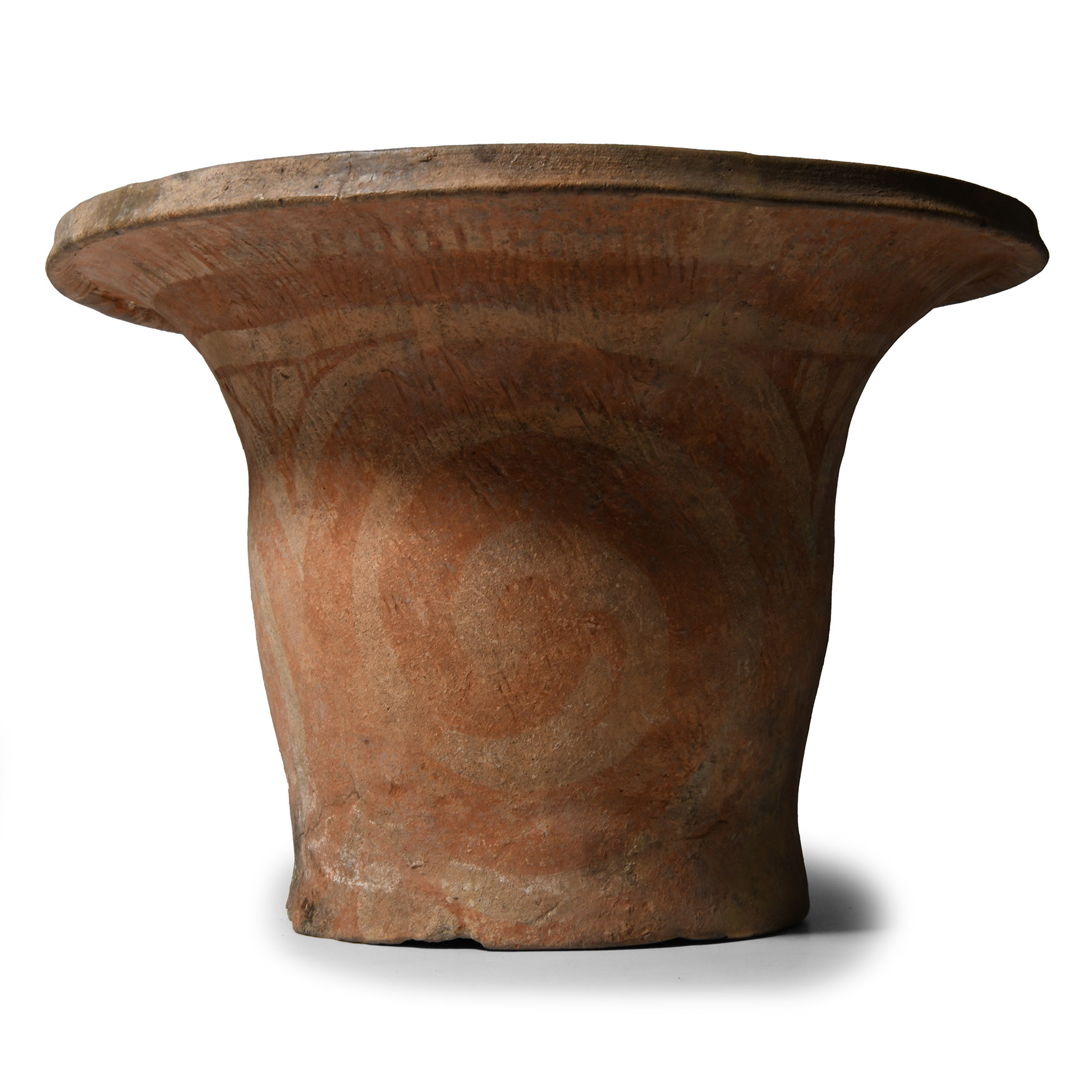
Ban Chiang Period Painted Fared Terracotta Vase
MIDDLE PERIOD, 900-300 B.C.
11 1/4 in. (1.23 kg, 28.5 cm wide).
With trumpet-shaped body and carinated rim, hollow base, reserved spiral designs on a coral-coloured field. [No Reserve]
ProvenanceFrom a collection acquired on the UK art market from various auction houses and collections mostly before 2000.
From an important Cambridgeshire estate; thence by descent.
See, Labbe, A., Prehistoric Thai Ceramics: Ban Chiang Regional Cultural Perspectives, Bangkok, 2002, for discussion.
CONDITIONTimeLine Auctions follows a vetting process to ensure the authenticity and legality of all items, reinforcing our commitment to integrity and responsible trading. Each antiquity, antique, and coin lot undergoes thorough examination by a vetting committee of at least ten external specialists, professional trade association members, scientists, and archaeologists: Our Vetting Process
AUCTIONS:
TimeLine is a leading auction house specialising in antiquities, ancient art, collectables, natural history, coins, medals, and books. Our auctions offer museums, collectors, historians, and enthusiasts the opportunity to acquire unique and historically significant pieces.
-
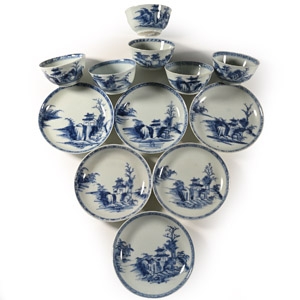
Nanking Cargo Shipwreck Glazed Blue and White Tea Bowl and Dish Set of Six
Early 18th century A.D.Sold for (Inc. bp): £650
Comprising: six shallow plates with a painted scene of a two-storey house on a rocky landscape; six matching cups with similar scenery to the outer face. 652 grams total, 76 -117 mm
Ex Christie's, Amsterdam, 28 April-2 May 1985. Accompanied by an illustrated information sheet about the Nanking shipwreck.
On Monday 3rd January 1752, the Dutch East India Company ship Geldermalsen, struck a reef on her return journey to the Netherlands and sank in the South China Sea. The cargo of Chinese porcelain was originally potted in Jingdezhen, Jiangzi province. The cargo was recovered by Captain Michael Hatcher and his team in 1985. -
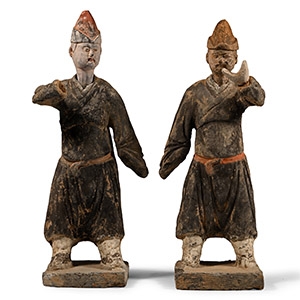
Chinese Ming Glazed Retainer Pair
Ming Dynasty, 1368-1644 A.D. or laterSold for (Inc. bp): £260
Both standing on a rectangular base in a wide stance, wearing conical hats, boots and black cross-over robes tied at the waist with a red belt; separately modelled heads with delicately rendered faces; both showing one raised arm (one with hand absent) and the other held at the side covered by the voluminous sleeve; repaired. 3 kg total, 33-34 cm
From a West Country, UK, collection, 1990s. -
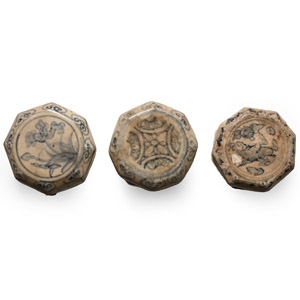
Hoi An Cargo Shipwreck Glazed Blue and White Lidded Box Collection
15th century A.D.Sold for (Inc. bp): £72
Comprising three facetted powder boxes with painted floral and geometric motifs to the body, two with the lidded decorated with floral motifs and one with an advancing traveller. 178 grams total, 47-48 mm
Ex Butterfield and Butterfield auction with official Hoi An Hoard labels. Accompanied by an illustrated information sheet about the Hoi An shipwreck.
In the mid 15th century a freighting junk loaded with fine Vietnamese pottery sank in an area of the South China Sea called the 'Dragon’s Embrace.' This vessel is part of the shipwreck cargo recovered off the coast of Vietnam at Hoi An. The ceramics themselves were probably made in the area of Chu Dau.
