
Loading, please wait...
LOT 2072
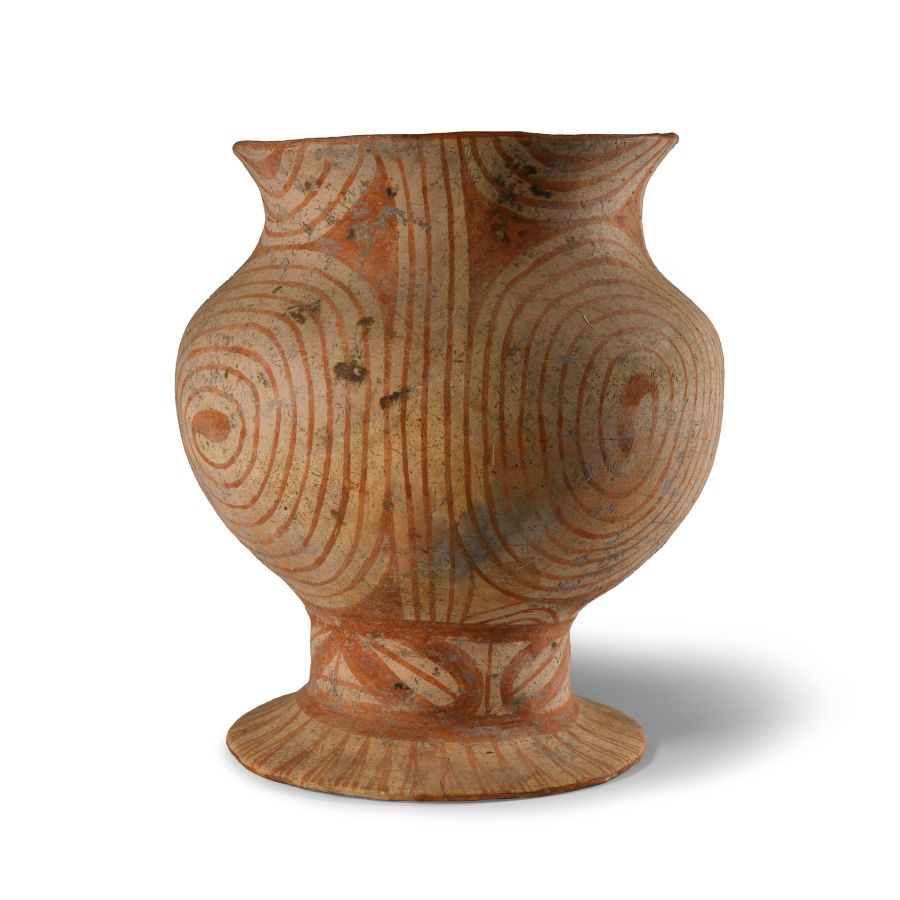
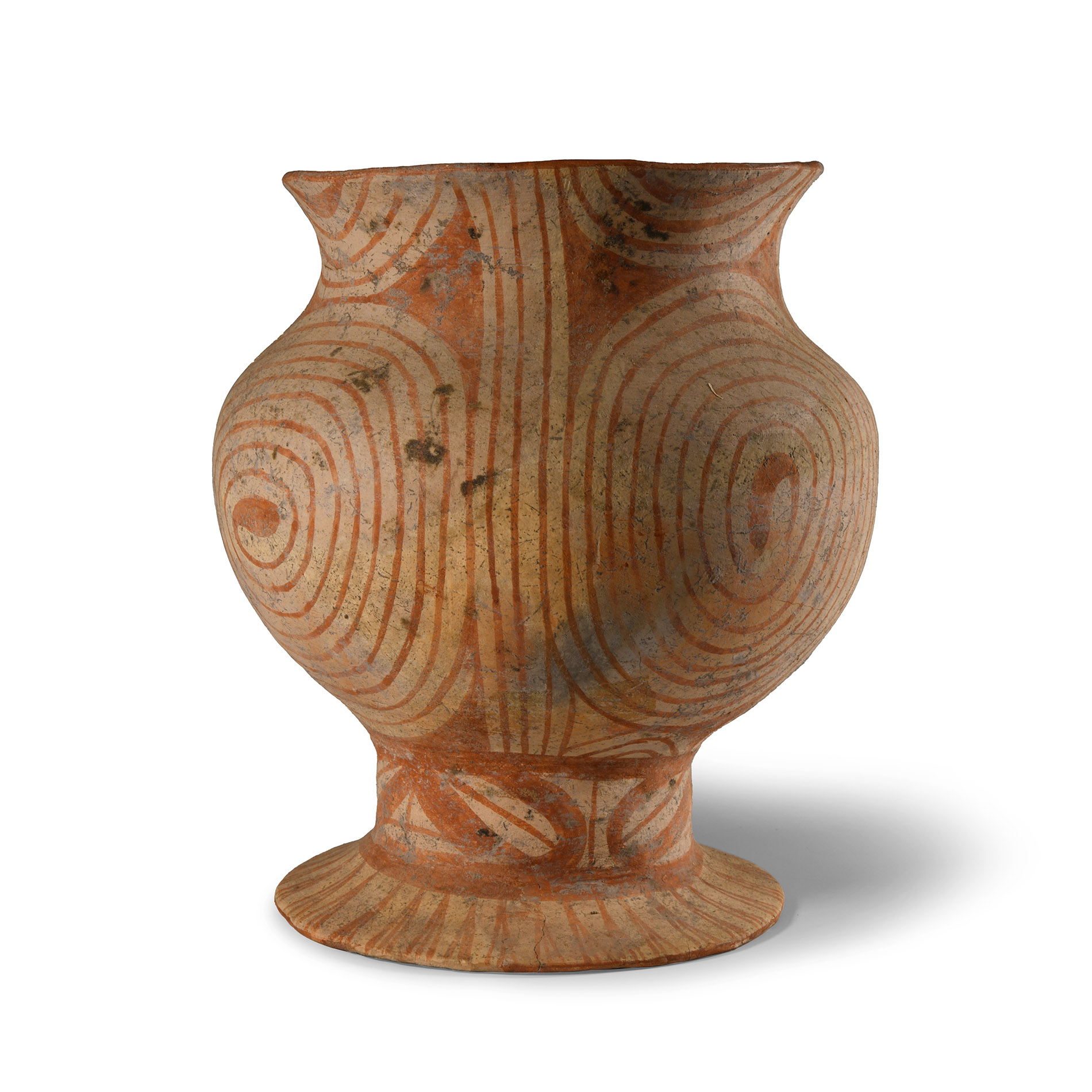
Ban Chiang Period Painted Chalice
MIDDLE PERIOD, 900-300 B.C.
9 5/8 in. (2.13 kg, 24.5 cm high).
With globular upper body and everted rim, trumpet-shaped foot; decorated with series of interlocking spiral motifs and radiating lines to the foot. [No Reserve]
ProvenanceFrom a collection acquired on the UK art market from various auction houses and collections mostly before 2000.
From an important Cambridgeshire estate; thence by descent.
See Labbe, A., Prehistoric Thai Ceramics: Ban Chiang in Regional Cultural Perspectives, Bangkok, 2002.
CONDITIONTimeLine Auctions follows a vetting process to ensure the authenticity and legality of all items, reinforcing our commitment to integrity and responsible trading. Each antiquity, antique, and coin lot undergoes thorough examination by a vetting committee of at least ten external specialists, professional trade association members, scientists, and archaeologists: Our Vetting Process
AUCTIONS:
TimeLine is a leading auction house specialising in antiquities, ancient art, collectables, natural history, coins, medals, and books. Our auctions offer museums, collectors, historians, and enthusiasts the opportunity to acquire unique and historically significant pieces.
-
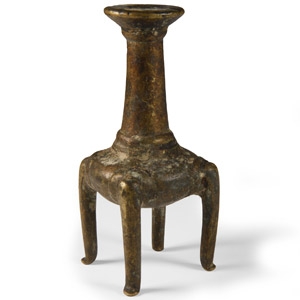
South East Asian Bronze Kohl Pot
18th-19th century A.D.Sold for (Inc. bp): £26
Rectangular reservoir with four spindle legs, conical neck and flared rim to the mouth. 213 grams, 10.5 cm
From the H.N. collection, Milton Keynes, Berkshire, UK, 1990s. -
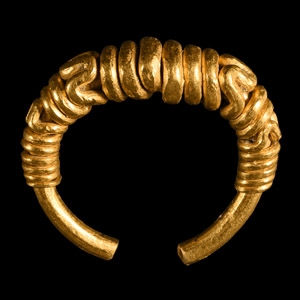
South East Asian Majapahit Gold Wire-Wrapped Ring
Java, 3rd-8th century A.D.Sold for (Inc. bp): £1,300
Comprising a penannular shank with a complex applied wound and twisted rod design. 13.6 grams, 26.73 mm overall, 18.60 mm internal diameter (approximate size British O 1/2, USA 7 1/4, Europe 15.61, Japan 15)
Private collection of Mr & Mrs Fischer, Munich, Germany, 1958-1998. London collection, 1999. -
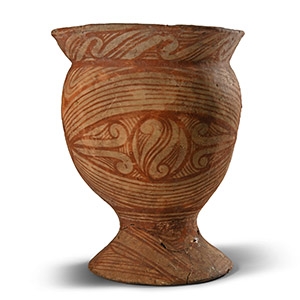
Ban Chiang Period Painted Chalice
Middle Period, 900-300 B.C.Sold for (Inc. bp): £143
With ovate body and flared rim, domed foot; decorated with series of interlocking linear and spiral motifs; base repaired. 1.75 kg, 23 cm high
From a collection acquired on the UK art market from various auction houses and collections mostly before 2000. From an important Cambridgeshire estate; thence by descent.
