
Loading, please wait...
LOT 1199
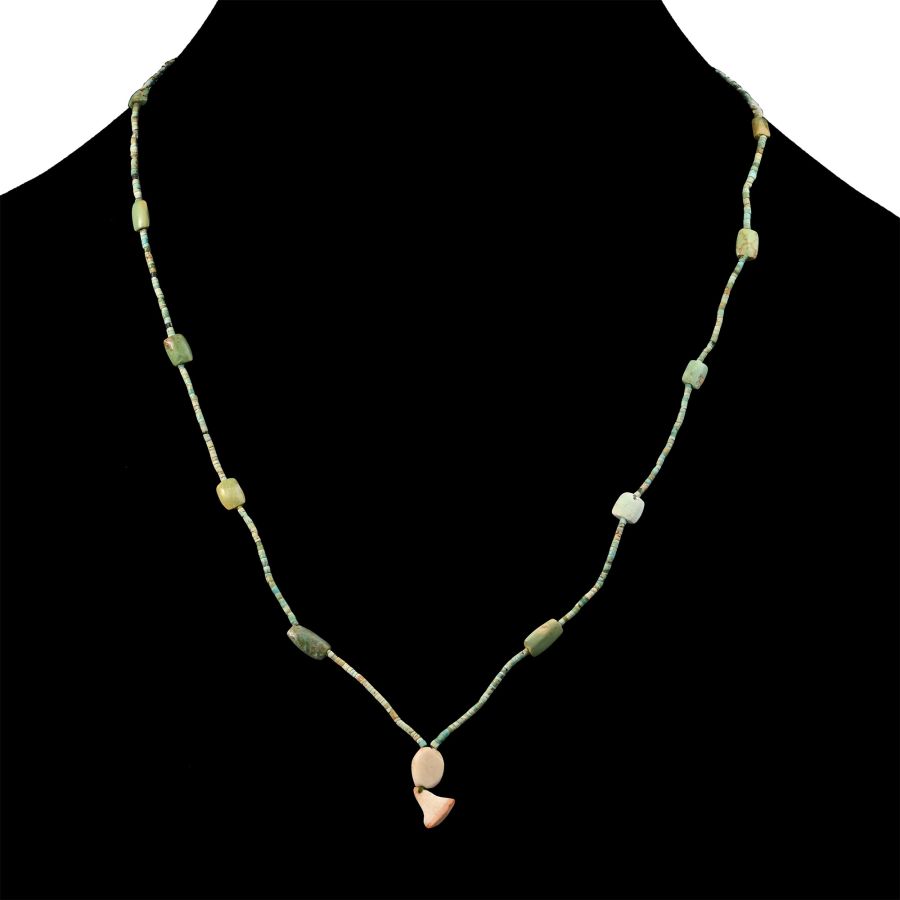
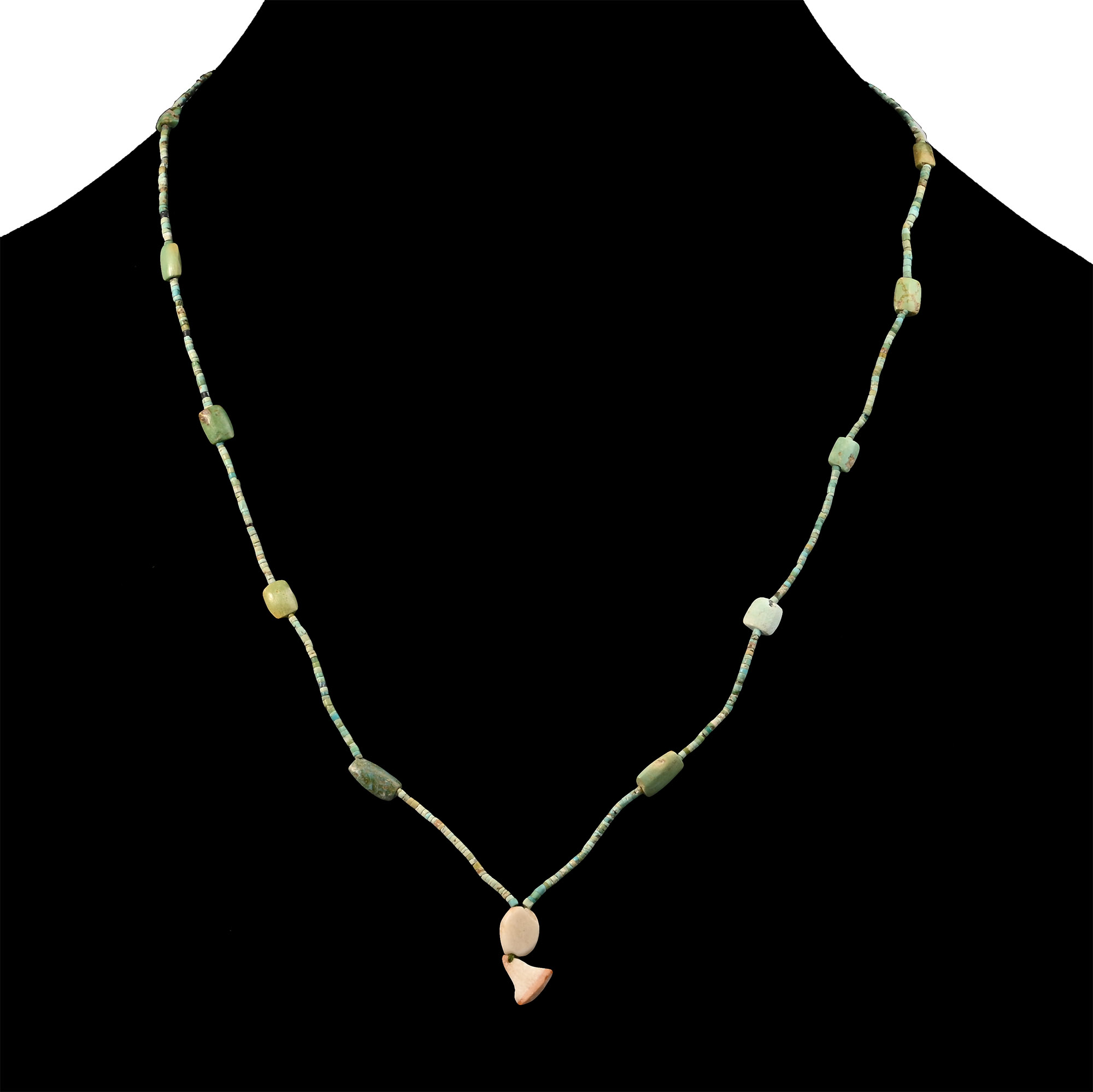
Bactrian Turquoise Bead Necklace
1ST MILLENNIUM B.C.
22 1/4 in. (4.57 grams, 56.5 cm).
Restrung designer group of turquoise-coloured seed beads with fan-shaped, lentoid and other beads.
ProvenanceEx Jack Ogden and Faustus Gallery, Mayfair, London, UK, 1980s-1990s, and latterly a London gentleman's collection.
CONDITIONTimeLine Auctions follows a vetting process to ensure the authenticity and legality of all items, reinforcing our commitment to integrity and responsible trading. Each antiquity, antique, and coin lot undergoes thorough examination by a vetting committee of at least ten external specialists, professional trade association members, scientists, and archaeologists: Our Vetting Process
AUCTIONS:
TimeLine is a leading auction house specialising in antiquities, ancient art, collectables, natural history, coins, medals, and books. Our auctions offer museums, collectors, historians, and enthusiasts the opportunity to acquire unique and historically significant pieces.
LOT 1199
Bactrian Turquoise Bead Necklace
Estimate £150 - 200€170 - 230 (for guidance only)$200 - 270 (for guidance only)
-
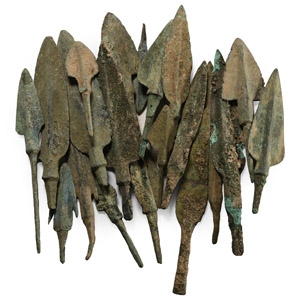
Luristan Bronze Arrowhead Collection
12th-10th century B.C.Sold for (Inc. bp): £156
Including triangular, barbed-and-tanged, leaf-shaped, and other types. 266 grams total, 49-108 mm
Ex London art market, 1980-1990s. This lot has been cleared against the Art Loss Register database, and is accompanied by an illustrated lot declaration signed by the Head of the Antiquities Department, Dr Raffaele D'Amato.
Some of these arrowheads seem to belong to the type V, subcategory types A, C and D according to the classification of Khorasani and Negahban. In the four categories of triangular bronze arrowheads from Luristan, Marlik and Northern Iran individuated by Negahban, subtypes C and D of type V are larger arrow or javelin heads, C with barbed shoulders and D with round shoulders. Subtype A is substantially similar to C, but smaller. -
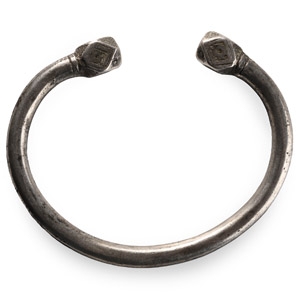
Large Western Asiatic Silver Bracelet
1st millennium A.D.Sold for (Inc. bp): £286
Penannular type with polyhedral terminals, blocks of pointillé detailing and hatching. 141 grams, 10.3 cm
Ex property of a Dutch gentleman; formerly in an old collection formed in the 1970s. -
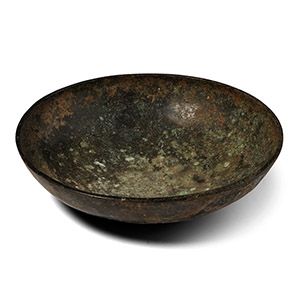
Western Asiatic Bronze Dish
Mid 1st millennium B.C.Estimate: £100 - 140 (+bp*)
Opening Bid: £50
Broad and shallow with lip to the inner face of the rim. 86 grams, 11.4 cm
Ex 1990s collection and with a central London gallery.
