
Loading, please wait...
LOT 1144
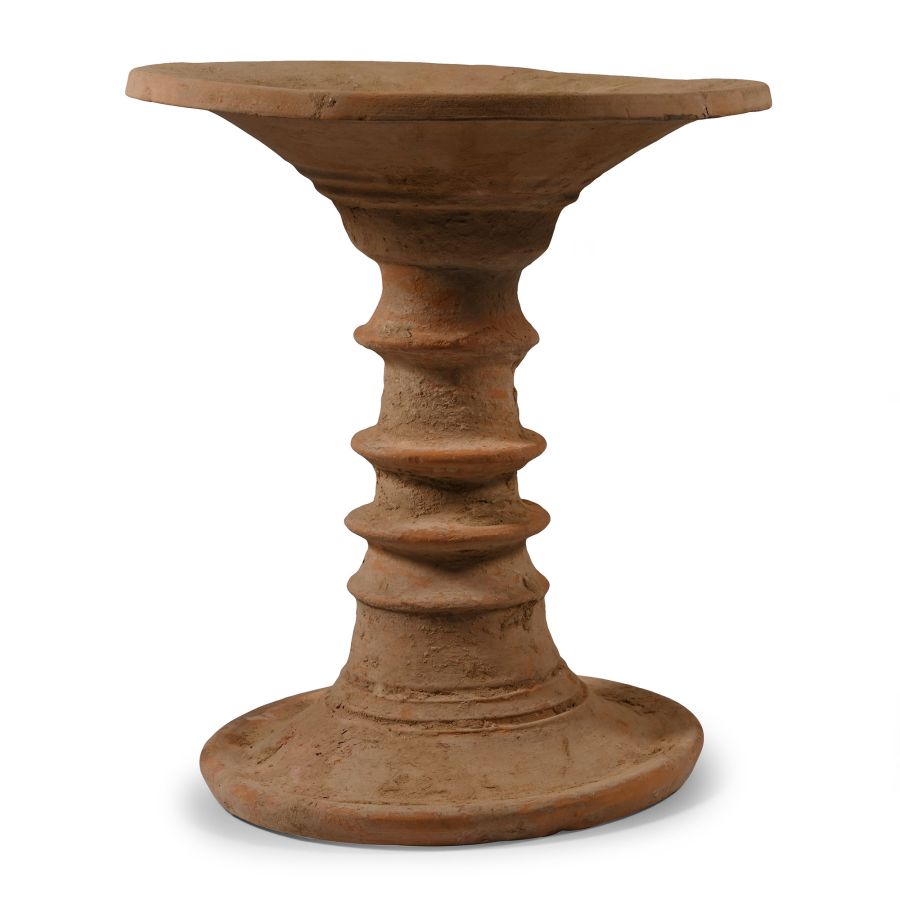
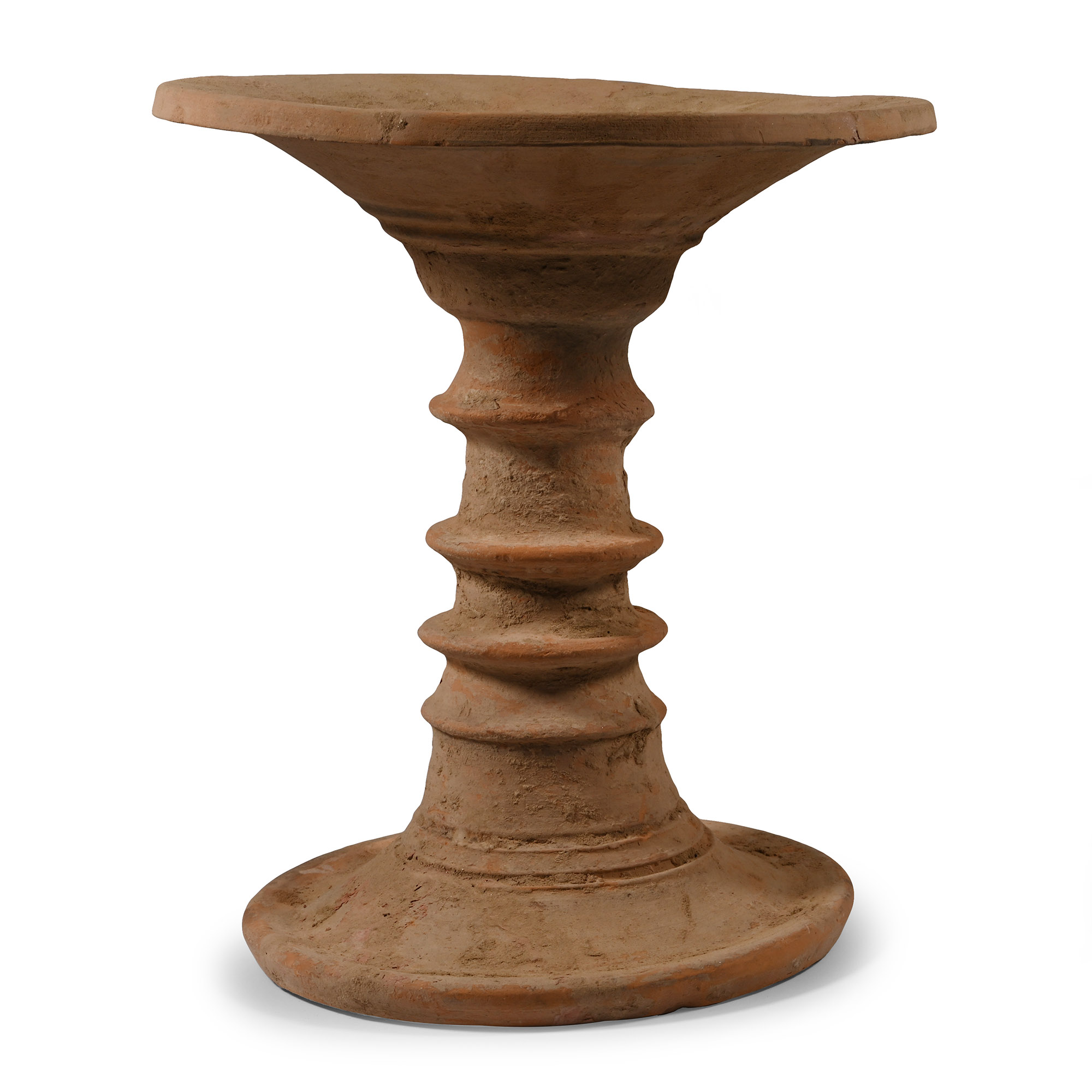
Bactrian Terracotta Chalice
1ST MILLENNIUM B.C.
11 in. (2.35 kg, 28 cm).
Comprising a columnar stem with ribbed collars flaring to the broad base with carinated rim, the bowl broad and dished. [No Reserve]
ProvenanceFrom a West London, UK, collection, 1990s.
This lot has been cleared against the Art Loss Register database, and is accompanied by an illustrated lot declaration signed by the Head of the Antiquities Department, Dr Raffaele D'Amato.
TimeLine Auctions follows a vetting process to ensure the authenticity and legality of all items, reinforcing our commitment to integrity and responsible trading. Each antiquity, antique, and coin lot undergoes thorough examination by a vetting committee of at least ten external specialists, professional trade association members, scientists, and archaeologists: Our Vetting Process
AUCTIONS:
TimeLine is a leading auction house specialising in antiquities, ancient art, collectables, natural history, coins, medals, and books. Our auctions offer museums, collectors, historians, and enthusiasts the opportunity to acquire unique and historically significant pieces.
-
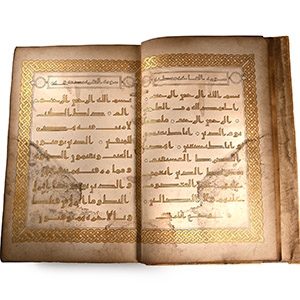
Western Asiatic Gilt Manuscript
20th century A.D.Sold for (Inc. bp): £2,600
An extensive Arabic text, bound in cardboard covers, some pages with decorative borders; pages stained. 3.8 kg, 30.5 x 22.5 cm
From the family collection of a Hampstead gentleman; formerly acquired in the 1980s. This lot has been cleared against the Art Loss Register database, and is accompanied by an illustrated lot declaration signed by the Head of the Antiquities Department, Dr Raffaele D'Amato. -
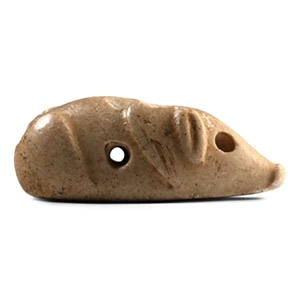
Sumerian Buff Stone Boar-Shaped Amulet Seal
Uruk / Jemdet Nasr Period, circa 3500-2900 B.C.Sold for (Inc. bp): £468
Modelled in the round with incuse running animals to the underside, sockets to the eyes and lateral piercing. 23.7 grams, 48 mm
From the 'S' collection, acquired 1970-1990s. Accompanied by a description by Peter Gert Van der Veen, senior lecturer of Levantine Archaeology, Johannes Gutenberg-Universität, Mainz. This lot has been cleared against the Art Loss Register database, and is accompanied by an illustrated lot declaration signed by the Head of the Antiquities Department, Dr Raffaele D'Amato. -
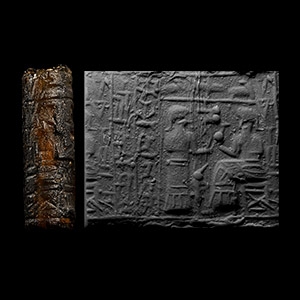
Large Middle Elamite Glass Cylinder Seal Asking for Divine Approval
Circa 1400-1000 B.C.Sold for (Inc. bp): £2,600
Accompanied by a copy of an old scholarly note, typed and signed by W.G. Lambert, late Professor of Assyriology, University of Birmingham, 1970-1993, which states: 'Cylinder Seal of Glass 47 x 15 mm. The main scene in the design shows a seated god on the right wearing a long robe with bottom fringe, sitting on a stool with crossing struts and holding in one hand a situla. Before him stands a servant similarly dressed and extending one hand. Between the two figures is a locust in big size and in the upper parts is a symbol. Above this scene is a band with three recumbent quadrupeds. The remainder of the space is devoted to a three-line cuneiform inscription: garna4kišib ne May the owner of this seal ina é-gal DU have free access to the palace NI Ni APKIN KA This is a Middle Elamite seal, c. 1400-1100 B.C. The design an inscription are based on Cassite-period Babylonian seals, but with Elamite rendering. This is a large seal and though the ends are chipped, it is otherwise in very good condition for ancient glass. Indeed, it is in such excellent state that one asks if it is not volcanic glass, namely obsidian. However, the pitted surface favours man-made glass, but in unusually good condition.'; a more comprehensive and up-to-date translation is: ki dingir ti-la Life is the gift of god. ina é-DU.DU (May he (seal owner)) have free access to the palace, i3-li2 APKIN KA I beseech you, my god. ; supplied with a museum-quality impression. 16.60 grams, 47 mm
Acquired from Christie's, New York, USA. From the private collection of a North American lady, formed 1970s-early 1990s, with collection reference no.P51. Accompanied by a copy of a scholarly note, typed and signed by Professor Wilfrid George Lambert. This lot has been checked against the Interpol Database of stolen works of art and is accompanied by a search certificate number no.12693-236341. This lot has been cleared against the Art Loss Register database, and is accompanied by an illustrated lot declaration signed by the Head of the Antiquities Department, Dr Raffaele D'Amato.
