
Loading, please wait...
LOT 1103
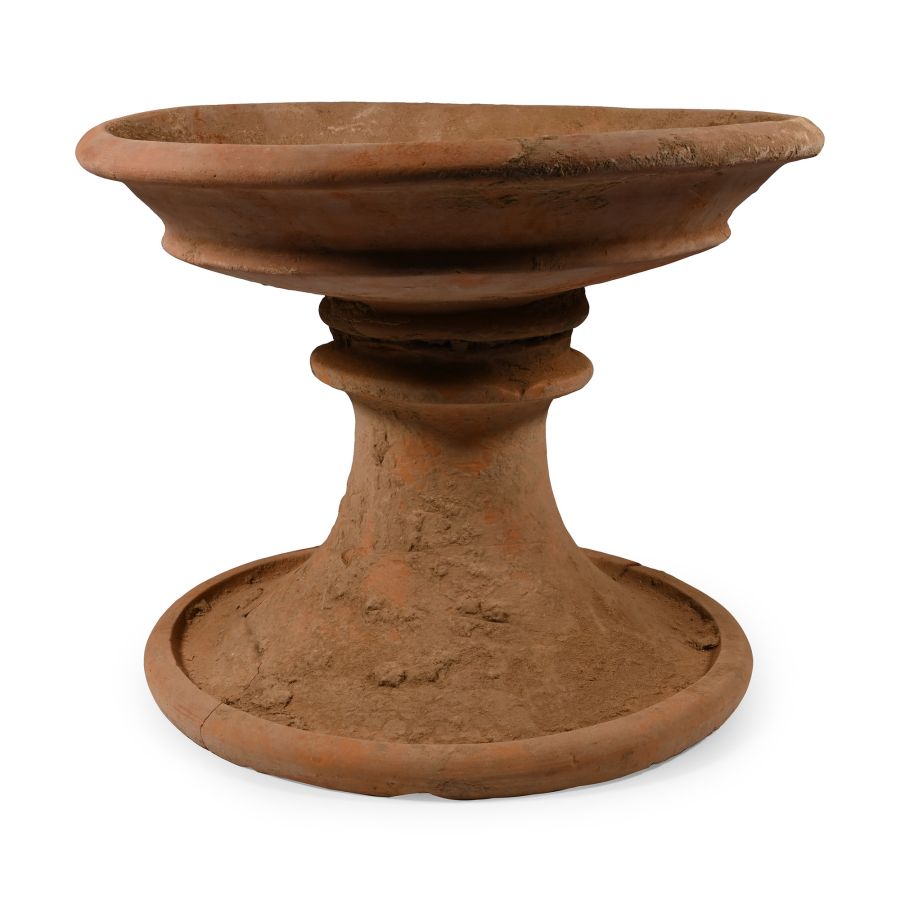
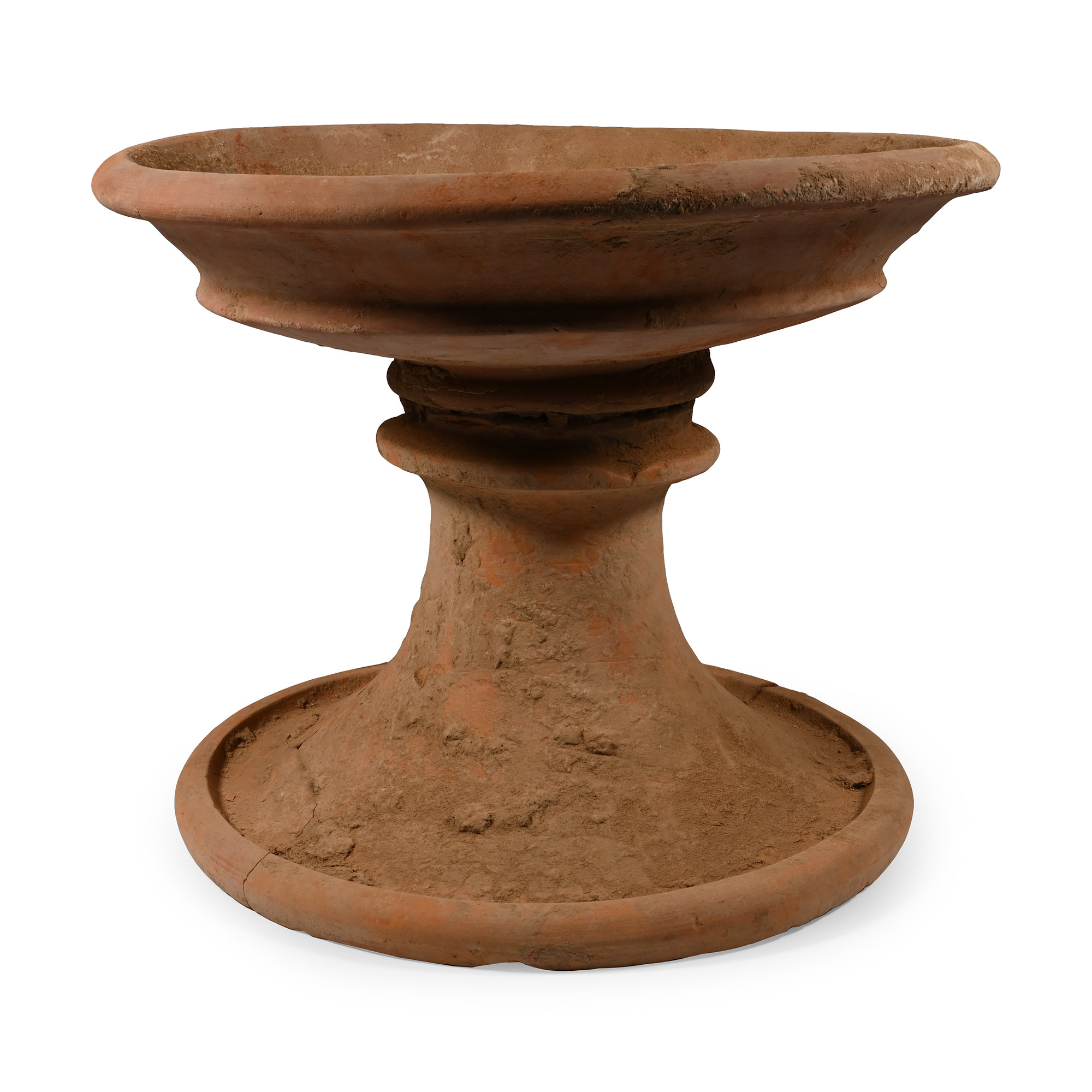
Bactrian Terracotta Chalice
2ND-1ST MILLENNIUM B.C.
10 in. (6.5 kg, 25.5 cm).
Comprising a columnar stem flaring to the broad base with carinated rim, collar below the junction with the bowl. [No Reserve]
ProvenanceFrom a West London, UK, collection, 1990s.
This lot has been cleared against the Art Loss Register database, and is accompanied by an illustrated lot declaration signed by the Head of the Antiquities Department, Dr Raffaele D'Amato.
TimeLine Auctions follows a vetting process to ensure the authenticity and legality of all items, reinforcing our commitment to integrity and responsible trading. Each antiquity, antique, and coin lot undergoes thorough examination by a vetting committee of at least ten external specialists, professional trade association members, scientists, and archaeologists: Our Vetting Process
AUCTIONS:
TimeLine is a leading auction house specialising in antiquities, ancient art, collectables, natural history, coins, medals, and books. Our auctions offer museums, collectors, historians, and enthusiasts the opportunity to acquire unique and historically significant pieces.
-
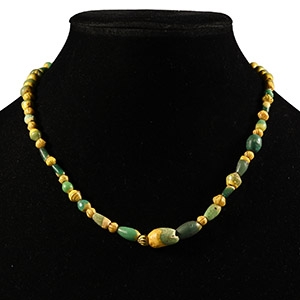
Western Asiatic Green and Yellow Glass Bead Necklace
Late 1st millennium B.C. and laterEstimate: £350 - 450 (+bp*)
Opening Bid: £175
Restrung group of bicone, fusiform, oblate, striped 'date', and other beads with spacer beads. 23 grams, 36 mm
From the collection of a gentleman, acquired on the London art market in the 1990s. This lot has been cleared against the Art Loss Register database, and is accompanied by an illustrated lot declaration signed by the Head of the Antiquities Department, Dr Raffaele D'Amato. -

Sasanian Carnelian Seal with Bird
5th-6th century A.D.Sold for (Inc. bp): £338
Plano-convex garnet seal with intaglio simurgh motif, portion of wire suspension loop. 2.21 grams, 12.85 mm
Acquired from Ancient and Islamic Art Ltd., February 1993. Thence by descent, private collection, since 1998. This lot has been cleared against the Art Loss Register database, and is accompanied by an illustrated lot declaration signed by the Head of the Antiquities Department, Dr Raffaele D'Amato. -
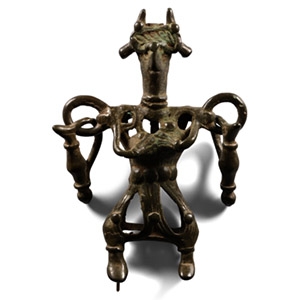
Marlik Bronze Maternity Figure
9th-8th century B.C.Estimate: £1,800 - 2,400 (‡+bp*)
Opening Bid: £900
Openwork body with integral horned head, loops to the shoulders and breasts; separate arms mounted in the shoulder-rings, applied pellets and braid detailing. 40 grams, 77 mm
Acquired in the 1980s. Private collection, Switzerland, thence by descent. Private collection, since the late 1990s. This lot has been checked against the Interpol Database of stolen works of art and is accompanied by a search certificate number no.12698-234680. This lot has been cleared against the Art Loss Register database, and is accompanied by an illustrated lot declaration signed by the Head of the Antiquities Department, Dr Raffaele D'Amato.
