
Loading, please wait...
LOT 1222
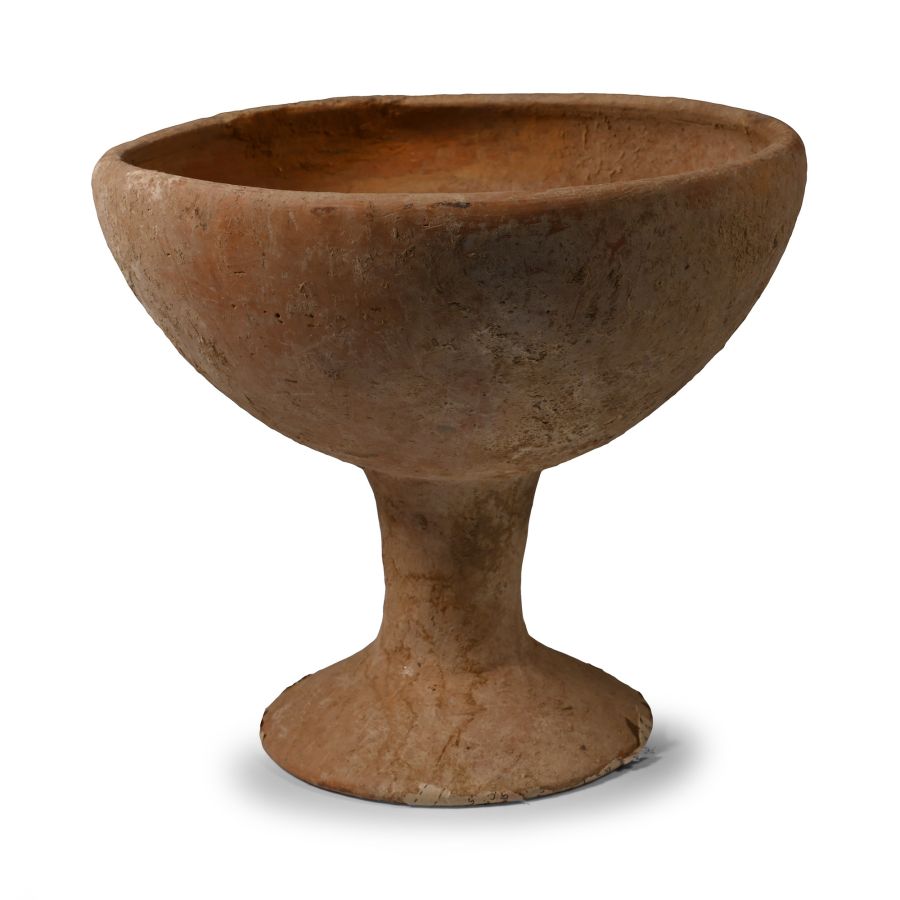
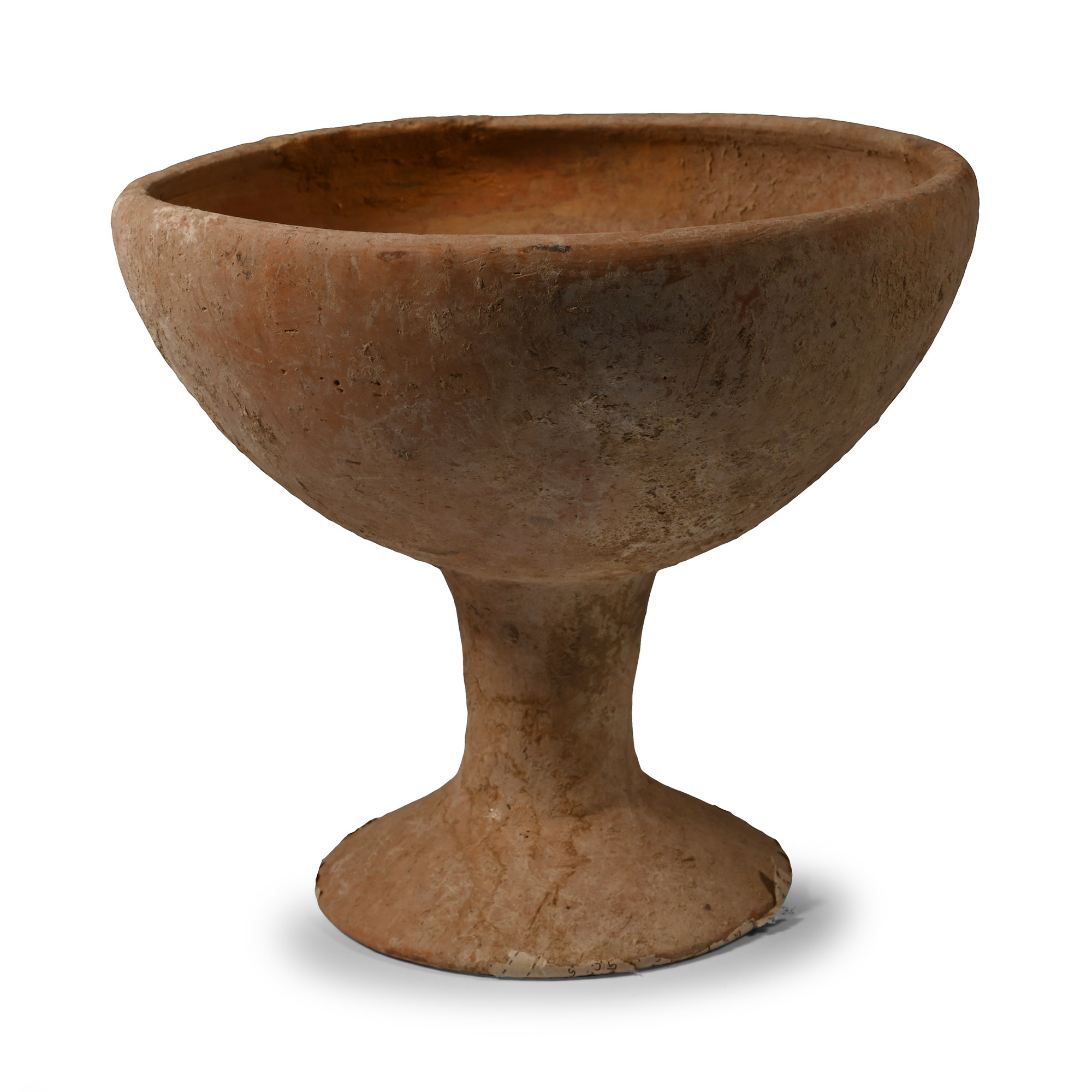
Bactrian Terracotta Chalice
2ND-1ST MILLENNIUM B.C.
6 1/2 in. (750 grams, 16.5 cm high).
With broad inturned rim, short stem and flared foot. [No Reserve]
ProvenanceFrom a West London, UK, collection, 1990s.
This lot has been cleared against the Art Loss Register database, and is accompanied by an illustrated lot declaration signed by the Head of the Antiquities Department, Dr Raffaele D'Amato.
TimeLine Auctions follows a vetting process to ensure the authenticity and legality of all items, reinforcing our commitment to integrity and responsible trading. Each antiquity, antique, and coin lot undergoes thorough examination by a vetting committee of at least ten external specialists, professional trade association members, scientists, and archaeologists: Our Vetting Process
AUCTIONS:
TimeLine is a leading auction house specialising in antiquities, ancient art, collectables, natural history, coins, medals, and books. Our auctions offer museums, collectors, historians, and enthusiasts the opportunity to acquire unique and historically significant pieces.
-
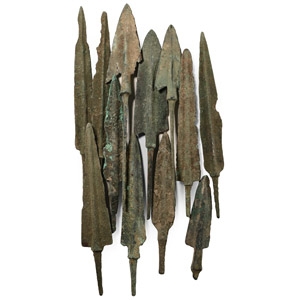
Luristan Bronze Arrowhead Collection
13th-6th century B.C.Estimate: £150 - 200 (+bp*)
Opening Bid: £75
Comprising triangular types with thick midrib, heater-shaped, leaf-shaped, and other types. 340 grams total, 8.7-17.5 cm
Ex London art market, 1980-1990s. This lot has been cleared against the Art Loss Register database, and is accompanied by an illustrated lot declaration signed by the Head of the Antiquities Department, Dr Raffaele D'Amato.
One category of the represented arrowheads has a sharp, flat blade, the ends of which extend to form wings or barbs, and a prominent midrib extending into a long tang that often has a stop; the blade shape varies from deltoid to more triangular. Another form has no barbs, but it has a prominent midrib extending to the tang, and a narrow leaf-shaped blade. -
.jpg)
Western Asiatic Mixed Bead Necklace String
2nd-1st millennium B.C. and laterSold for (Inc. bp): £26
Restrung group of melon, biconvex, faceted and other beads in stone and ceramic. 28.5 grams, 35.5 cm
Ex London, UK, collection, 1990s. This lot has been cleared against the Art Loss Register database, and is accompanied by an illustrated lot declaration signed by the Head of the Antiquities Department, Dr Raffaele D'Amato. -
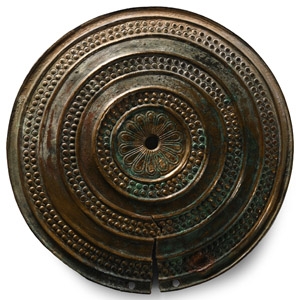
Achaemenid Gilt Bronze Roundel
500-400 B.C.Estimate: £100 - 140 (+bp*)
Opening Bid: £50
Discoid and slightly domed with concentric rings of plain and pounced decoration, rosette to centre; two holes to rim, crack between. 59 grams, 91 mm
Acquired before 1983. Ex London gallery, 1990s. This lot has been cleared against the Art Loss Register database, and is accompanied by an illustrated lot declaration signed by the Head of the Antiquities Department, Dr Raffaele D'Amato.
