
Loading, please wait...
_900x900.jpg "Bactrian Style Lapis Lazuli Bead Necklace")
_200x200.jpg "Bactrian Style Lapis Lazuli Bead Necklace")
.jpg "Bactrian Style Lapis Lazuli Bead Necklace")
LOT 2026
Bactrian Style Lapis Lazuli Bead Necklace
20TH CENTURY A.D.
16 1/8 in. (38.4 grams, 41 cm).
Designer necklace of mainly square-section and polyhedral types with square-section tapering dangles. [No Reserve]
ProvenanceAcquired 1980-2015.
Ex Abelita family collection.
TimeLine Auctions follows a vetting process to ensure the authenticity and legality of all items, reinforcing our commitment to integrity and responsible trading. Each antiquity, antique, and coin lot undergoes thorough examination by a vetting committee of at least ten external specialists, professional trade association members, scientists, and archaeologists: Our Vetting Process
AUCTIONS:
TimeLine is a leading auction house specialising in antiquities, ancient art, collectables, natural history, coins, medals, and books. Our auctions offer museums, collectors, historians, and enthusiasts the opportunity to acquire unique and historically significant pieces.
-
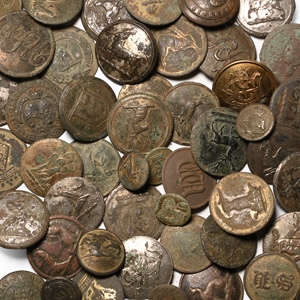
Post Medieval Bronze Military and Other Button Collection
18th-20th century A.D.Sold for (Inc. bp): £39
Including tined and gilded types with mainly heraldic crests on torses; many of these objects are published in the Detector Finds book series as well as Buttons & Fasteners 500BC-1840AD. 269 grams total, 14-27 mm
From the collection of the famous author, writer and speaker, Gordon Bailey, Essex, UK; formed since 1968. -
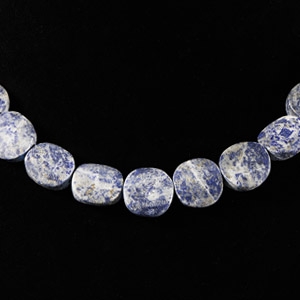
Lapis Lazuli Bead Necklace
20th century A.D.Sold for (Inc. bp): £13
Composed of graduated coin-shaped beads, with hook-and-eye clasp. 72 grams, 43 cm long
UK gallery, early 2000s. -
.jpg)
Framed Watercolour Painting
India, 19th century A.D.Sold for (Inc. bp): £26
A textual panel with a figural scene in watercolour at the centre, polychrome floral border; mounted in a reveal and a glazed wooden frame. 1.14 kg, 42.2 x 30.2 cm
Fine condition.
Acquired on the UK art market, 1980s-1990s. The Woodbridge collection of Indo-Persian art.
