
Loading, please wait...
_900x900.jpg "Bactrian Style Lapis Lazuli Bead Necklace")
_200x200.jpg "Bactrian Style Lapis Lazuli Bead Necklace")
.jpg "Bactrian Style Lapis Lazuli Bead Necklace")
LOT 1150
Bactrian Style Lapis Lazuli Bead Necklace
20TH CENTURY A.D.
22 7/8 in. (30 grams, 58 cm long).
Designer necklace comprising tubular and fusiform lapis lazuli beads. [No Reserve]
ProvenanceAcquired 1980-2015.
Ex Abelita family collection.
TimeLine Auctions follows a vetting process to ensure the authenticity and legality of all items, reinforcing our commitment to integrity and responsible trading. Each antiquity, antique, and coin lot undergoes thorough examination by a vetting committee of at least ten external specialists, professional trade association members, scientists, and archaeologists: Our Vetting Process
AUCTIONS:
TimeLine is a leading auction house specialising in antiquities, ancient art, collectables, natural history, coins, medals, and books. Our auctions offer museums, collectors, historians, and enthusiasts the opportunity to acquire unique and historically significant pieces.
-
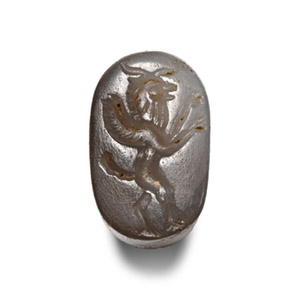
Neo Babylonian Stone Stamp Seal with Winged God
8th-7th century B.C.Sold for (Inc. bp): £572
Plano-convex in profile pierced near the top, with incuse lamma winged deity, rampant with tail raised and horns splayed; supplied with a museum-quality impression. 11 grams, 23 mm
1 in.
Ex S. collection, London, UK, 1980s-2000s. -
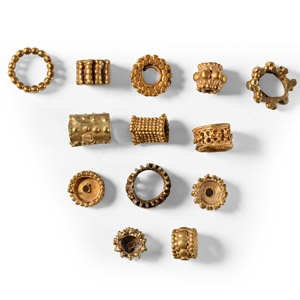
Western Asiatic Granulated Gold Bead Group
2nd-1st millennium B.C.Estimate: £500 - 700 (+bp*)
Opening Bid: £250
Mainly annular and tubular types with regularly placed granules and other detailing. 8.27 grams total, 6-8 mm
Ex property of a late Japanese collector, 1970s-2000s. -
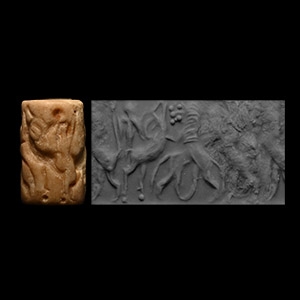
Akkadian Marble Cylinder Seal with Contest Scene
2nd millennium B.C.Sold for (Inc. bp): £104
With incuse frieze depicting a male figure holding a sceptre between two rampant stags; behind, a second pair of rampant beasts (probably lions) fighting; supplied with a museum-quality impression. 16.7 grams, 28 mm
UK private collection before 2000. Acquired on the UK art market. Property of a London gentleman.
