
Loading, please wait...
LOT 1854
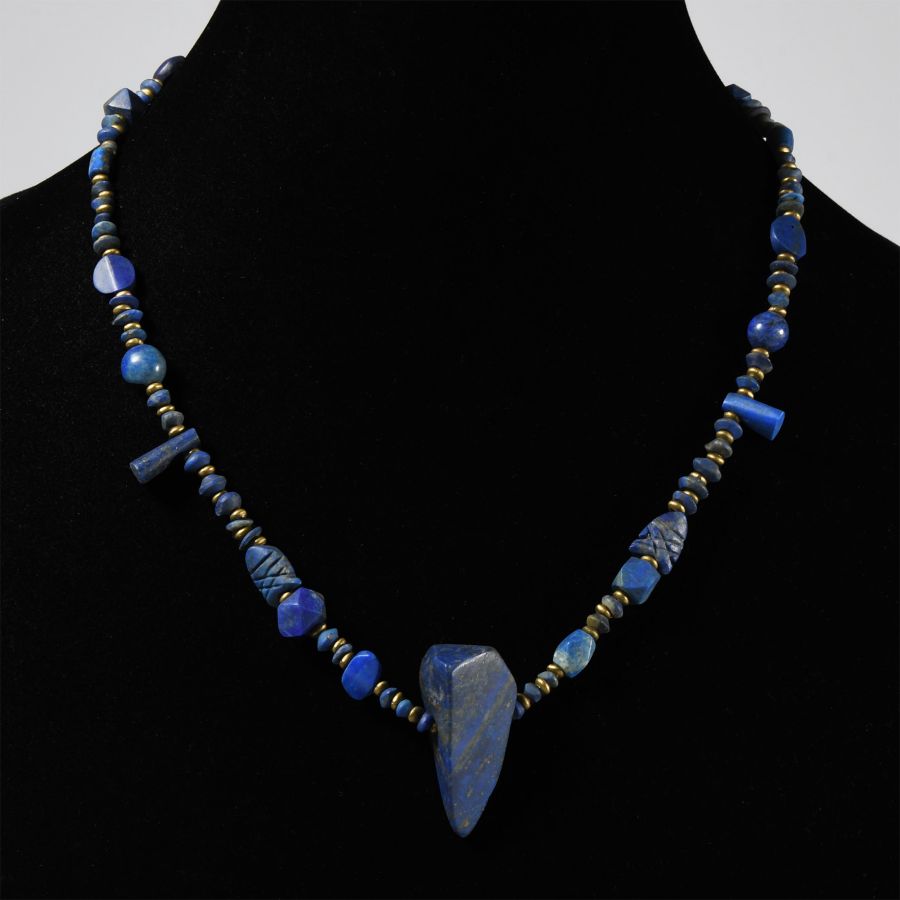
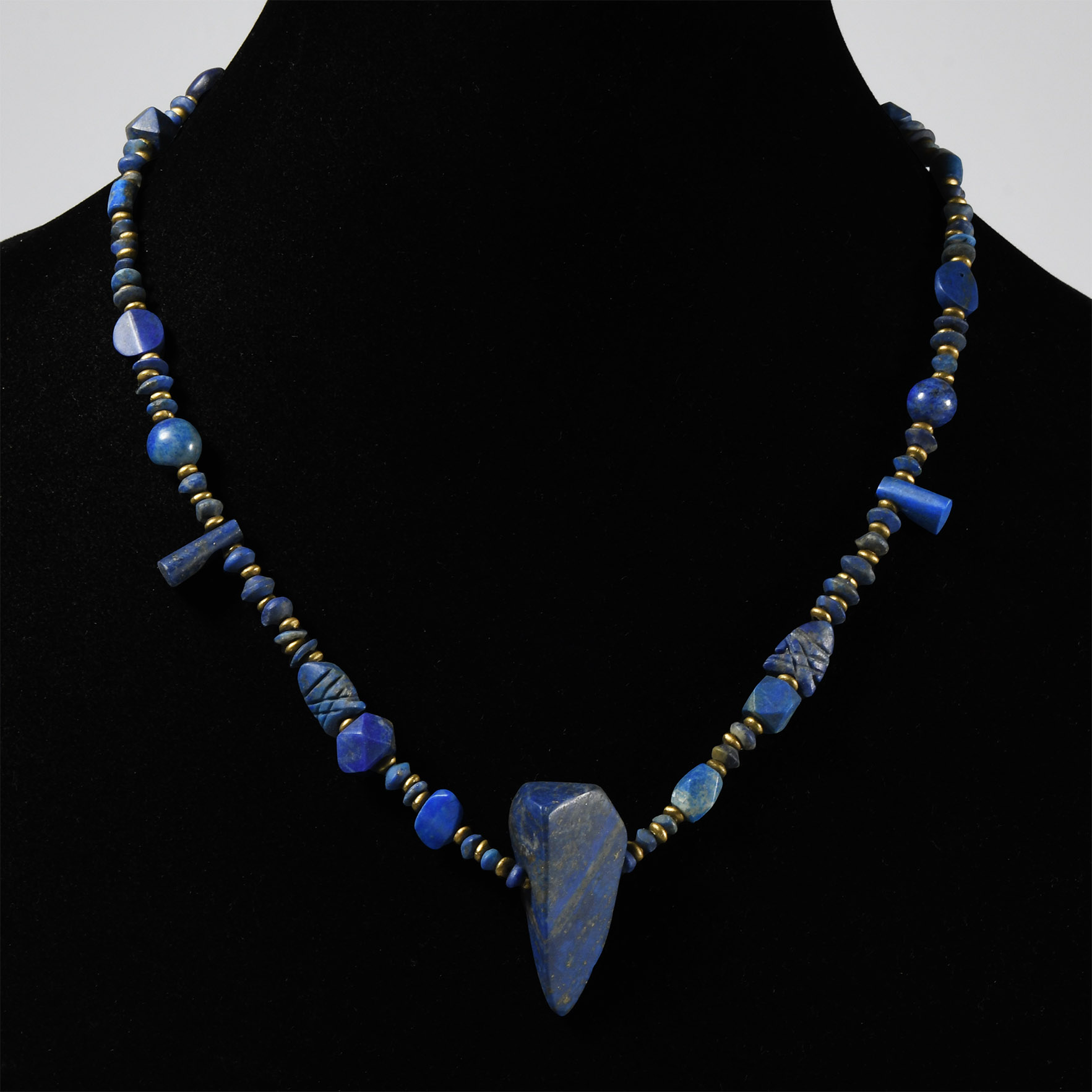
Bactrian Style Lapis Lazuli Bead Necklace
20TH CENTURY A.D.
17 3/4 in. (40.5 grams, 45 cm).
Restrung designer necklace with polyhedral, tabular, irregular and other beads and metal spacers. [No Reserve]
ProvenanceAcquired on the London, UK, art market in the 1990s.
Ex London, UK, gallery.
TimeLine Auctions follows a vetting process to ensure the authenticity and legality of all items, reinforcing our commitment to integrity and responsible trading. Each antiquity, antique, and coin lot undergoes thorough examination by a vetting committee of at least ten external specialists, professional trade association members, scientists, and archaeologists: Our Vetting Process
AUCTIONS:
TimeLine is a leading auction house specialising in antiquities, ancient art, collectables, natural history, coins, medals, and books. Our auctions offer museums, collectors, historians, and enthusiasts the opportunity to acquire unique and historically significant pieces.
-
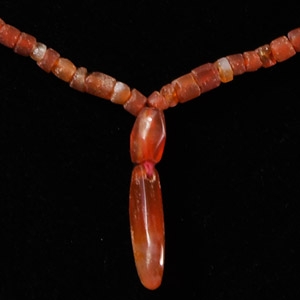
Hardstone Bead Necklace
20th century A.D.Sold for (Inc. bp): £143
Restrung carnelian beads with interstitial oblate beads. 7.38 grams, 38.5 cm
From the private collection of the late Mrs Belinda Ellison, a long time member of the Egyptian Exploration Society, c.1940-2020. -
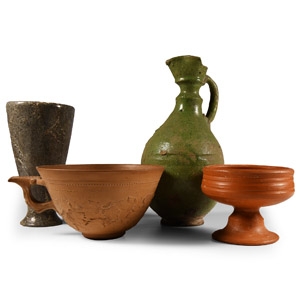
Reproduction Vessel Group
20th century A.D.Sold for (Inc. bp): £33
Including a green-glazed ewer, terracotta goblet and other types; after the antique. 1.02 kg total, 8.9-19 cm
From various auction houses since circa 2005. Property of a Cambridgeshire, UK, gentleman. -
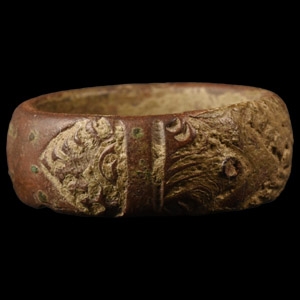
Georgian Ring with G O
18th-19th century A.D.Sold for (Inc. bp): £33
Plain hoop with faux buckle detailing with initials G and O. 12.29 grams, 25.66 mm overall, 19.41 mm internal diameter (approximate size British S 1/2, USA 9 1/4, Europe 20.63, Japan 19)
Found Suffolk, UK.
