
Loading, please wait...
LOT 1972
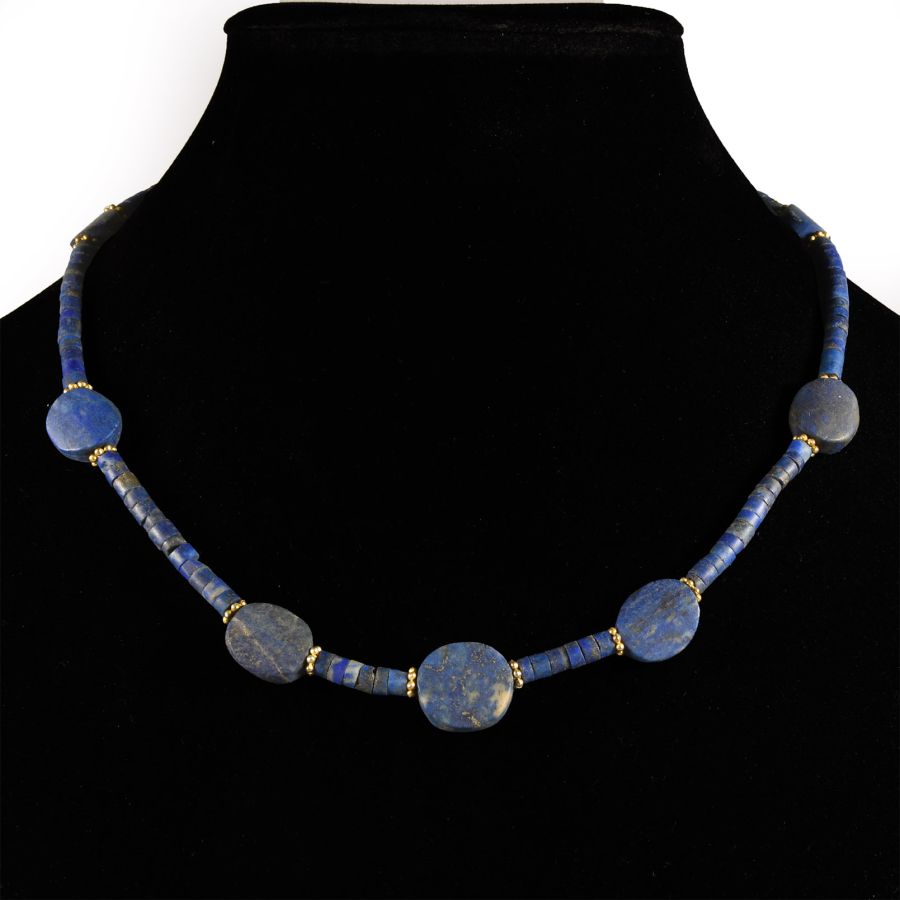
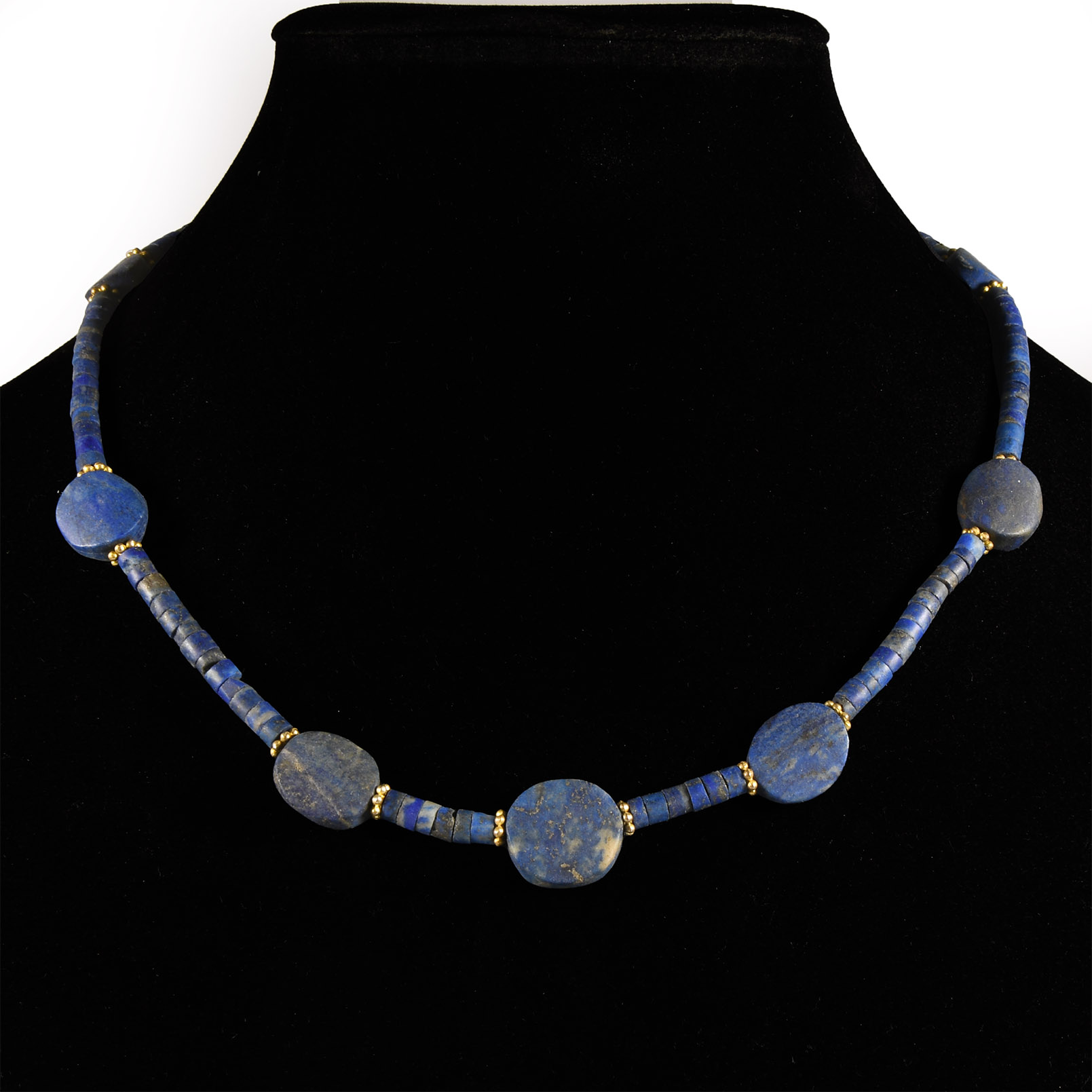
Bactrian Style Lapis Lazuli Bead Necklace
20TH CENTURY A.D.
18 1/2 in. (35 grams, 47 cm).
Comprising lapis lazuli annular and tabular beads with gold spacers. [No Reserve]
ProvenanceEx North London, UK, gentleman.
Property of a Cambridgeshire, UK, gentleman.
TimeLine Auctions follows a vetting process to ensure the authenticity and legality of all items, reinforcing our commitment to integrity and responsible trading. Each antiquity, antique, and coin lot undergoes thorough examination by a vetting committee of at least ten external specialists, professional trade association members, scientists, and archaeologists: Our Vetting Process
AUCTIONS:
TimeLine is a leading auction house specialising in antiquities, ancient art, collectables, natural history, coins, medals, and books. Our auctions offer museums, collectors, historians, and enthusiasts the opportunity to acquire unique and historically significant pieces.
-
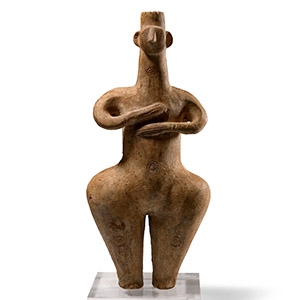
Large Amlash Style Steatopygous Terracotta Idol
20th century A.D.Sold for (Inc. bp): £338
With exaggerated broad hips and short tapering legs, the arms held at right angles across the body, long tapering neck and discoid face with incised eyes and projecting nose, lateral lobe ears; incised roundel motifs to the throat, navel and knees; reverse with a vertical pillar and zigzag ornament indicating the hair; open at the top of the head with crenellated rim; mounted on custom-made display stand. 3.21 kg total, 44.5 cm high including stand
Ex North Yorkshire, UK, collection, 1990s. -
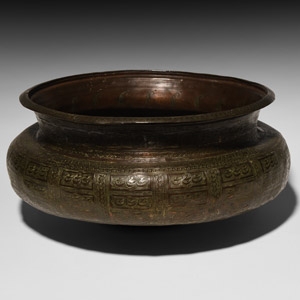
Large Copper Bowl with Script
India, 19th century A.D.Estimate: £120 - 170 (+bp*)
Opening Bid: £65
With repeating script and geometric bands to the body. 1.67 kg, 33 cm wide
Fine condition.
Acquired on the UK art market, 2000s. Property of a Suffolk gentleman. -
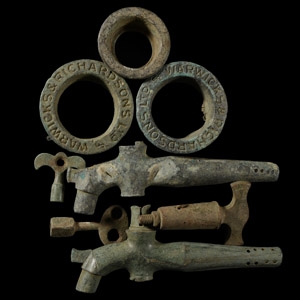
'WARWICKS & RICHARDSON' Bronze Beer Barrel Fittings
19th century A.D.Sold for (Inc. bp): £13
Comprising barrel taps, barrel tap keys, and three screw-fitting outlet collars, two inscribed 'WARWICKS & RICHARDSON LTD'. 808 grams total, 3.6-15.2 cm
Found near Cotham, Newark, UK.
The brewery was styled 'Warwicks & Richardsons Ltd, Northgate, Newark on Trent, Nottinghamshire' and was founded by Samuel Sketchley at the Tower Wharf Brewery 1766 and acquired by Richard Warwick in 1856. The premises of the Northgate Brewery were built in 1871.
