
Loading, please wait...
LOT 1859
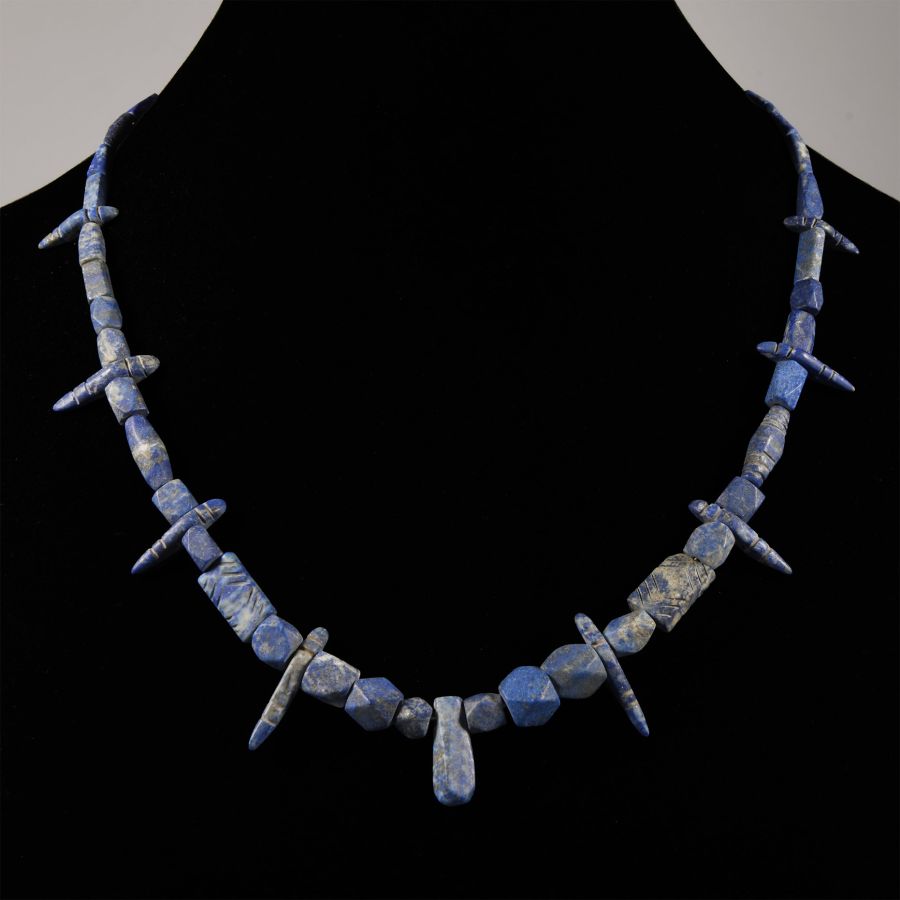
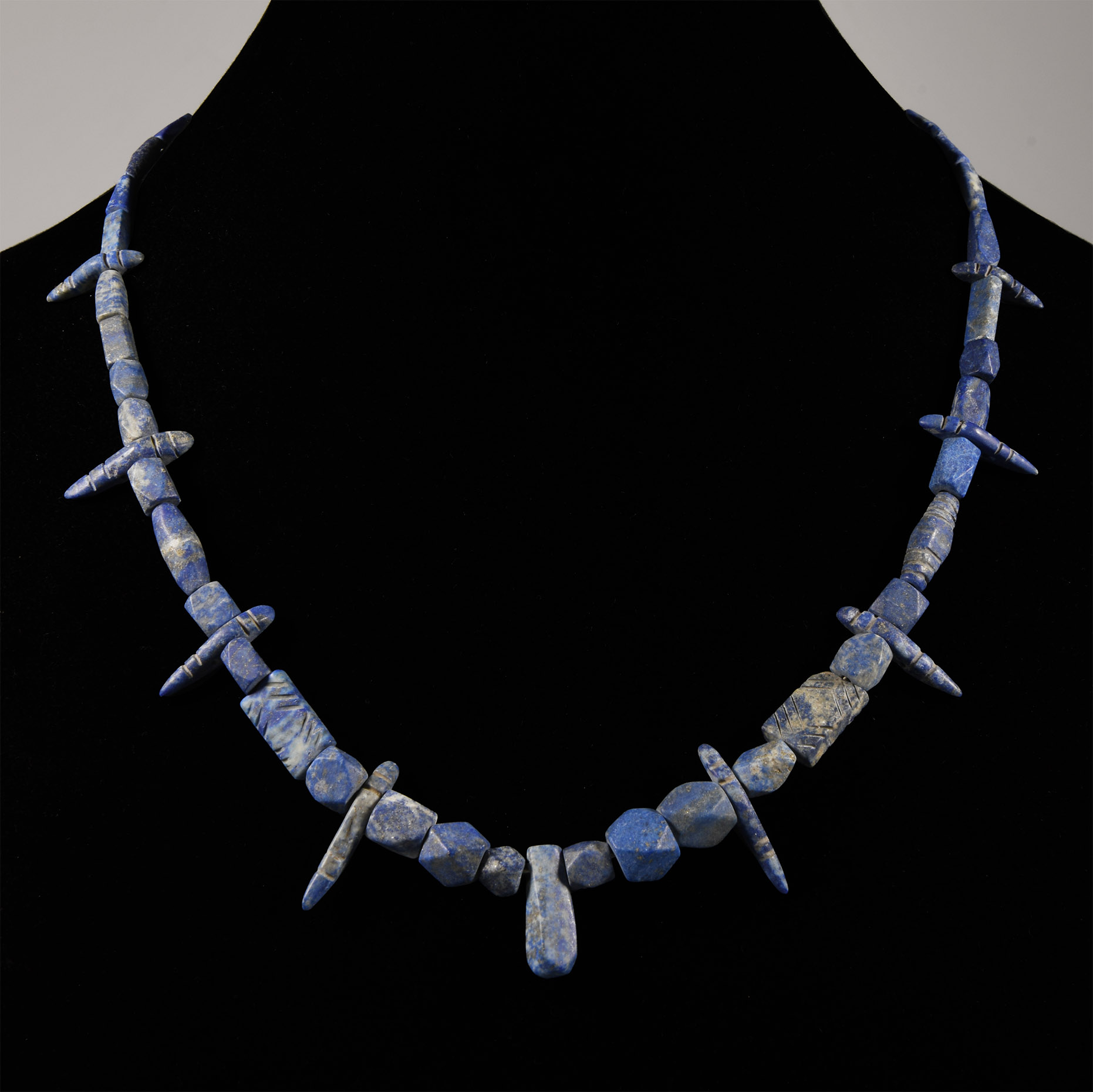
Bactrian Style Lapis Lazuli Bead Necklace
20TH CENTURY A.D.
16 1/8 in. (38.4 grams, 41 cm).
Mainly fusiform, square-section and polyhedral types with square-section tapering dangles. [No Reserve]
ProvenanceAcquired 1980-2015.
Ex Abelita family collection.
TimeLine Auctions follows a vetting process to ensure the authenticity and legality of all items, reinforcing our commitment to integrity and responsible trading. Each antiquity, antique, and coin lot undergoes thorough examination by a vetting committee of at least ten external specialists, professional trade association members, scientists, and archaeologists: Our Vetting Process
AUCTIONS:
TimeLine is a leading auction house specialising in antiquities, ancient art, collectables, natural history, coins, medals, and books. Our auctions offer museums, collectors, historians, and enthusiasts the opportunity to acquire unique and historically significant pieces.
-
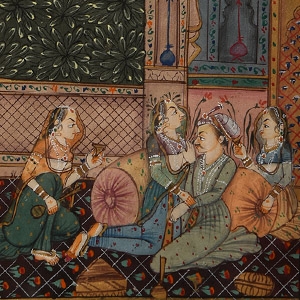
Framed Watercolour Painting with Harem Scene
Persia, 20th century A.D.Sold for (Inc. bp): £26
With kneeling nobleman and three kneeling females within a courtyard; panels of nastaliq text above and below; mounted in a glazed wooden frame. 1.2 kg, 42.7 x 38 cm
Very fine condition.
Acquired on the UK art market, 1980s-1990s. The Woodbridge collection of Indo-Persian art. -
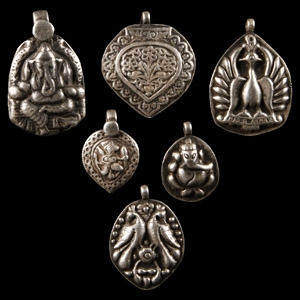
Mixed Pendant Group
20th century A.D.Sold for (Inc. bp): £59
Mixed group of silver-coloured metal pendants with high-relief motifs including Ganesha, opposed birds and other items. 30 grams total, 25-40 mm
Property of a South West London gentleman. -
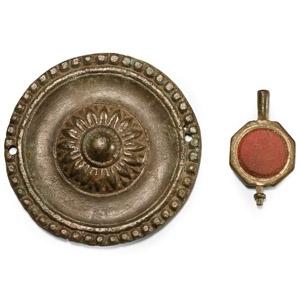
Post Medieval Bronze Mount and Watch Key
Circa 19th century A.D.Sold for (Inc. bp): £7
Discoid mount with domed rosette to the centre; watch key with mandrel, inset carnelian disc. 28.2 grams total, 30-51 mm
Acquired between the 1960s-early 1990s. From an old UK private collector from Worthing, West Sussex, UK. Property of K.P., a Cornish lady collector, UK.
