
Loading, please wait...
LOT 2131
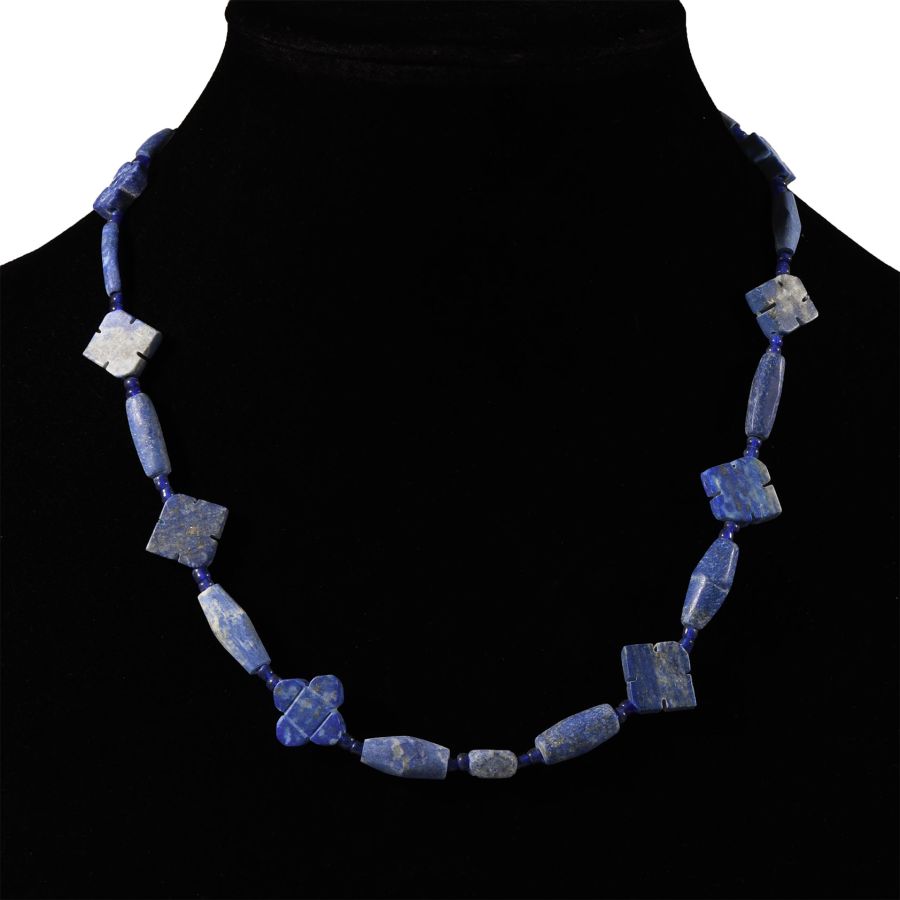
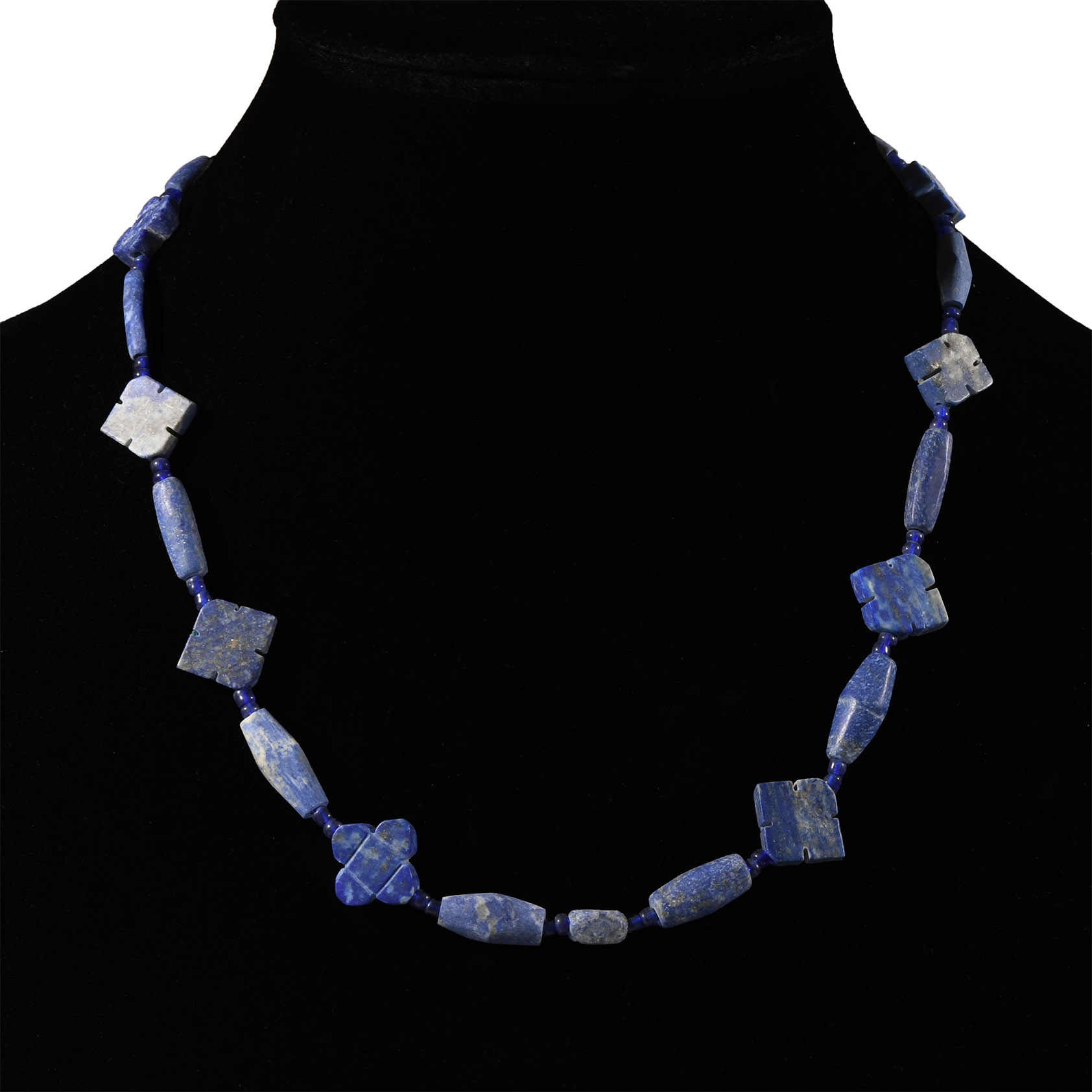
Bactrian Style Lapis Lazuli Bead Necklace String
20TH CENTURY A.D.
16 3/4 in. (28.9 grams, 42.5 cm).
Restrung group of beads, mainly annular and biconical types with cruciform tabular type. [No Reserve]
ProvenanceLondon, UK, art market, 1980-2000s
CONDITIONTimeLine Auctions follows a vetting process to ensure the authenticity and legality of all items, reinforcing our commitment to integrity and responsible trading. Each antiquity, antique, and coin lot undergoes thorough examination by a vetting committee of at least ten external specialists, professional trade association members, scientists, and archaeologists: Our Vetting Process
AUCTIONS:
TimeLine is a leading auction house specialising in antiquities, ancient art, collectables, natural history, coins, medals, and books. Our auctions offer museums, collectors, historians, and enthusiasts the opportunity to acquire unique and historically significant pieces.
-
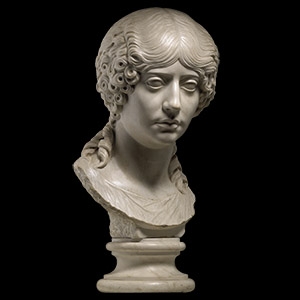
Marble Head of a Roman Noblewoman
Italy, 19th century A.D.Sold for (Inc. bp): £5,720
Female bust modelled in the round with hair centre-parted and dressed in ringlets gathered at the nape of the neck and extending to the shoulders; mounted on a socle base. 22.1 kg, 46 cm
Private collection, England. This lot has been checked against the Interpol Database of stolen works of art and is accompanied by a search certificate number no.12303-215648.
This portrait is directly inspired by a Roman model (fig. 1) discovered in 1880, now housed at the Museo Nazionale Romano in Rome and believed to depict Minatia Polla. The young woman depicted showcases the refined features characteristic of Roman feminine nobility, with a rounded oval face, large hemmed eyes, a long nose, and a well-defined, slightly open mouth. Her low forehead is adorned with a sophisticated hairstyle: long, soft locks separated by a middle parting that end in curls, with a few delicate strands falling over her shoulders. She wears a dress with subtle pleats and a round neckline. Upon comparing our portrait with the Roman original of Minatia Polla, it becomes evident that this piece is an exact neoclassical copy of the ancient portrait. The only notable difference is the more pronounced fullness under the chin in our version, which is less evident in the antique model. From the 18th century and throughout the neoclassical era, significant archaeological discoveries sparked immense interest and enthusiasm (as evidenced by Winckelmann), compelling contemporary sculptors to engage with ancient works to showcase their talents. The portrait presented here, given the delicacy of the features and the overall quality of the sculpture, is unmistakably the work of a master sculptor. -
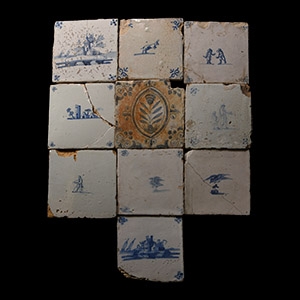
Post Medieval Dutch Glazed Ceramic Tile Group
Circa 17th-18th century A.D.Sold for (Inc. bp): £33
Comprising blue and white glazed tiles displaying figural vignettes, animals and wildlife, buildings in landscape settings and floral motifs. 3.19 kg total, 13 x 13 - 13.5 x 13.5 cm
Acquired 1990s-early 2000s. East Anglian private collection. -
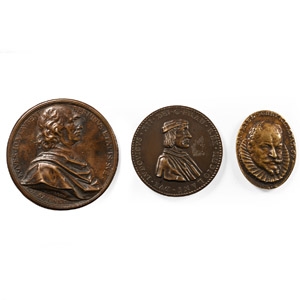
Bronze Medallion Group
15th-16th century A.D. or laterSold for (Inc. bp): £72
Comprising: with raised rim, profile portrait of von Cheron by Gianlorenzo Bernini; with band of pellets to border, legend '. DVX . LVDOVICVS . XII . DEI . G . FRAN . REX . MEDIOLANI -- ' and reverse ' SEMPER . AVGVSTVS . VICTOR . TRIVMPHATOR .'; ellipsoid with high-relief bust and legend 'GABRIEL SCHEVRL ÆTAT 67' and 'VIVAT POST FVNERA VIRTVS'. 211 grams total, 52-74 mm
Austrian private collection for at least 90 years. Ex central London gallery.
