
Loading, please wait...
LOT 2203
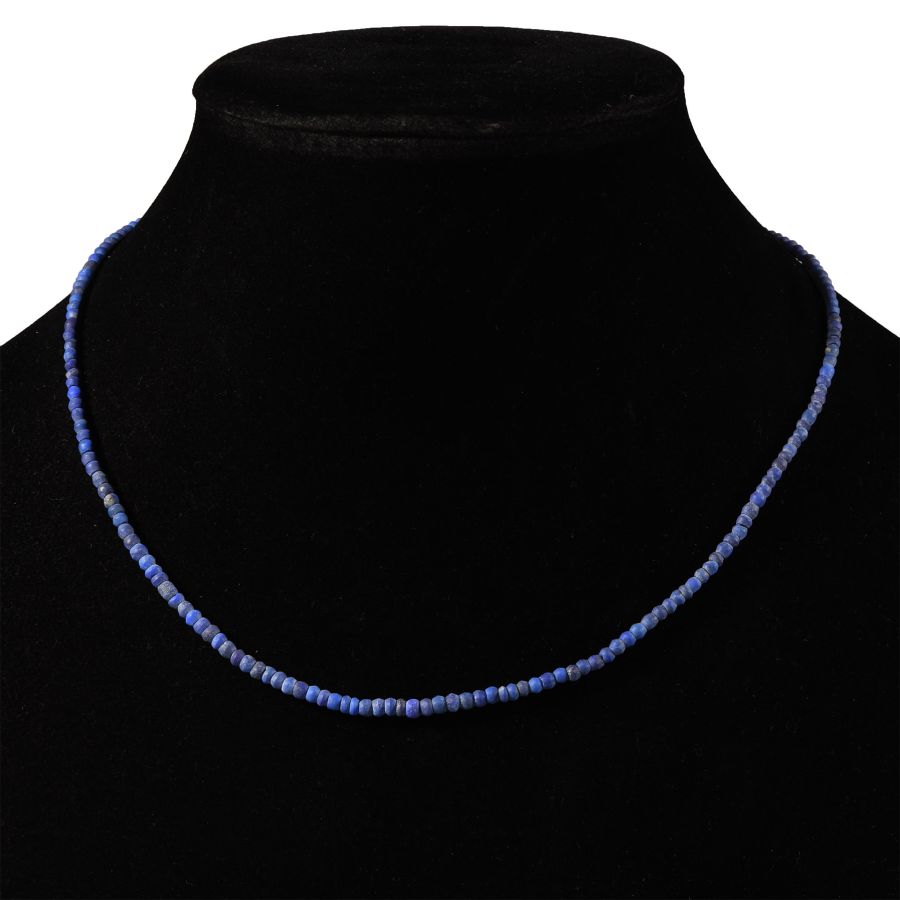
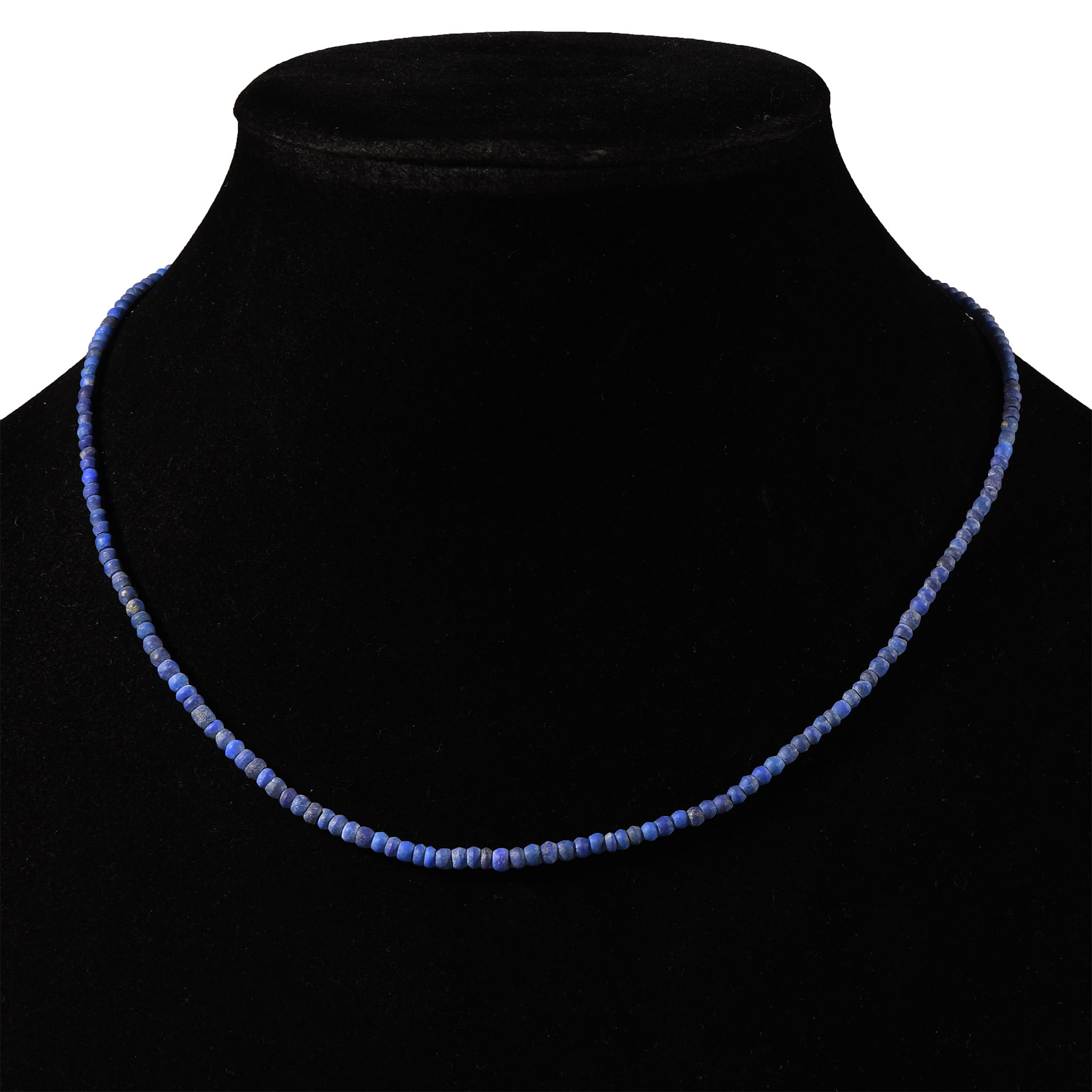
Bactrian Style Lapis Lazuli Bead Necklace String
20TH CENTURY A.D.
16 1/2 in. (5.7 grams, 42 cm).
Mainly annular and biconical seed beads. [No Reserve]
ProvenanceLondon, UK, art market, 1980-2000s
CONDITIONTimeLine Auctions follows a vetting process to ensure the authenticity and legality of all items, reinforcing our commitment to integrity and responsible trading. Each antiquity, antique, and coin lot undergoes thorough examination by a vetting committee of at least ten external specialists, professional trade association members, scientists, and archaeologists: Our Vetting Process
AUCTIONS:
TimeLine is a leading auction house specialising in antiquities, ancient art, collectables, natural history, coins, medals, and books. Our auctions offer museums, collectors, historians, and enthusiasts the opportunity to acquire unique and historically significant pieces.
-
.jpg)
Indus Valley Style Terracotta Bull Figure
20th century A.D.Sold for (Inc. bp): £59
Model zebu with applied black linear ornament. 350 grams, 16 cm
From the property of the late Mr SM, London, UK, 1969-1999. -
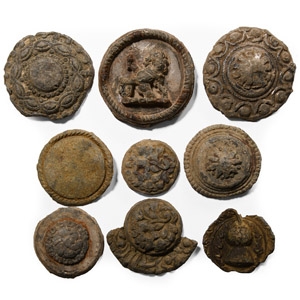
Post Medieval Pewter Horse Harness Mount Collection
16th-19th century A.D.Sold for (Inc. bp): £1
Mostly discoid in plan with stepped profile, central rosette and high-relief detailing to the outer edge; many of these objects are published in the Detector Finds book series. 569 grams total, 35-59 mm
From the collection of the famous author, writer and speaker, Gordon Bailey, Essex, UK; formed since 1968. -
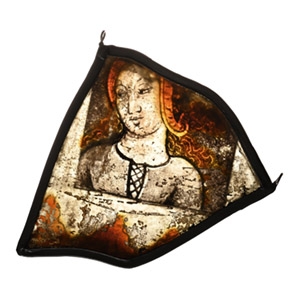
Renaissance Stained Glass Panel of a Woman Praying from a Window
Northern France, 1500-1525 A.D.Sold for (Inc. bp): £845
Irregular figural panel with polychrome bust of a young female in a front-laced bodice, with amber-yellow hair worn loose, her eyes downcast, confined within a rectangular frame; possibly in the act of meditation or silent prayer; framed with a lead came and two suspension loops. 104 grams, 12 cm
Galerie de Chartres, 8 March 2009. Ex central London gallery.
