
Loading, please wait...
LOT 2137
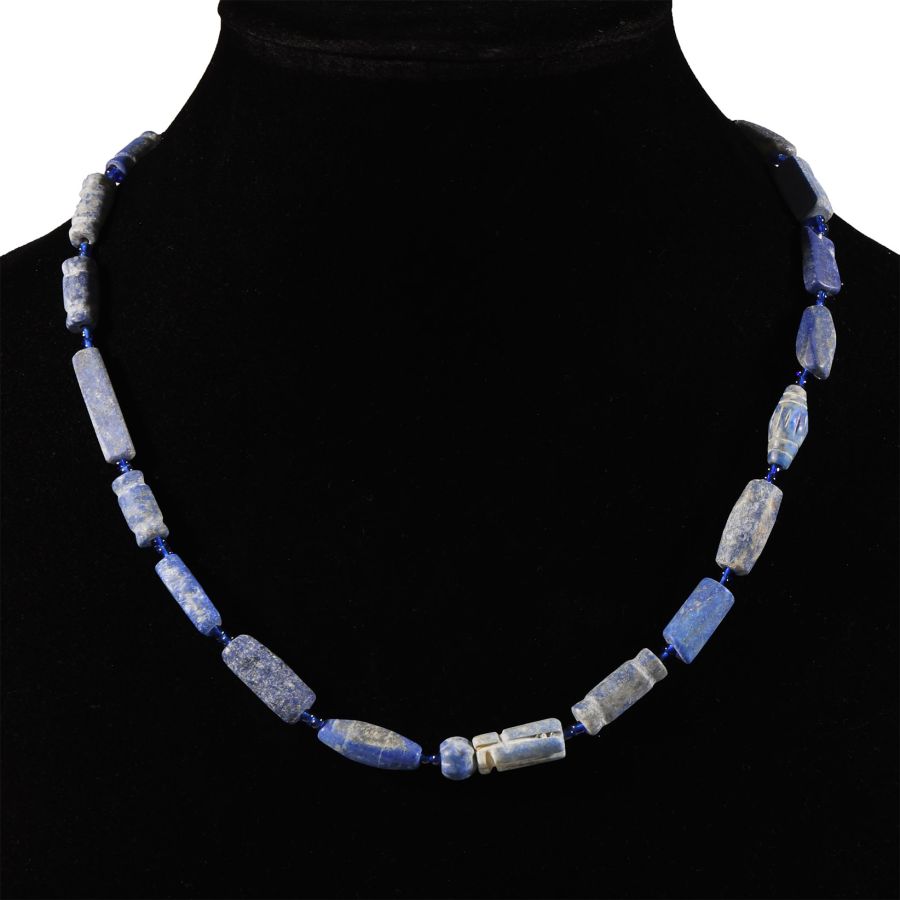
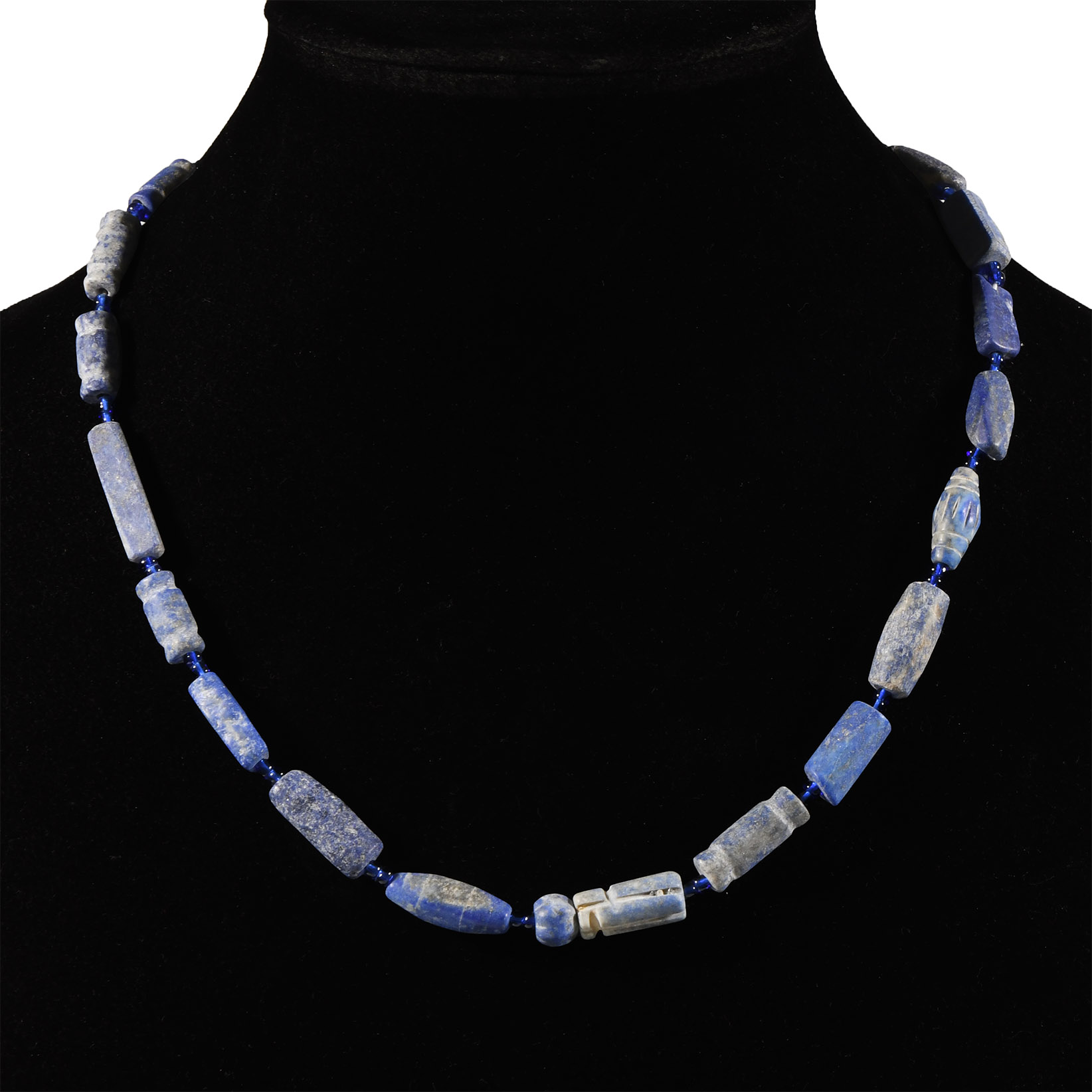
Bactrian Style Lapis Lazuli Bead Necklace String
20TH CENTURY A.D.
16 1/2 in. (33.8 grams, 42 cm).
Graduated group of square-section, fusiform and other beads. [No Reserve]
ProvenanceLondon, UK, art market, 1980-2000s
CONDITIONTimeLine Auctions follows a vetting process to ensure the authenticity and legality of all items, reinforcing our commitment to integrity and responsible trading. Each antiquity, antique, and coin lot undergoes thorough examination by a vetting committee of at least ten external specialists, professional trade association members, scientists, and archaeologists: Our Vetting Process
AUCTIONS:
TimeLine is a leading auction house specialising in antiquities, ancient art, collectables, natural history, coins, medals, and books. Our auctions offer museums, collectors, historians, and enthusiasts the opportunity to acquire unique and historically significant pieces.
-
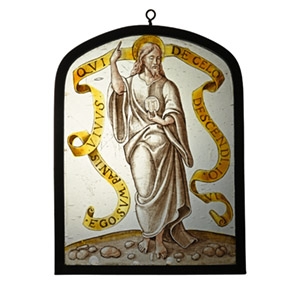
Renaissance Stained Glass Panel of Christ as the Living Bread
Low Countries, circa 1550-1575 A.D.Sold for (Inc. bp): £3,380
Figural tongue-shaped panel standing nimbate figure in loose robe holding a disc (slice of bread) to his chest and pointing above his head, in a stony landscape; with looped and draped scroll inscribed 'Ego sum panis vivus qui de caelo descendi .Io.VI' (I am the living bread which descended from heaven. John 6:51); in framed with a lead came and with a suspension loop above. 193 grams, 17.7 cm
De Baecque Vente aux enchere, 8 June 2023, no.511 (part). Ex central London gallery. -
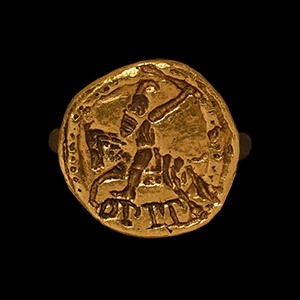
Medieval Style Gold Signet Ring with Knight on Horseback
20th century A.D.Sold for (Inc. bp): £598
Substantial hoop with discoid bezel, low-relief figure of a charging horseman; in 10th century A.D. Italian style. 12.2 grams, 25.06 mm overall, 18.10 mm internal diameter (approximate size British Q, USA 8, Europe 17.49, Japan 16)
Acquired in France in the 1990s. Property of a North American gallery. -
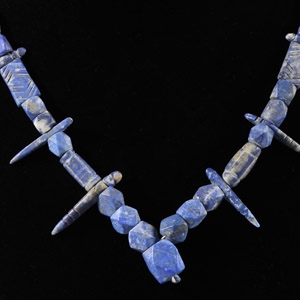
Bactrian Style Lapis Lazuli Bead Necklace String
20th century A.D.Sold for (Inc. bp): £26
Graduated group of beads, mainly polyhedral, tubular and square-section types with and transverse spikes. 50.9 grams, 42 cm
London, UK, art market, 1980-2000s.
