
Loading, please wait...
LOT 1995
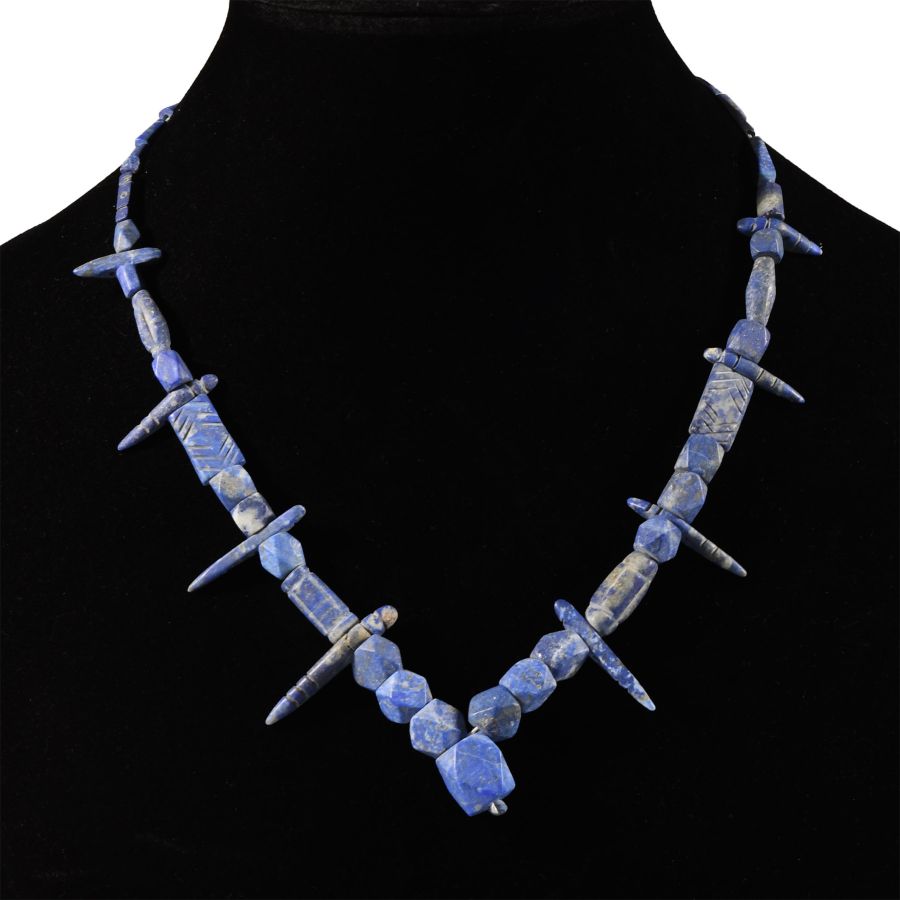
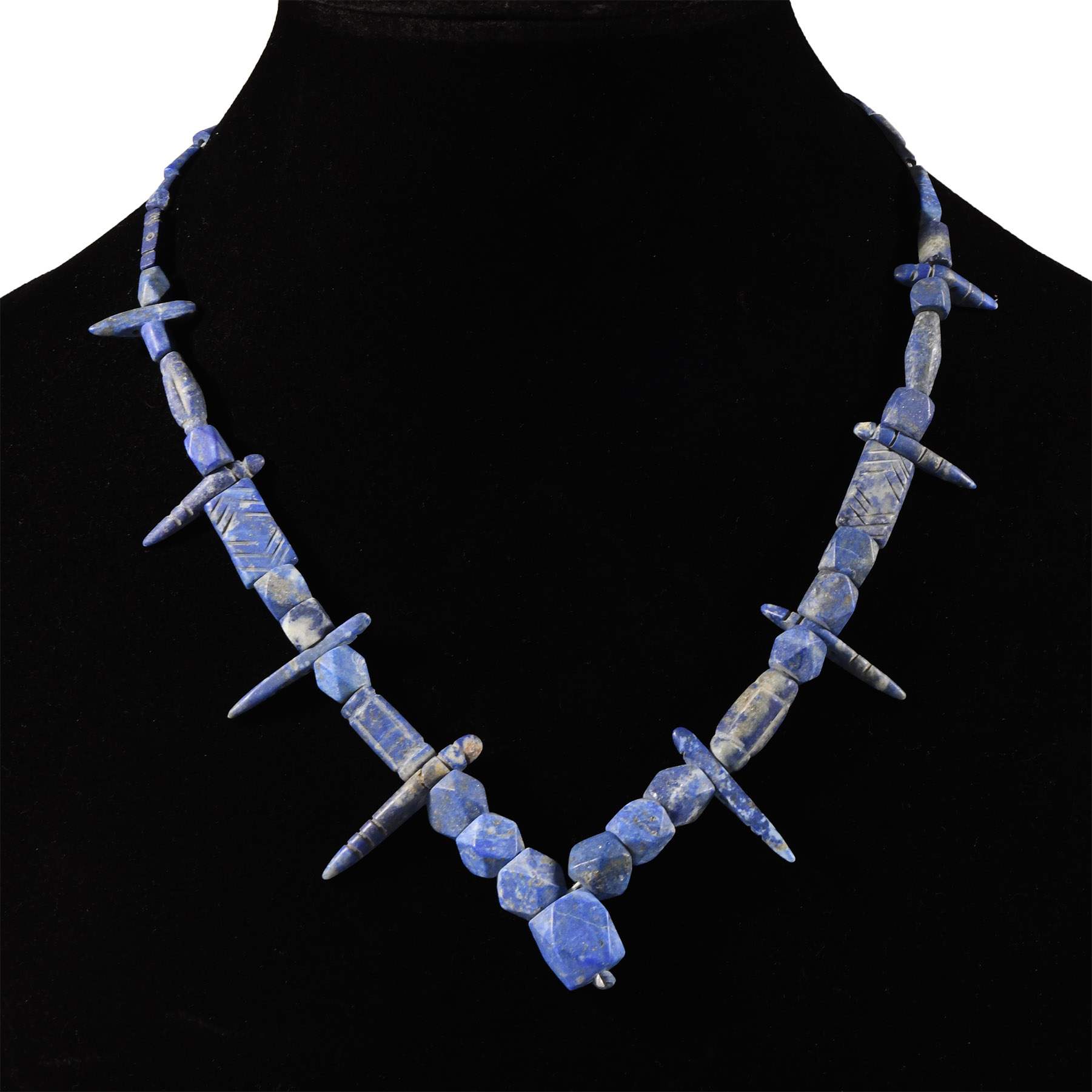
Bactrian Style Lapis Lazuli Bead Necklace String
20TH CENTURY A.D.
16 1/2 in. (50.9 grams, 42 cm).
Graduated group of beads, mainly polyhedral, tubular and square-section types with and transverse spikes. [No Reserve]
ProvenanceLondon, UK, art market, 1980-2000s.
CONDITIONTimeLine Auctions follows a vetting process to ensure the authenticity and legality of all items, reinforcing our commitment to integrity and responsible trading. Each antiquity, antique, and coin lot undergoes thorough examination by a vetting committee of at least ten external specialists, professional trade association members, scientists, and archaeologists: Our Vetting Process
AUCTIONS:
TimeLine is a leading auction house specialising in antiquities, ancient art, collectables, natural history, coins, medals, and books. Our auctions offer museums, collectors, historians, and enthusiasts the opportunity to acquire unique and historically significant pieces.
-
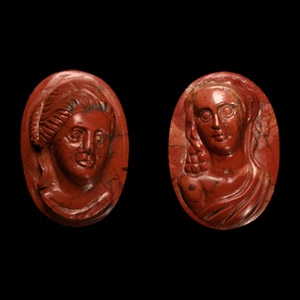
Neoclassical Red Jasper Cameo Pair
20th century A.D.Sold for (Inc. bp): £13
Comprising: mature female mask with swept hair in three-quarter view; youthful female bust in three-quarter view with hair cascading in ringlets, peplos with right shoulder exposed. 9.05 grams total, 25 mm each
Private collection, England. -
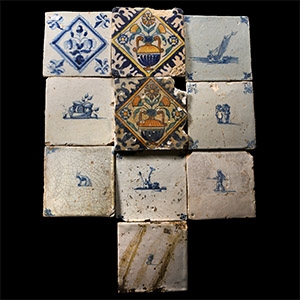
Post Medieval Dutch Glazed Ceramic Tile Group
Circa 17th-18th century A.D.Sold for (Inc. bp): £78
Composed mainly of blue and white glazed tiles displaying sailing vessels, still life scenes, figural vignettes, animals, polychrome floral motifs and others. 3.4 kg total, 12.5 x 13 - 13 x 13.3 cm
Acquired 1990s-early 2000s. East Anglian private collection. -

Renaissance Stained Glass Panel of a Grotesque Head in Profile
Northern France, probably Champagne, circa 1540 A.D.Sold for (Inc. bp): £143
Figural panel with profile head wearing a draped fabric covering knotted at the rear, the eyes cast upwards and mouth agape, with wispy facial hair; scrolled arm from a piece of furniture and other items in the field; lead cames with loop to the upper edge. 124 grams, 16.7 cm
UK trade, 2018. Ex central London gallery.
