
Loading, please wait...
LOT 2076
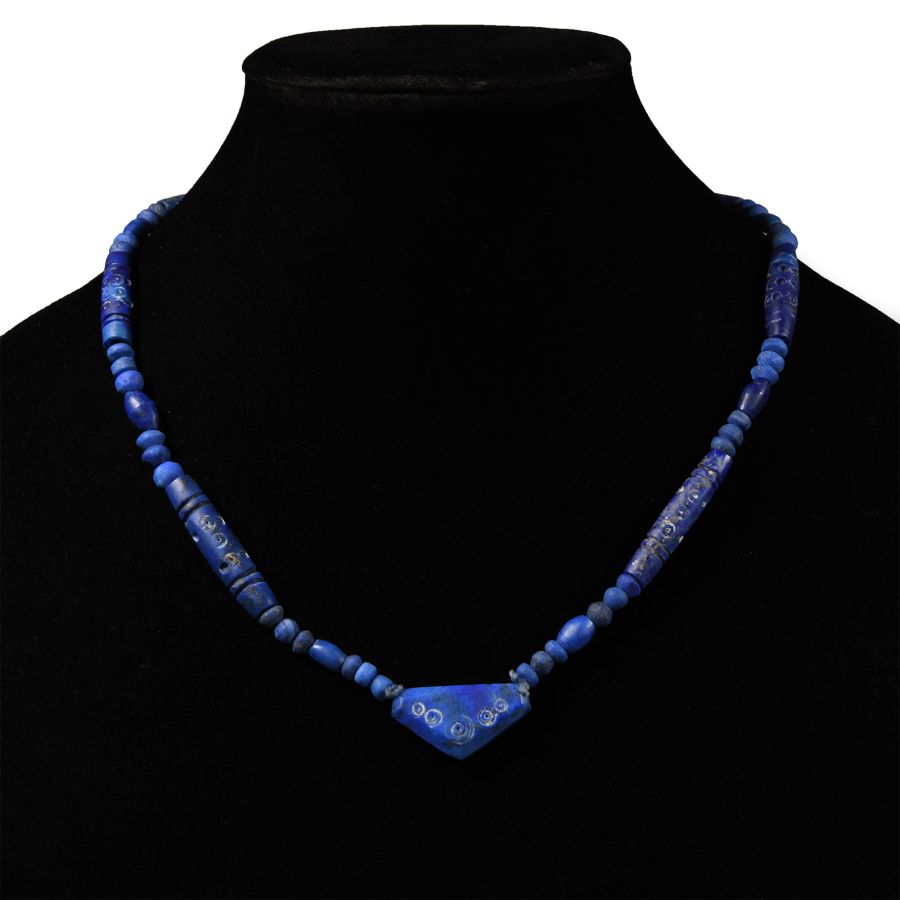
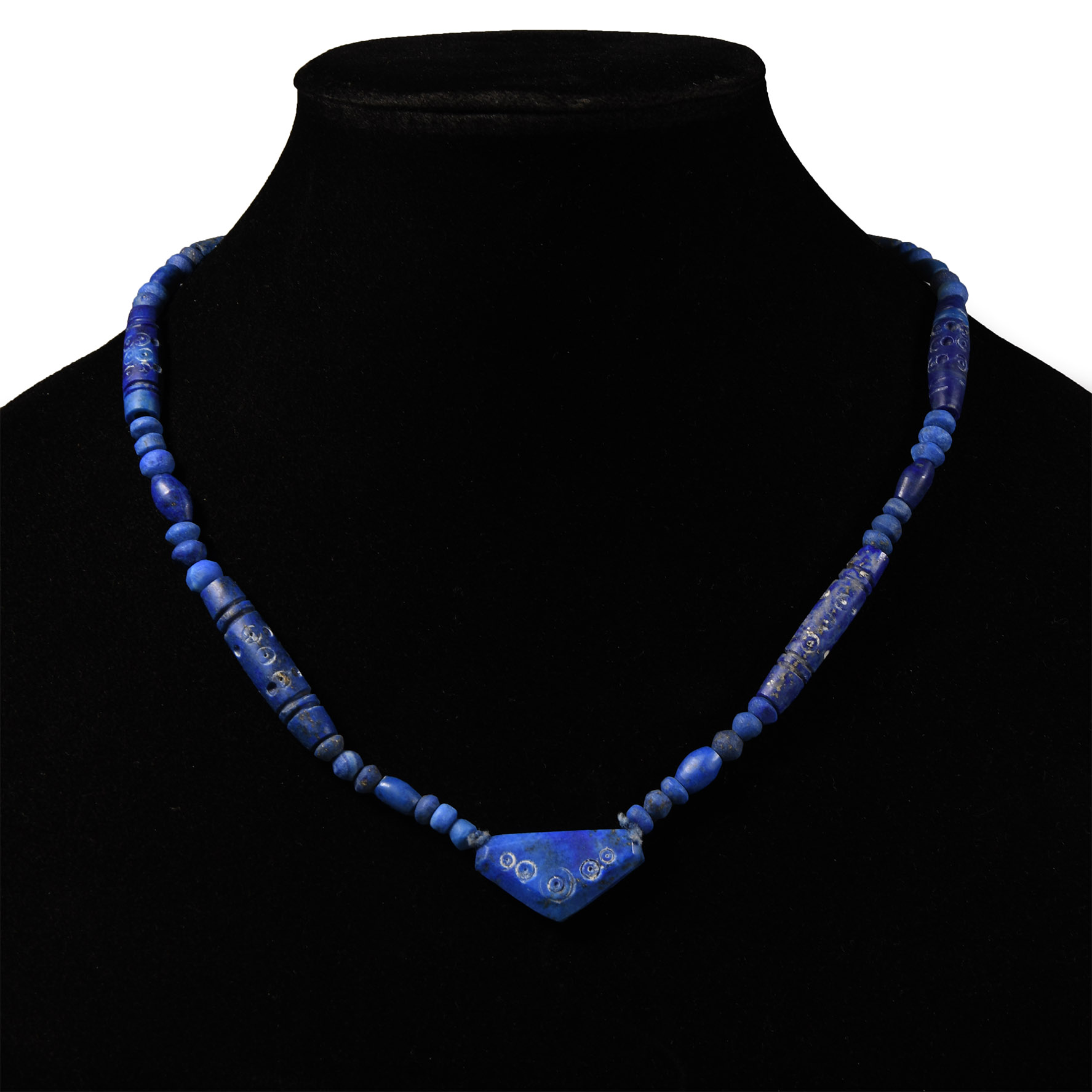
Bactrian Style Lapis Lazuli Bead Necklace String
20TH CENTURY A.D.
18 1/8 in. (39 grams, 46 cm).
Graduated group of beads, mainly tubular, fusiform and annular types with triangular 'elbow' bead centrepiece. [No Reserve]
ProvenanceLondon, UK, art market, 1980-2000s
CONDITIONTimeLine Auctions follows a vetting process to ensure the authenticity and legality of all items, reinforcing our commitment to integrity and responsible trading. Each antiquity, antique, and coin lot undergoes thorough examination by a vetting committee of at least ten external specialists, professional trade association members, scientists, and archaeologists: Our Vetting Process
AUCTIONS:
TimeLine is a leading auction house specialising in antiquities, ancient art, collectables, natural history, coins, medals, and books. Our auctions offer museums, collectors, historians, and enthusiasts the opportunity to acquire unique and historically significant pieces.
-
.jpg)
Post Medieval and Later Artefact Group
Circa 18th-20th century A.D.Sold for (Inc. bp): £13
Mixed large group including horseshoes, furniture fittings, decorative mounts and other items. 2.21 kg total, 46-230mm
Found Hertfordshire, UK. -
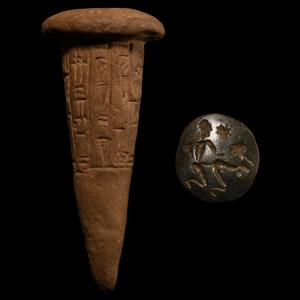
Reproduction Cuneiform Foundation Cone and Erotic Seal Group
20th century A.D.Sold for (Inc. bp): £52
A mixed reproduction group comprising: cuneiform cone for Ishme-Dagan, King of Isin; large plano-convex black stone stamp seal with incuse erotic scene. 363 grams total, 48-147 mm
From a North American gallery. From the estate of Mr R.W., a private Wiltshire, UK, collector; thence by descent. -
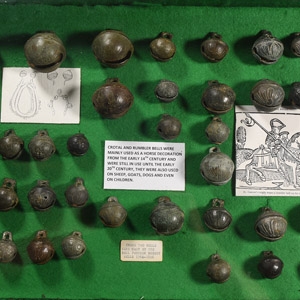
Cased Medieval and Later 'Published' Crotal and Rumbler Bell Collection
14th-19th century A.D.Sold for (Inc. bp): £416
Collection of crotal bells labelled and mounted in a felt-lined glazed wooden display case with explanatory text and illustration; many of these objects are published in the Detector Finds book series. 4.6 kg total, 51 x 35.5 x 8.5 cm
From the collection of the famous author, writer and speaker, Gordon Bailey, Essex, UK; formed since 1968.
