
Loading, please wait...
LOT 1973
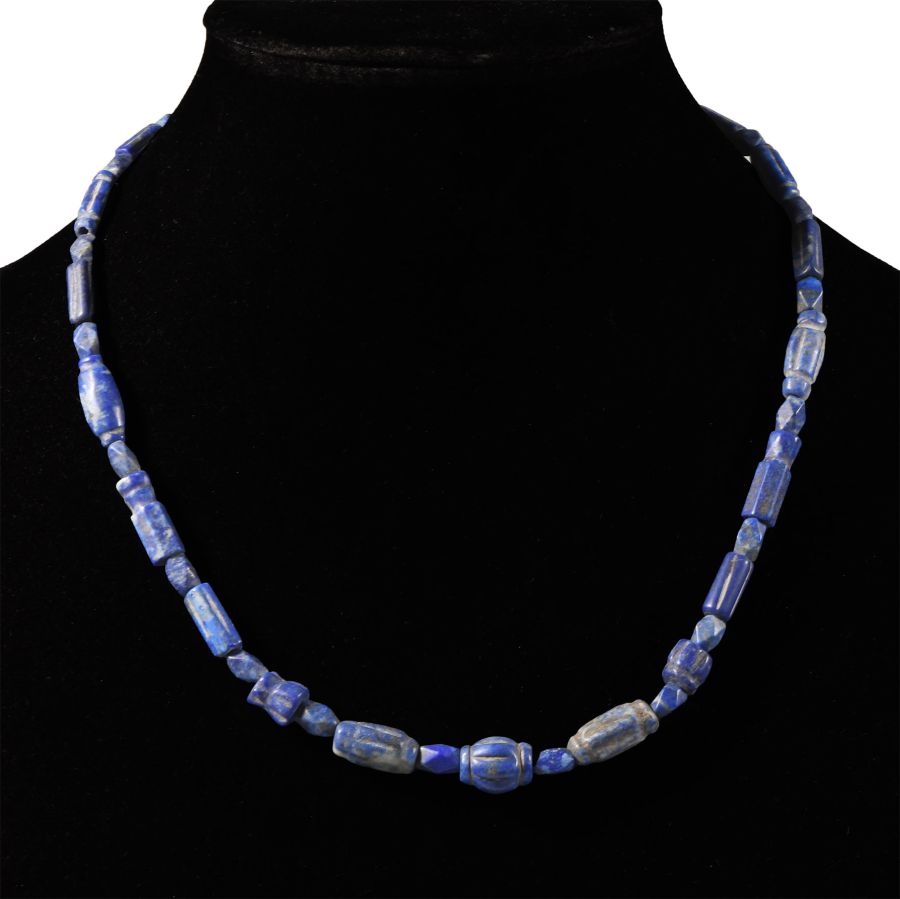
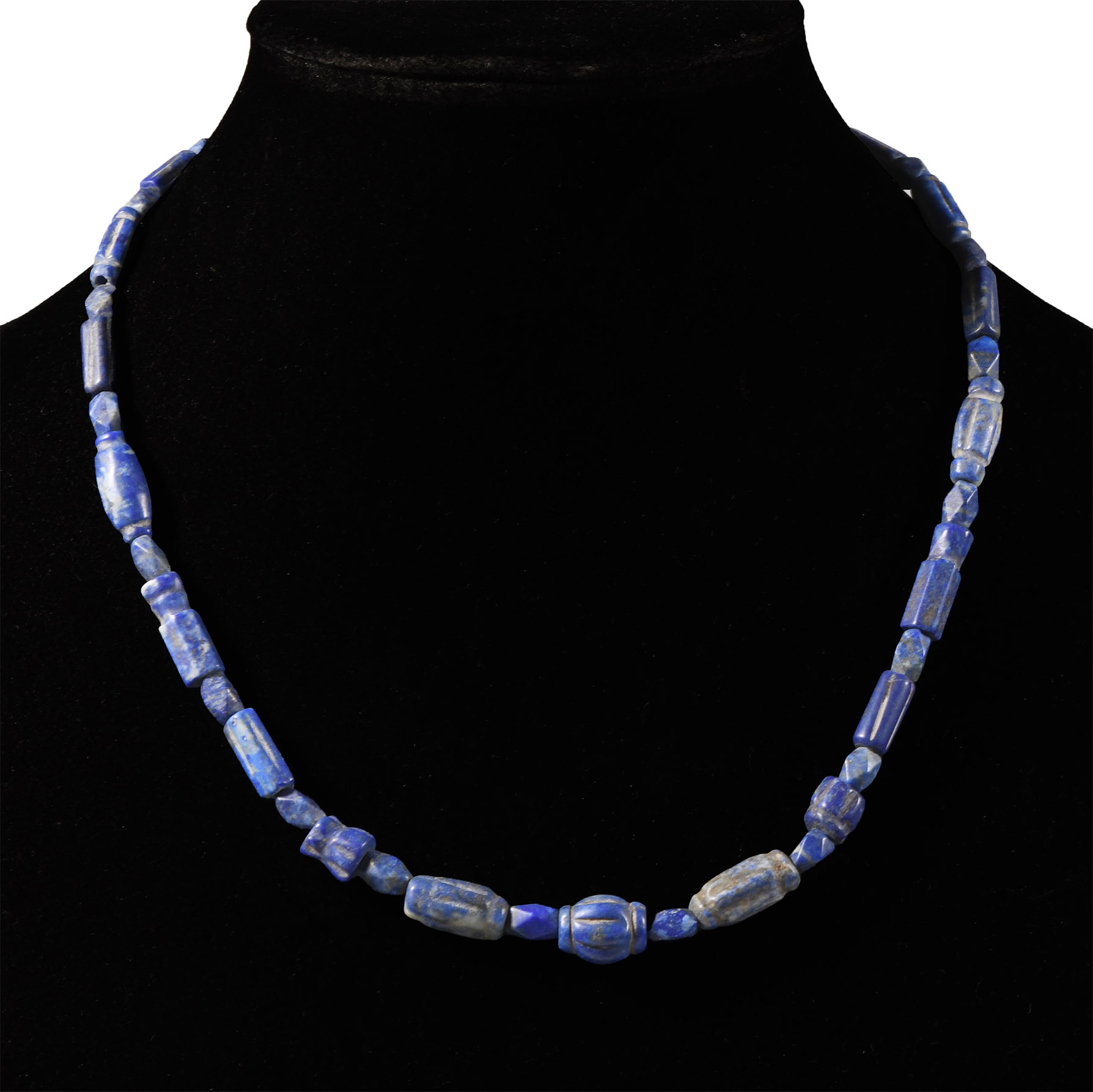
Bactrian Style Lapis Lazuli Bead Necklace String
20TH CENTURY A.D.
17 1/2 in. (33 grams, 44.5 cm).
Graduated group of beads with unusual grooved types. [No Reserve]
ProvenanceLondon, UK, art market, 1980-2000s
CONDITIONTimeLine Auctions follows a vetting process to ensure the authenticity and legality of all items, reinforcing our commitment to integrity and responsible trading. Each antiquity, antique, and coin lot undergoes thorough examination by a vetting committee of at least ten external specialists, professional trade association members, scientists, and archaeologists: Our Vetting Process
AUCTIONS:
TimeLine is a leading auction house specialising in antiquities, ancient art, collectables, natural history, coins, medals, and books. Our auctions offer museums, collectors, historians, and enthusiasts the opportunity to acquire unique and historically significant pieces.
-
Post Medieval Glazed Ceramic Animal Tile Group
17th-18th century A.D.Sold for (Inc. bp): £46
Comprising two tile designs in relief: three horses in an enclosure; two animals, likely cats, fighting; coloured glazes. 1.29 kg total, 9.9 x 9.1 - 10.2 x 9.3 cm
Acquired 1990s-early 2000s. East Anglian private collection.
The tile production increased in the second half of the 16th century and during the following centuries. The fragments discovered from various localities (pot-tiles, rectangular, triangular and trapezoidal panels, open-work crest tiles) were all produced in regional workshops, from the end of the 15th century or at the beginning of the 16th century. They all had diverse decorative motifs, mainly animals and geometrical or vegetal combinations, almost all of them singular finds for this study area. -
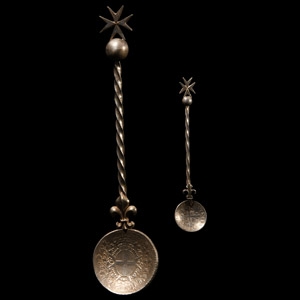
Knights of Malta 'Order of St. John' Silver Spoon Group
Dated 1795 and 1796 A.D.Sold for (Inc. bp): £98
The larger made from a Sovereign Military Order of Malta, Emmanuel de Rohan (1775-1797), Grandmaster, 2 Scudi, dated 1796: F. EMMANUEL DE ROHAN M . M ., armoured bust right, to the reverse crowned oval shield, beaded and spiked, within sprigs, divided date above; the smaller made from a silver Kingdom of Naples 'Ferdinand IV 1 Carlino (10 Grana) dating 1795. 45.08 grams total, 8.6-15.7 cm
Property of a Northamptonshire lady, by descent. -
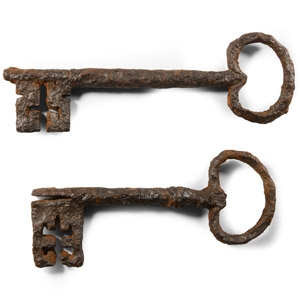
Large Georgian Iron Key Pair
Early 18th century A.D.Sold for (Inc. bp): £33
Comprising one with kidney-shaped bow and square bit with cruciform void, the other similar with slotted forward end to the shank. 236 grams total, 13.7-16.5 cm
Found on various UK sites since 1974. Property of an Essex collector.
