
Loading, please wait...
LOT 1188
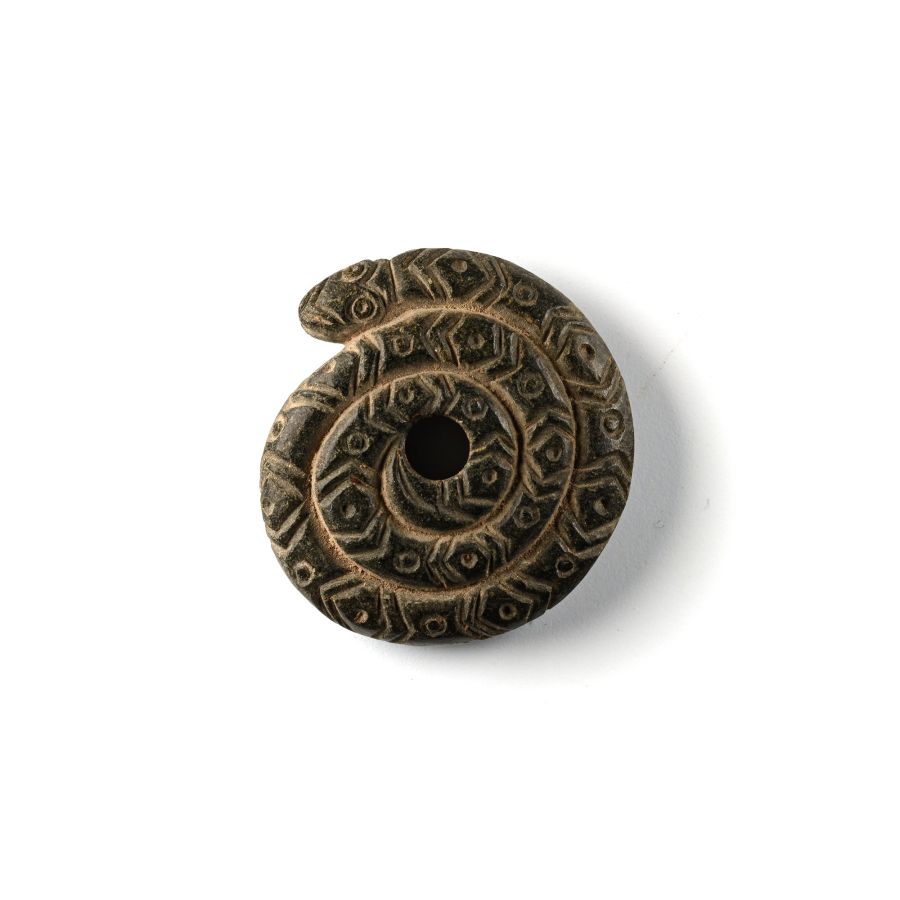
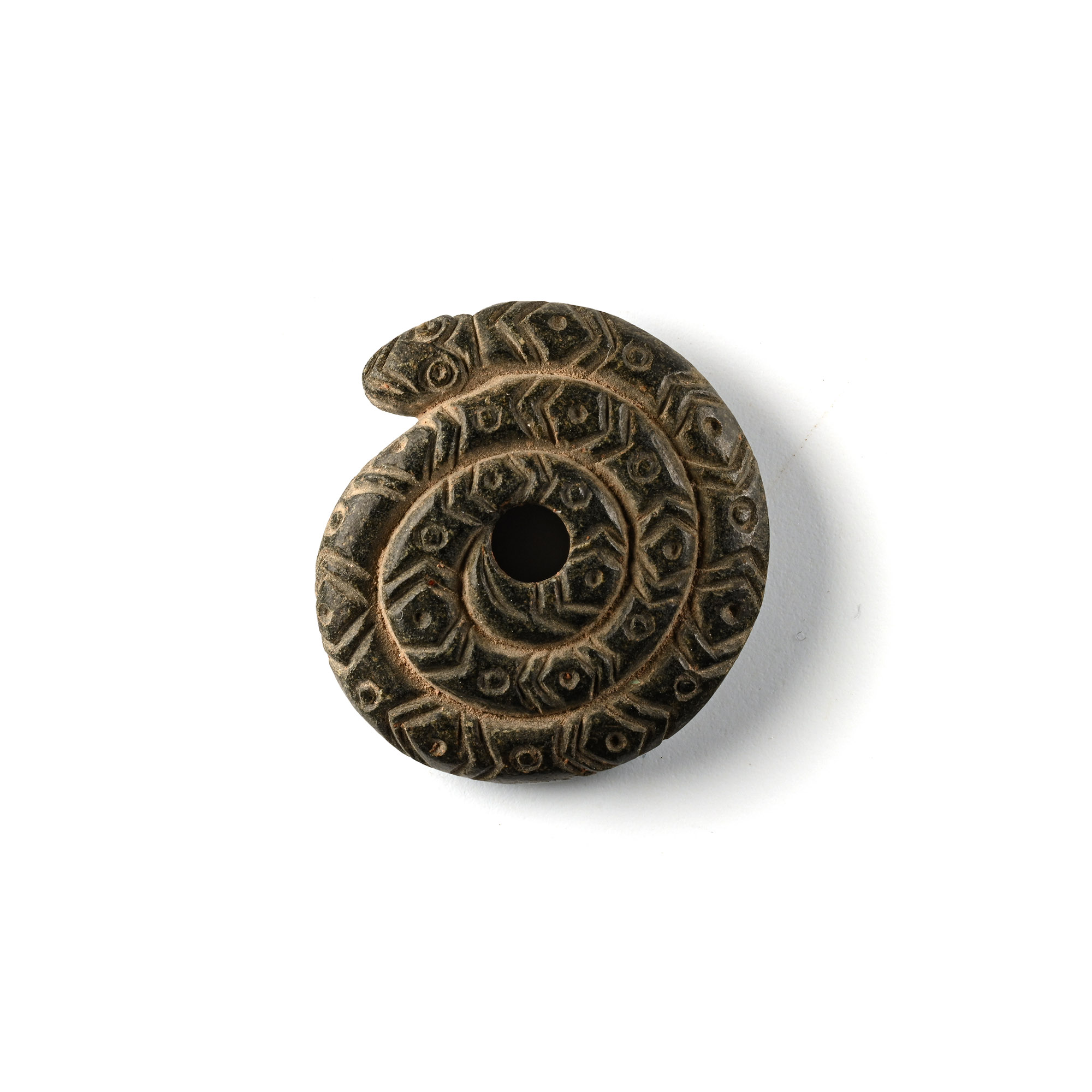
Bactrian Stone Coiled Snake Amulet
3RD-2ND MILLENNIUM B.C.
1 in. (5.68 grams, 26 mm).
Carved steatite pendant of a coiled serpent with central hole; lozenge and angled detailing to obverse.
ProvenancePrivate collection, 1999.
This lot has been cleared against the Art Loss Register database, and is accompanied by an illustrated lot declaration signed by the Head of the Antiquities Department, Dr Raffaele D'Amato.
TimeLine Auctions follows a vetting process to ensure the authenticity and legality of all items, reinforcing our commitment to integrity and responsible trading. Each antiquity, antique, and coin lot undergoes thorough examination by a vetting committee of at least ten external specialists, professional trade association members, scientists, and archaeologists: Our Vetting Process
AUCTIONS:
TimeLine is a leading auction house specialising in antiquities, ancient art, collectables, natural history, coins, medals, and books. Our auctions offer museums, collectors, historians, and enthusiasts the opportunity to acquire unique and historically significant pieces.
LOT 1188
Bactrian Stone Coiled Snake Amulet
Estimate £700 - 900€810 - 1,040 (for guidance only)$950 - 1,220 (for guidance only)
-
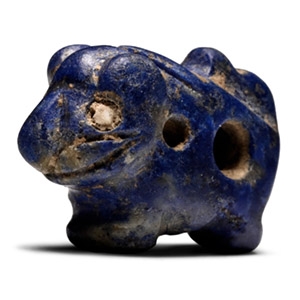
Western Asiatic Lapis Lazuli Animal Bead
1st millennium B.C.Sold for (Inc. bp): £468
Modelled in the round with transverse piercing behind the shoulder. 2.72 grams, 17 mm
Acquired before 1983. Ex London gallery, 1990s. This lot has been cleared against the Art Loss Register database, and is accompanied by an illustrated lot declaration signed by the Head of the Antiquities Department, Dr Raffaele D'Amato. -
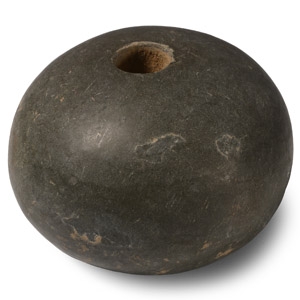
Western Asiatic Stone Macehead
3rd-2nd millennium B.C.Sold for (Inc. bp): £117
Donut-shaped and drilled vertically to accommodate a wooden shaft. 502 grams, 78 mm
From a West London, UK, collection, 1980-1990s. This lot has been cleared against the Art Loss Register database, and is accompanied by an illustrated lot declaration signed by the Head of the Antiquities Department, Dr Raffaele D'Amato. -
.jpg)
Western Asiatic Cobalt-Blue Footed Bowl
9th century A.D.Estimate: £7,000 - 9,000 (+bp*)
Opening Bid: £3,150
With carinated sidewall, rolled and everted rim, shallow foot; partial lustre-glaze to surface with four trapezoidal panels: two with reserved regardant bird and two with tracery motif. 498 grams, 18.5 cm
Private collection, Japan, acquired prior to 1982. Private collection, U.K. This lot has been checked against the Interpol Database of stolen works of art and is accompanied by a search certificate number no.12724-235155. This lot has been cleared against the Art Loss Register database, and is accompanied by an illustrated lot declaration signed by the Head of the Antiquities Department, Dr Raffaele D'Amato.
