
Loading, please wait...
LOT 0184
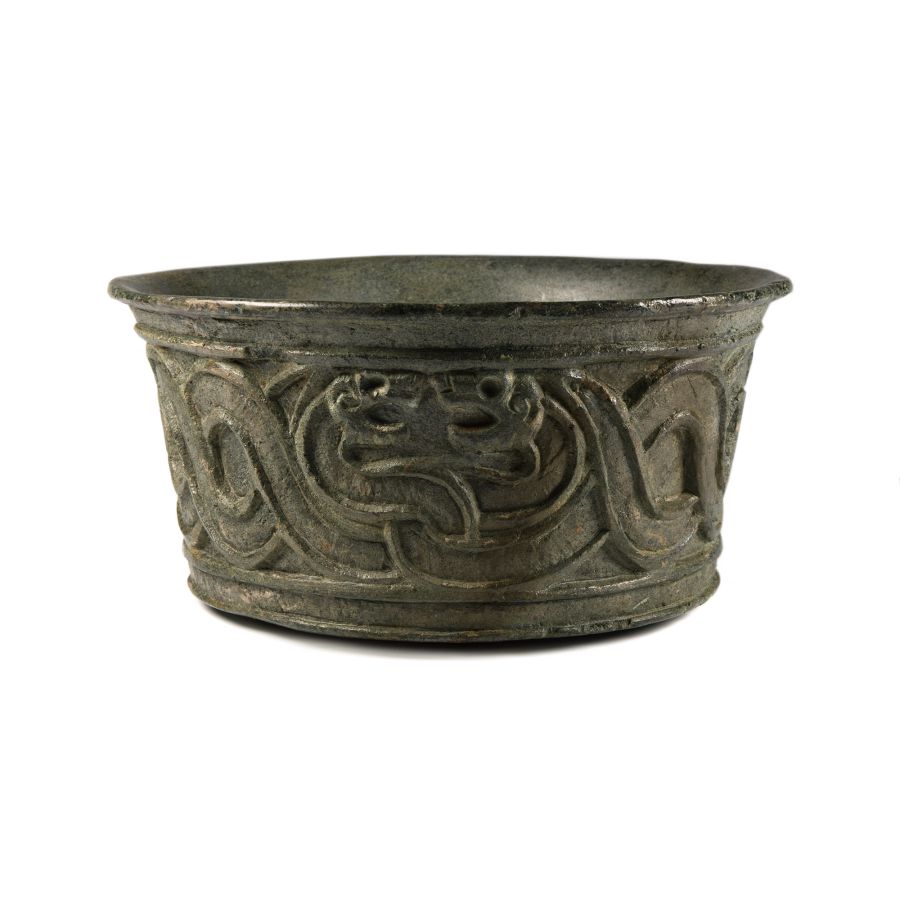
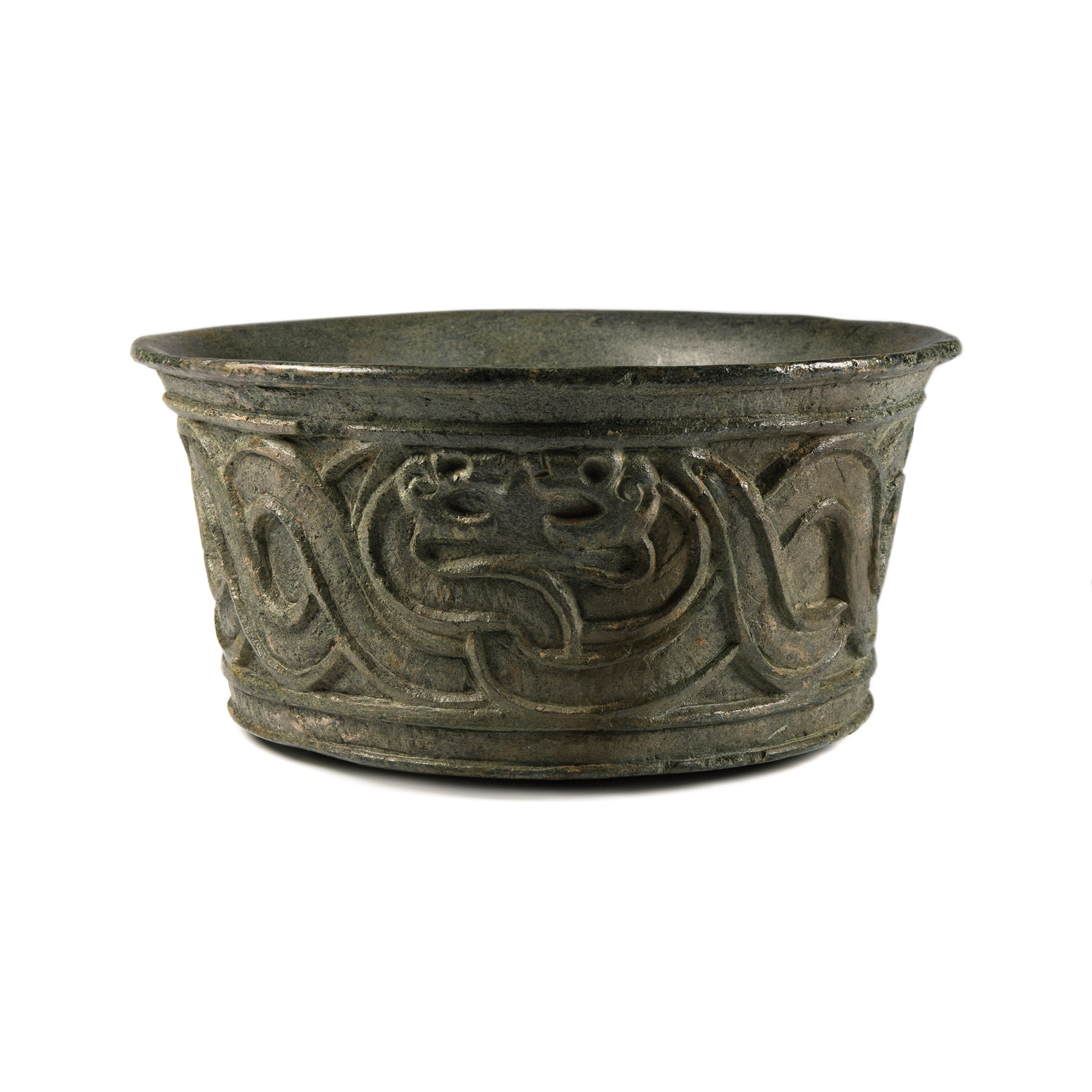
Bactrian Stone Bowl with Snakes
3RD-2ND MILLENNIUM B.C.
6 3/4 in. (881 grams, 17 cm).
Carved with squat, vertical sidewall and everted rim, frieze of entwined snakes with opposed heads between raised bands around the body.
ProvenanceAcquired from a French gallery in 1982; thence by descent.
LiteratureCf. Aruz, J. ed., Art Of The First Cities: The Third Millennium B.C. from the Mediterranean to the Indus, The Metropolitan Museum of Art, New York, 2003, p. 326, for similar.
FootnotesThe stone is likely chlorite.
CONDITIONTimeLine Auctions follows a vetting process to ensure the authenticity and legality of all items, reinforcing our commitment to integrity and responsible trading. Each antiquity, antique, and coin lot undergoes thorough examination by a vetting committee of at least ten external specialists, professional trade association members, scientists, and archaeologists: Our Vetting Process
AUCTIONS:
TimeLine is a leading auction house specialising in antiquities, ancient art, collectables, natural history, coins, medals, and books. Our auctions offer museums, collectors, historians, and enthusiasts the opportunity to acquire unique and historically significant pieces.
LOT 0184
Bactrian Stone Bowl with Snakes
Estimate £800 - 1,000€930 - 1,160 (for guidance only)$1,080 - 1,350 (for guidance only)
-
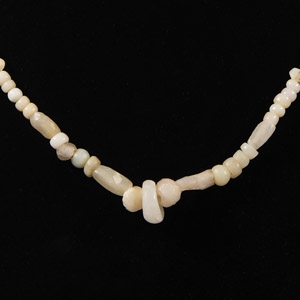
Western Asiatic Stone Bead Necklace
1st millennium B.C. and laterSold for (Inc. bp): £13
Composed of graduated, mainly cream-coloured agate, quartz and shell beads of various types, including spherical, coin-shaped, oblate and other types; restrung. 19.3 grams, 61 cm long
Ex W.J. collection, 1990s. -
.jpg)
Central Asian Ceramic Bull Rhyton with Juglets
3rd century B.C.-3rd century A.D.Sold for (Inc. bp): £3,120
Modelled with a substantial body standing on short, slender legs, crescentic horns, incised circular eyes and linear mouth, circular nostrils above serving as spouts, dewlap to chest and tail hanging between hindlegs; flared neck and strap handle to back, flanked by flasks with pierced handles; painted detailing; some restoration. 1.55 kg, 35.7 cm
Ex private American collection, kept in Switzerland, 1960s. On the UK art market, since 2005. Accompanied by an IADAA search certificate dated 8 April 2020. Accompanied by a copy of an old photograph and a description sticker with collection number '40' to verso. This lot has been checked against the Interpol Database of stolen works of art and is accompanied by search certificate no.202211. -
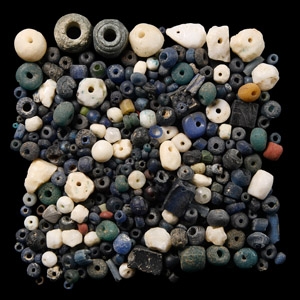
Western Asiatic Mixed Bead Group
1st millennium B.C. and laterEstimate: £100 - 140 (+bp*)
Opening Bid: £50
Comprising glass, shell and stone beads of cylindrical, oblate, spherical and other types. 89 grams total, 2-15 mm
Acquired 1970-2010. Collection of a late Japanese gentleman.
