
Loading, please wait...


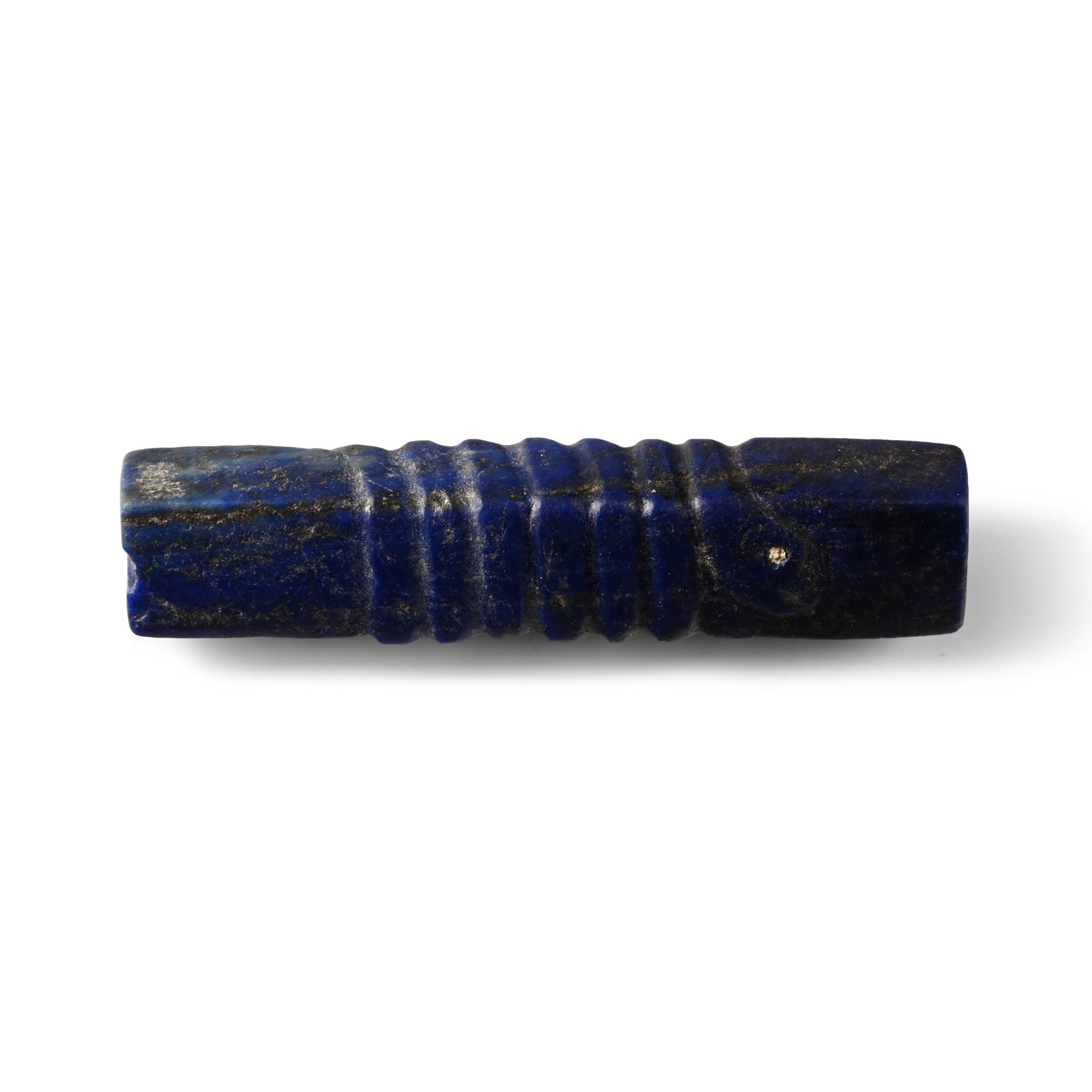
LOT 1368
Bactrian Lapis Lazuli Tubular Bead with Snake
3RD MILLENNIUM B.C.
1 3/8 in. (3.32 grams, 36 mm).
Square in section, tubular bead with reserved coiled serpent, head at each end.
Provenancewith Gallery Rosen Ancient Art, Tel Aviv, 1968.
with a London, UK gallery, 1971-early 2000s.
Includes a copy of the original 1968 invoice.
This lot has been cleared against the Art Loss Register database, and is accompanied by an illustrated lot declaration signed by the Head of the Antiquities Department, Dr Raffaele D'Amato.
TimeLine Auctions follows a vetting process to ensure the authenticity and legality of all items, reinforcing our commitment to integrity and responsible trading. Each antiquity, antique, and coin lot undergoes thorough examination by a vetting committee of at least ten external specialists, professional trade association members, scientists, and archaeologists: Our Vetting Process
AUCTIONS:
TimeLine is a leading auction house specialising in antiquities, ancient art, collectables, natural history, coins, medals, and books. Our auctions offer museums, collectors, historians, and enthusiasts the opportunity to acquire unique and historically significant pieces.
LOT 1368
Bactrian Lapis Lazuli Tubular Bead with Snake
Estimate £500 - 700€580 - 810 (for guidance only)$680 - 950 (for guidance only)
-
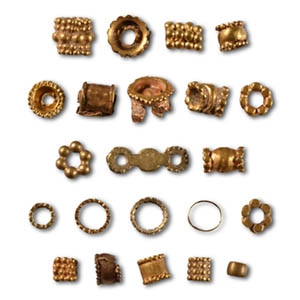
Western Asiatic Mixed Gold Bead Group
1st millennium B.C.Sold for (Inc. bp): £468
Including oblate, barrel-shaped and other types with applied granulation. 5.21 grams total, 2-10 mm
Ex property of a late Japanese collector, 1970-2000s. This lot has been cleared against the Art Loss Register database, and is accompanied by an illustrated lot declaration signed by the Head of the Antiquities Department, Dr Raffaele D'Amato. -
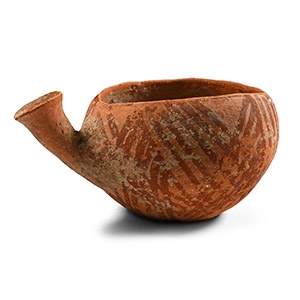
Amlash Terracotta Painted Vessel with Spout
1st millennium B.C.Estimate: £200 - 300 (‡+bp*)
Opening Bid: £100
With rounded body and narrow base, tubular spout with everted rim; the body with intersecting linear decoration. 252 grams, 14.6 cm
with Galerie Rhéa, Zurich, Switzerland. This lot has been cleared against the Art Loss Register database, and is accompanied by an illustrated lot declaration signed by the Head of the Antiquities Department, Dr Raffaele D'Amato. -
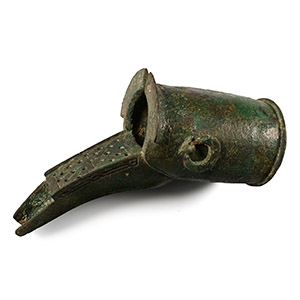
Islamic Bronze Incense Burner Pouring Spout
12th-13th century A.D.Estimate: £200 - 300 (+bp*)
Opening Bid: £100
Tubular in plan with flange above the base, two lateral crescentic loops, partial everted rim with slot and curved rectangular-section spout with pierced strainer. 315 grams, 16.5 cm
Acquired in the late 1980s-early 1990s. Private collection, London. This lot has been cleared against the Art Loss Register database, and is accompanied by an illustrated lot declaration signed by the Head of the Antiquities Department, Dr Raffaele D'Amato.
