
Loading, please wait...
LOT 1098
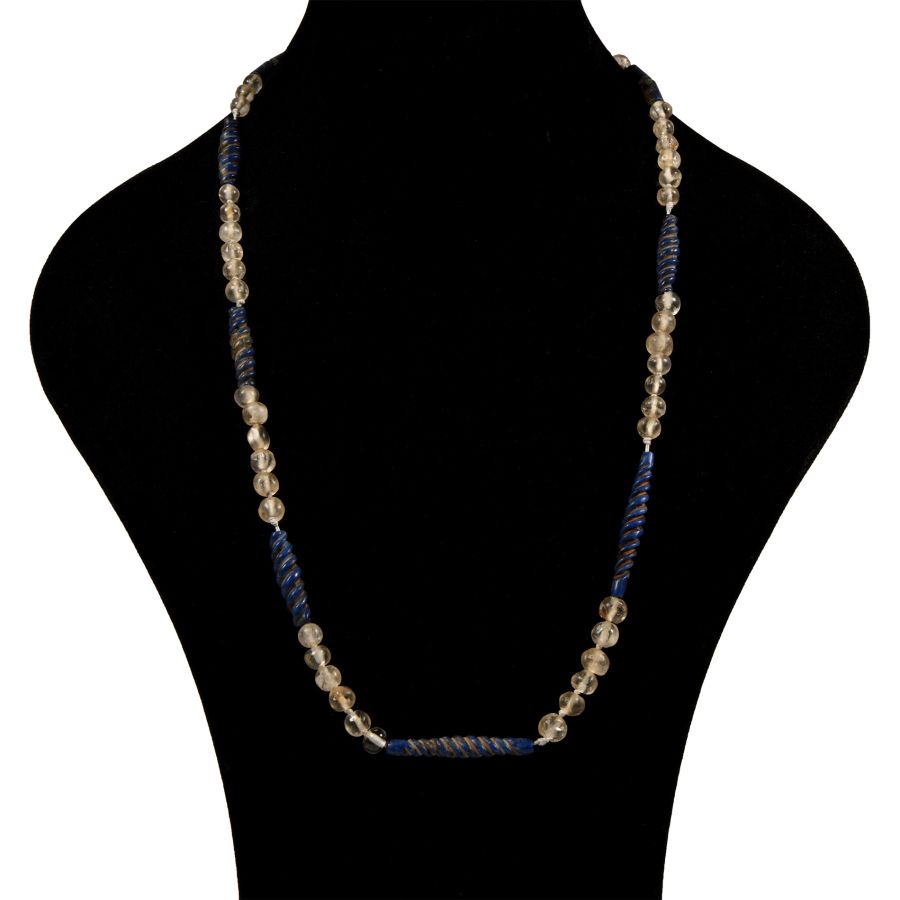
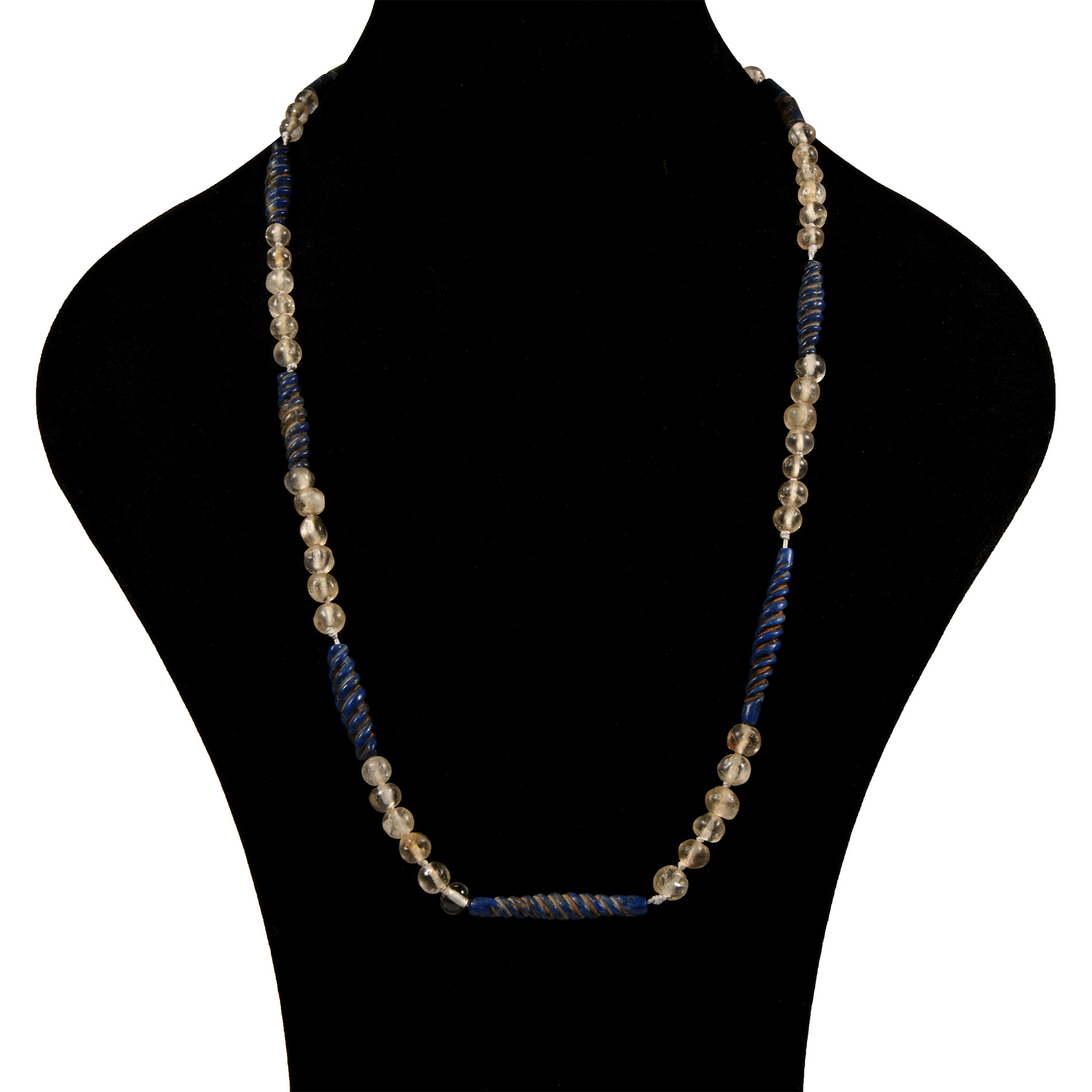
Bactrian Lapis Lazuli Spiral and Rock Crystal Bead Necklace
1ST MILLENNIUM B.C.AND LATER
29 in. (52 grams, 73.5 cm).
Comprising four cylindrical lapis lazuli beads carved with spiral grooves like a screw thread, interspersed with oblate rock crystal beads, ten tubular lapis lazuli beads flanking the modern clasp, restrung.
Provenancewith a London, UK gallery 1971-early 2000s.
CONDITIONTimeLine Auctions follows a vetting process to ensure the authenticity and legality of all items, reinforcing our commitment to integrity and responsible trading. Each antiquity, antique, and coin lot undergoes thorough examination by a vetting committee of at least ten external specialists, professional trade association members, scientists, and archaeologists: Our Vetting Process
AUCTIONS:
TimeLine is a leading auction house specialising in antiquities, ancient art, collectables, natural history, coins, medals, and books. Our auctions offer museums, collectors, historians, and enthusiasts the opportunity to acquire unique and historically significant pieces.
LOT 1098
Bactrian Lapis Lazuli Spiral and Rock Crystal Bead Necklace
Estimate £700 - 900€810 - 1,040 (for guidance only)$950 - 1,220 (for guidance only)
-
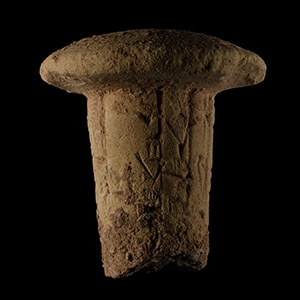
Mesopotamian Terracotta Foundation Nail for Ningirsu, the Strong Hero of Enlil his King, Gudea
3rd-2nd millennium B.C.Sold for (Inc. bp): £390
Conical foundation nail fragment with broad domed top, columns of cuneiform text to the shank: 'dnin-gir -su ur-saĝ-kal-ga- den-lil -la lugal-a-ni gu -de -a ensi ŠIR.BUR.LAki-ke nig -du -e pa mu-na-e e -ninnu AN.IM.DUGUD-babbar -ra-ni mu-na-du ki-bi mu-na-gi', reading: 'Ningirsu, the strong hero of Enlil his king, Gudea, ruler of Lagaš, made ideal values shine and built Eninnu, his white eagle, and restored it'. 355 grams, 95 mm
Acquired in London in 1995. European private collection. -
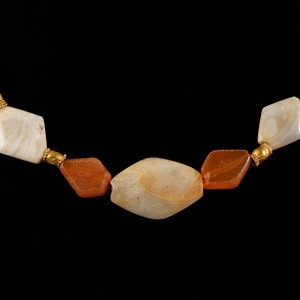
Western Asiatic Gold and Stone Bead Necklace
1st millennium B.C.Estimate: £700 - 900 (+bp*)
Opening Bid: £350
Restrung with gold barrel-shaped spacer beads, agate and carnelian flattish diamond-shaped beads. 48.2 grams, 44.5 cm
Collected from 1969-1999. From the collection of the late Mr S.M., London, UK. Accompanied by a previous catalogue identification card. -
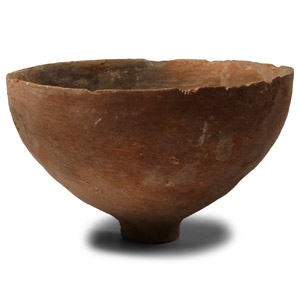
Trans-Jordan Polished Terracotta Bowl
Early Bronze Age, 3rd-2nd millennium B.C.Sold for (Inc. bp): £46
Hemispherical n profile with small foot, dimple to the underside; rim chipped. 145 grams, 65 mm high
From a family collection pre 1988.
