
Loading, please wait...
LOT 0287
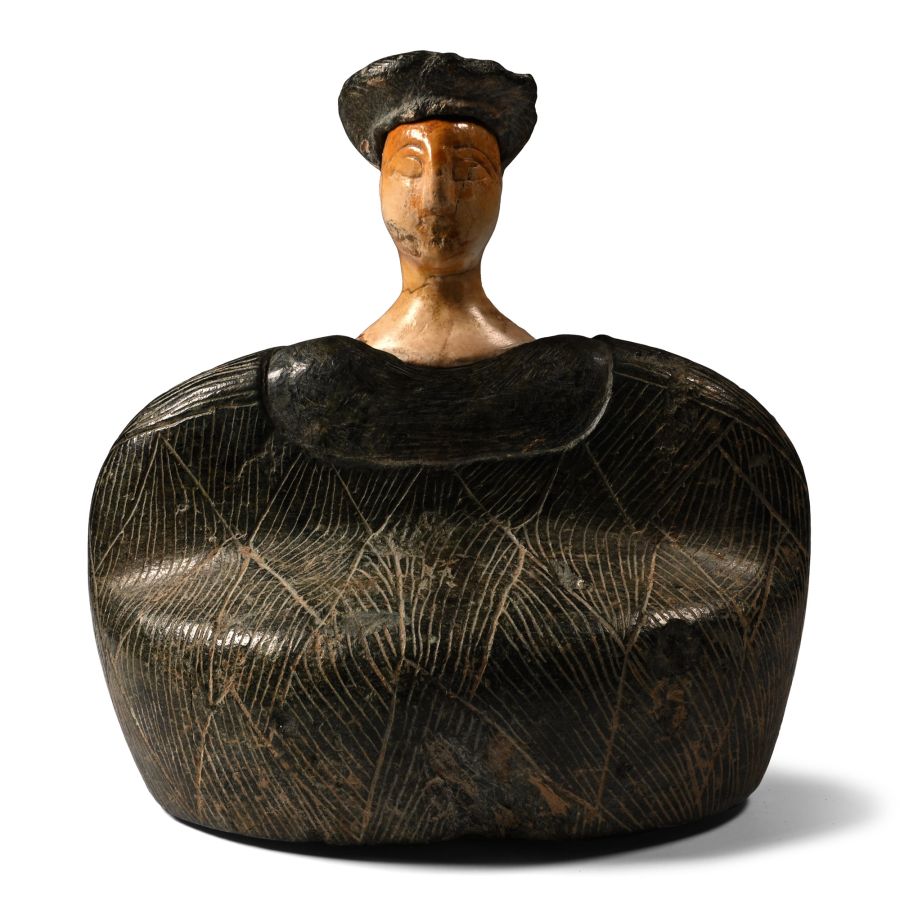
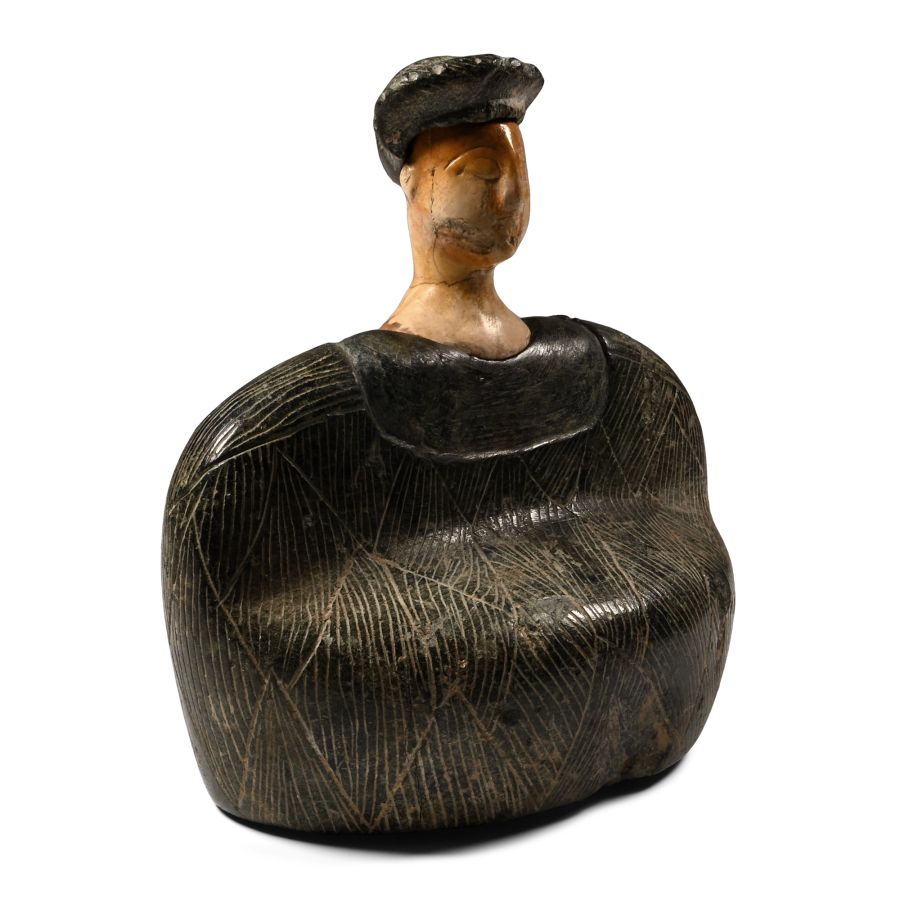
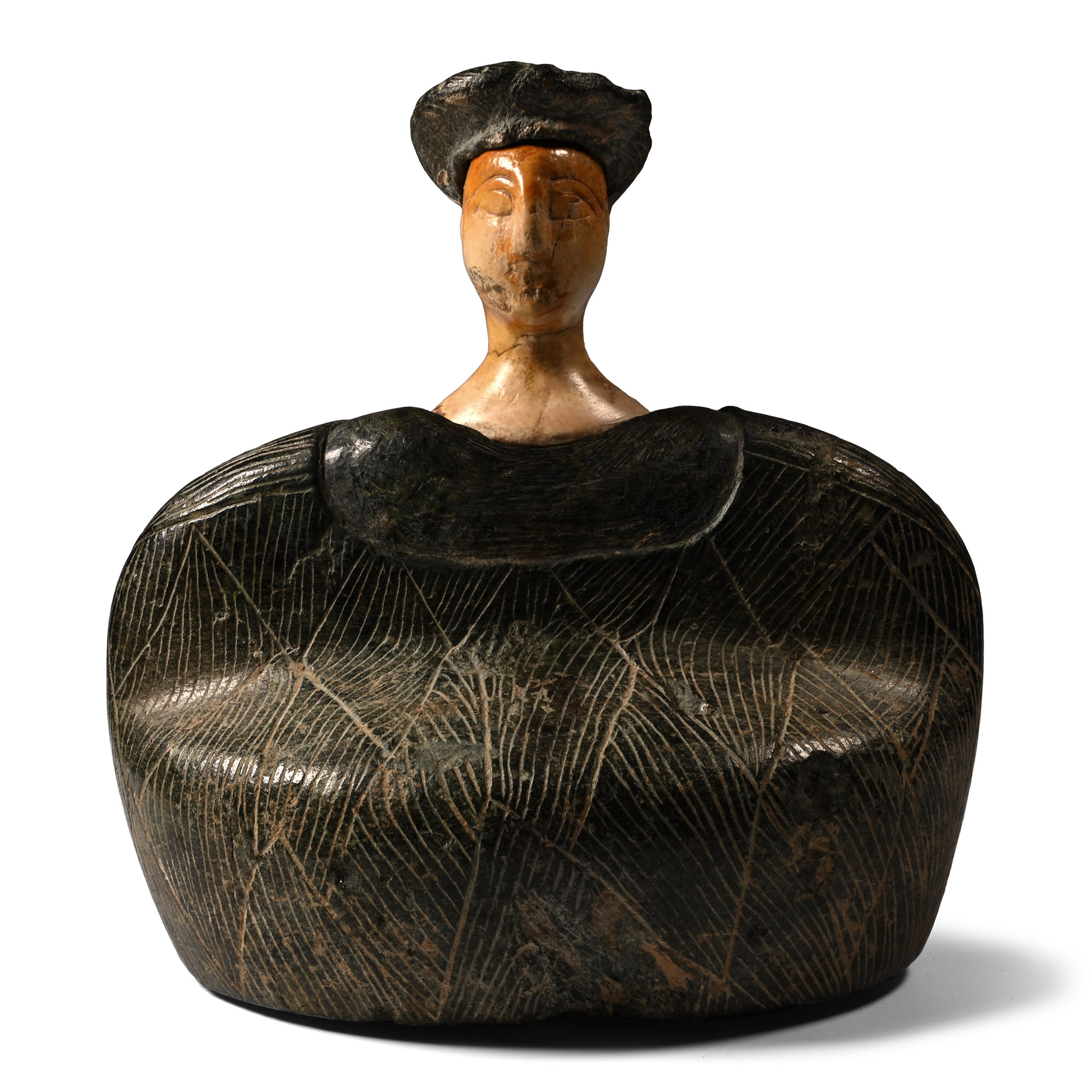
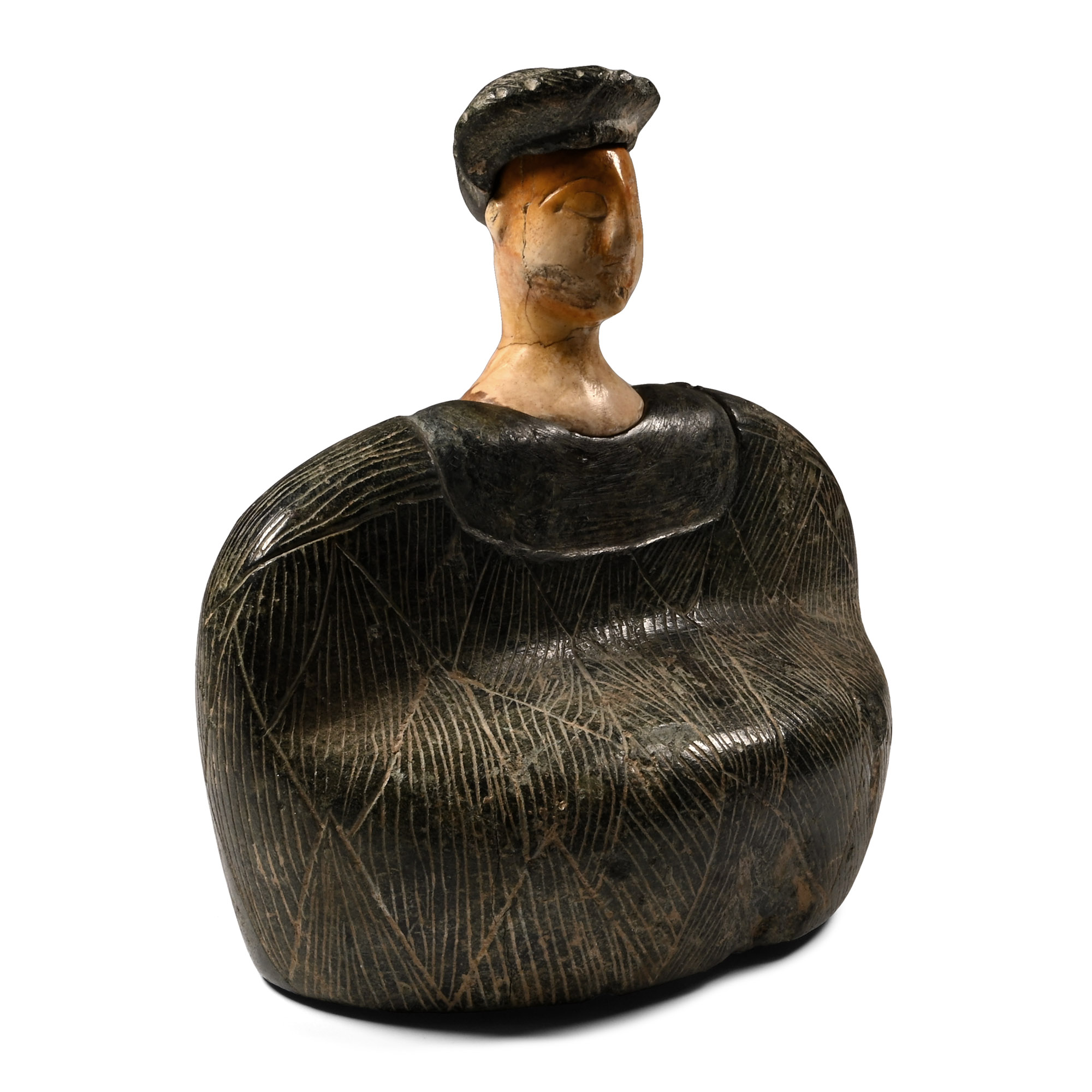
Bactrian Chlorite 'Princess' Idol
LATE 3RD-EARLY 2ND MILLENNIUM B.C.
1 1/2 - 5 1/2 in. (1.54 kg total, 3.9-14 cm).
Carved as a human figure in three parts: body with rows of overlapping tufts of fur, shallow socket to accept the head and broad collar below; the bald head carved from marble with semi-naturalistic detailing to the face; headdress (or wig) with a flared outer flange. [3]
ProvenanceAcquired from a gallery in France and brought to the United Kingdom in 1982; thence by descent.
This lot has been checked against the Interpol Database of stolen works of art and is accompanied by a search certificate number no.12713-235197.
This lot has been cleared against the Art Loss Register database, and is accompanied by an illustrated lot declaration signed by the Head of the Antiquities Department, Dr Raffaele D'Amato.
See Aruz, J., Art of The First Cities: The Third Millennium B.C. from the Mediterranean to the Indus, The Metropolitan Museum of Art, 2003, pp. 367-368, for discussion and similar examples; cf. Hiebert, F. and Cambon, P. edn., Afghanistan: Crossroads of the Ancient World, The British Museum Press, 2011, pp.71-76, for discussion and comparable objects.
CONDITIONTimeLine Auctions follows a vetting process to ensure the authenticity and legality of all items, reinforcing our commitment to integrity and responsible trading. Each antiquity, antique, and coin lot undergoes thorough examination by a vetting committee of at least ten external specialists, professional trade association members, scientists, and archaeologists: Our Vetting Process
AUCTIONS:
TimeLine is a leading auction house specialising in antiquities, ancient art, collectables, natural history, coins, medals, and books. Our auctions offer museums, collectors, historians, and enthusiasts the opportunity to acquire unique and historically significant pieces.
-
Western Asiatic Terracotta Painted Vessel
1st millennium A.D.Sold for (Inc. bp): £39
With barrel-shaped body and narrow foot, trumpet-shaped neck and mouth; circumferential bands to the shoulder with hatching. 62 grams, 73 mm
Acquired before 1983. Ex London gallery, 1990s. This lot has been cleared against the Art Loss Register database, and is accompanied by an illustrated lot declaration signed by the Head of the Antiquities Department, Dr Raffaele D'Amato. -
Royal Stamped Terracotta Jar Handle
Late 8th century B.C.Estimate: £300 - 400 (+bp*)
Opening Bid: £150
The handle fragment from a Tufnell type 484 jar, bearing an oval stamp to the upper handle. 129 grams, 10 cm
Ex S.M. London collection, UK, 1970-1990s. Accompanied by a description from Peter Gert Van der Veen, senior lecturer of Levantine Archaeology, Johannes Gutenberg-Universität, Mainz. This lot has been cleared against the Art Loss Register database, and is accompanied by an illustrated lot declaration signed by the Head of the Antiquities Department, Dr Raffaele D'Amato. -
.jpg)
Kushan Turquoise-Glazed Bowl
12th-13th century A.D.Estimate: £1,800 - 2,400 (+bp*)
Opening Bid: £1,000
Footed bowl with painted black rim and vertical strokes to the outer face, eight painted internal segments with lattice, scrolls and other ornament. 473 grams, 20 cm wide
Ex London, UK, gallery, 1971-early 2000s. London, UK, collection. This lot has been checked against the Interpol Database of stolen works of art and is accompanied by a search certificate number no.12722-235581. This lot has been cleared against the Art Loss Register database, and is accompanied by an illustrated lot declaration signed by the Head of the Antiquities Department, Dr Raffaele D'Amato.
