Loading, please wait...
LOT 0895
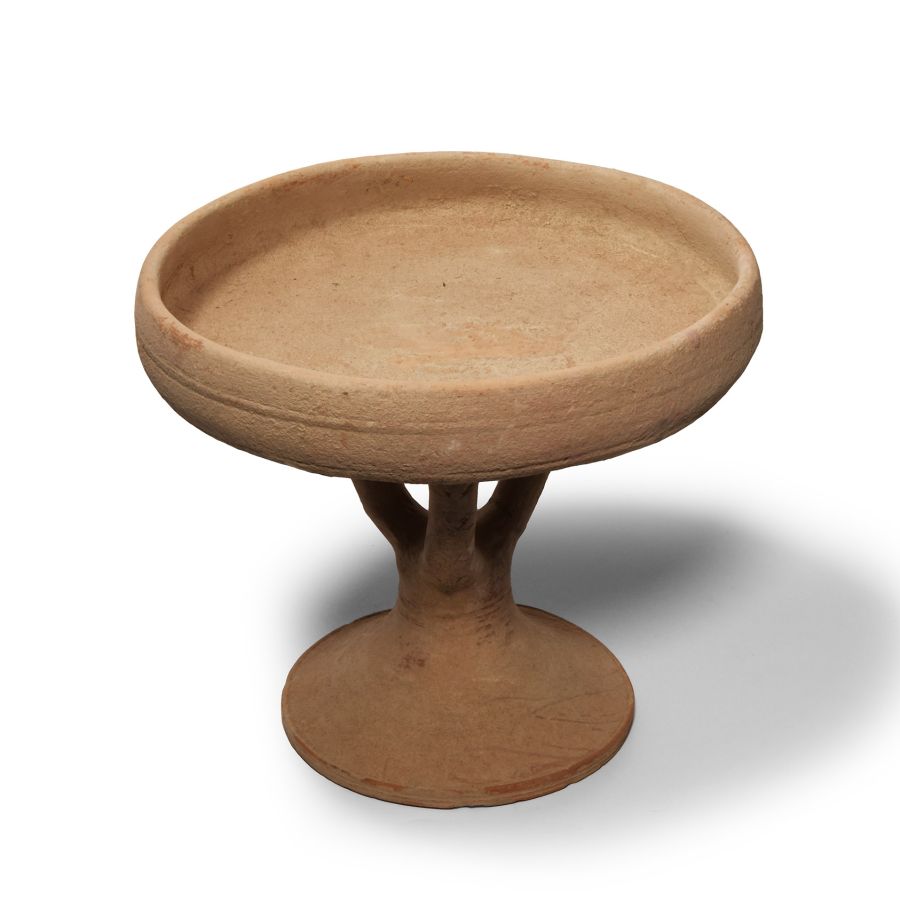
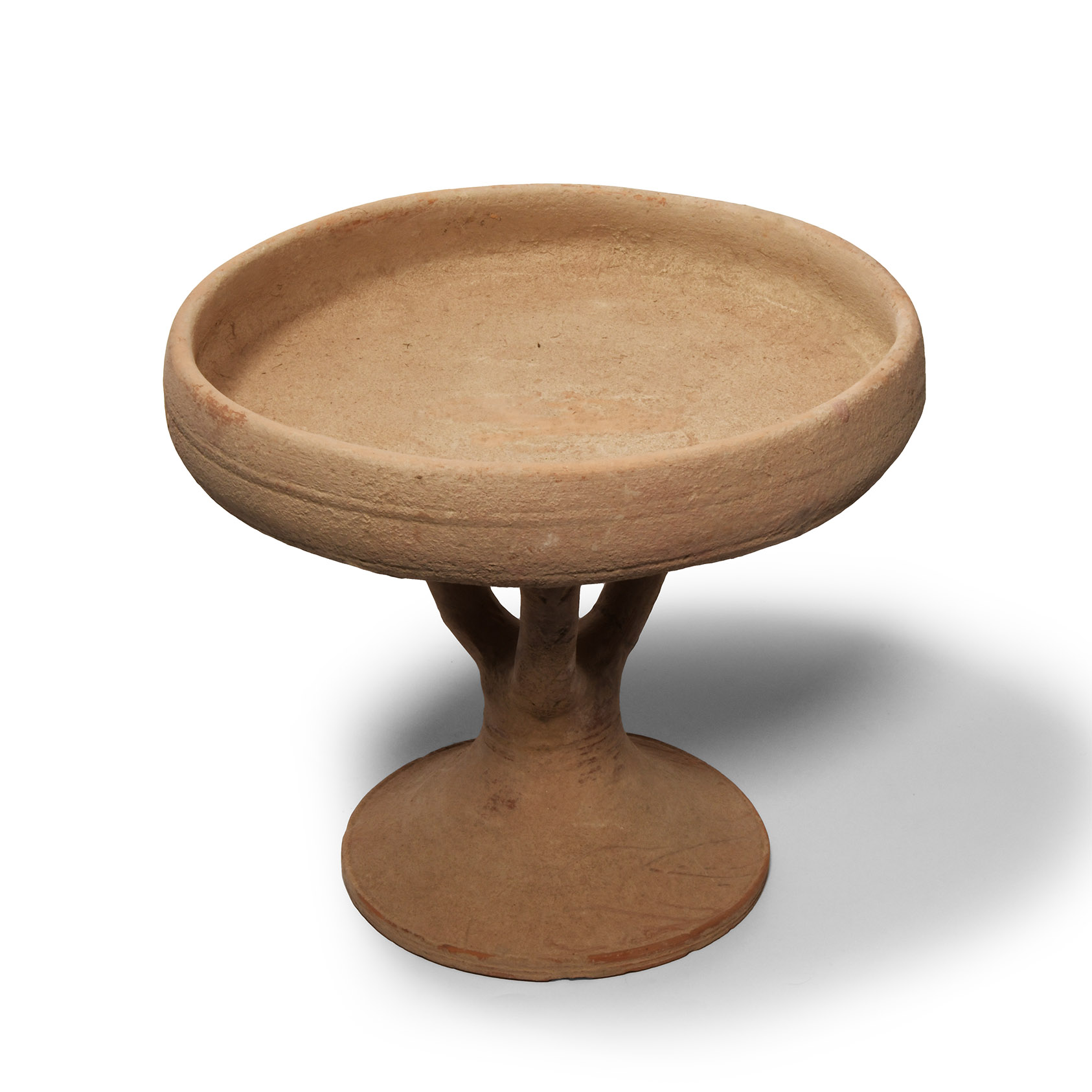
Bactrian Ceramic Vessel
2ND MILLENNIUM B.C.
8 1.2 in. (1.7 kg, 21.5 cm high).
Trumpet-shaped foot developing to three round-section arms supporting a broad dish with sloping sidewall.
ProvenanceFrom a late Japanese specialist collector, 1970-2000s.
CONDITIONTimeLine Auctions follows a vetting process to ensure the authenticity and legality of all items, reinforcing our commitment to integrity and responsible trading. Each antiquity, antique, and coin lot undergoes thorough examination by a vetting committee of at least ten external specialists, professional trade association members, scientists, and archaeologists: Our Vetting Process
AUCTIONS:
TimeLine is a leading auction house specialising in antiquities, ancient art, collectables, natural history, coins, medals, and books. Our auctions offer museums, collectors, historians, and enthusiasts the opportunity to acquire unique and historically significant pieces.
-
Mesopotamian Clay Cuneiform Tablet Fragment
Circa 2nd millennium B.C.Sold for (Inc. bp): £143
Bearing text to one face; the tablet roughly semi-circular in plan with a plano-convex cross-section. 48.9 grams, 43 mm
Specialised collection of cuneiform texts, the property of a London gentleman and housed in London before 1992. Thence by descent to family members. Examined by Professor Wilfrid George Lambert FBA (1926-2011), historian, archaeologist, and specialist in Assyriology and Near Eastern archaeology, in the late 1980s and early 1990s. This small collection is exceptional for the variety of types, including some very rare and well preserved examples. -
Central Asian Bronze Compartmented Seal Matrix
3rd-2nd millennium B.C.Sold for (Inc. bp): £39
Segmented wheel with U-shaped loop; accompanied by an old scholarly note, typed and signed by W.G. Lambert, late Professor of Assyriology, University of Birmingham, 1970-1993, which states: 'Stamp Seal of Bronze. 46 x 48 x 18. This is roughly round, compartmented, and open work except for the central star. There is a largish circle in the middle, a six-pointed star around it. and a band of 11 oblongs around the outer edge. 6 in three pairs matching the points of the stars [sic]. This is a seal from west central Asia, c. 2300-2000 B.C. It is well preserved and a largish example of its kind. There is a loop handle on the back.' 35.5 grams, 47 mm
From an important London, UK, collection, 1970s. Accompanied by a scholarly note by Professor Wilfrid George Lambert FBA (1926-2011), historian, archaeologist, and specialist in Assyriology and Near Eastern archaeology. -
Neo-Assyrian Bronze Two-Piece Belt Buckle with Winged Genii
9th-7th century B.C.Estimate: £2,500 - 3,500 (+bp*)
Opening Bid: £1,250
Comprising two halves decorated in chased low relief, each half with a standing winged figure dressed in long embroidered tunic, holding a stylised snake(?) in the raised hand, the other hand extended along the wing; the left side with three attachment hooks and the right side with a perforated plaque with two lines of holes providing the possibility of extending the belt. 191 grams total, 80 mm each
Nice bronze patina with small scratches on the surface, antique deformations
Acquired prior to 2000. British private collection of Mr D.M., London, UK. Accompanied by an academic report by Dr Raffaele D’Amato. This lot has been checked against the Interpol Database of stolen works of art and is accompanied by search certificate number no.11753-202365.
The genii symbolised both protection and fertility - their role was to safeguard and replenish the ancient kingdom of Assyria and therefore, on a personal buckle, the wearer of the belt. The representation of divine genii upon a belt plaque provided a link with the king and with the royal family, and it could be that such a belt was worn by important dignitaries, although the structure of the belt and its composition exclude the possibility of military use.