
Loading, please wait...
LOT 0227
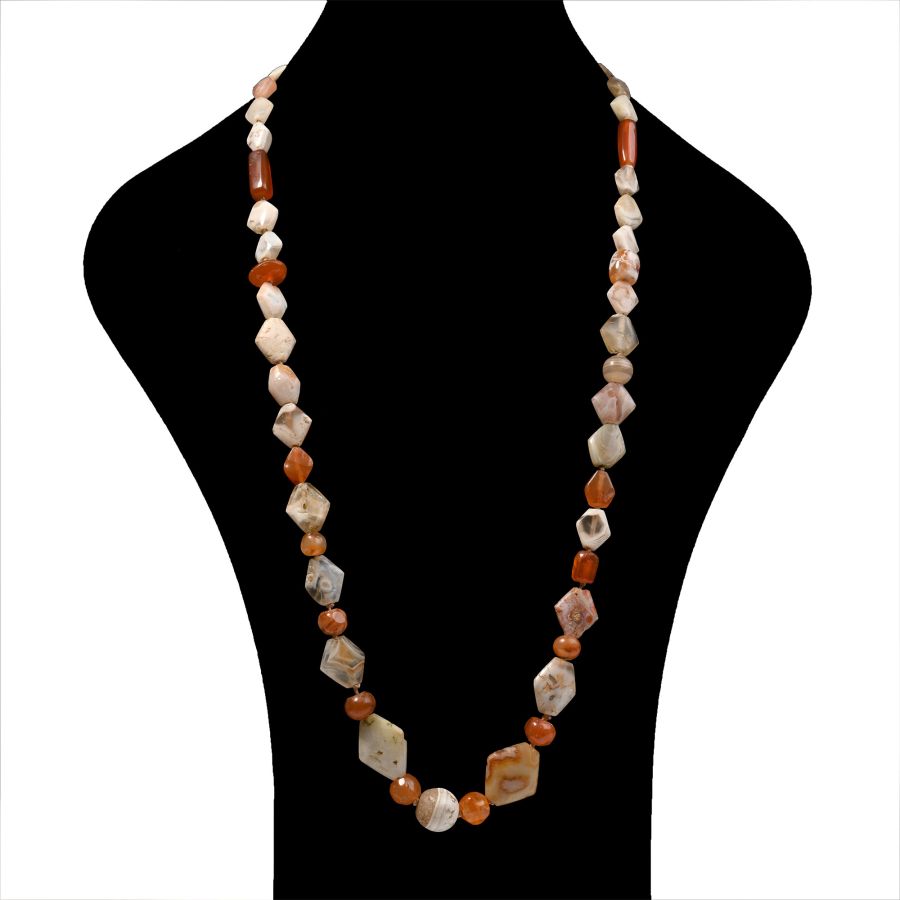
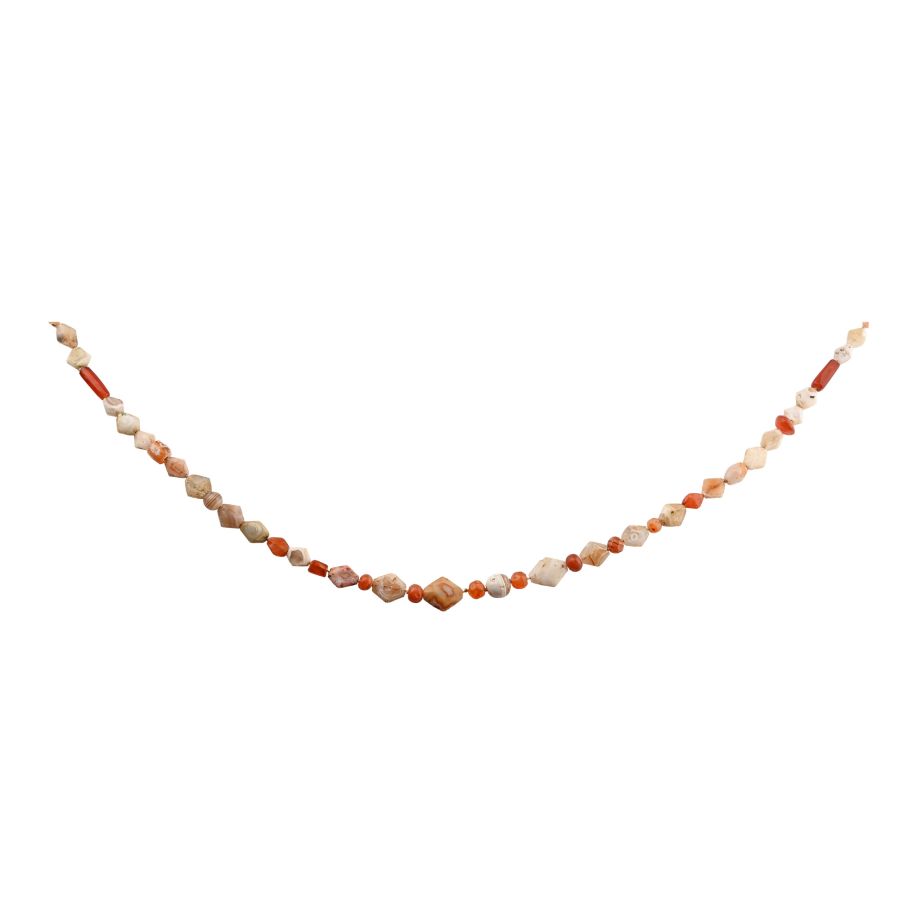
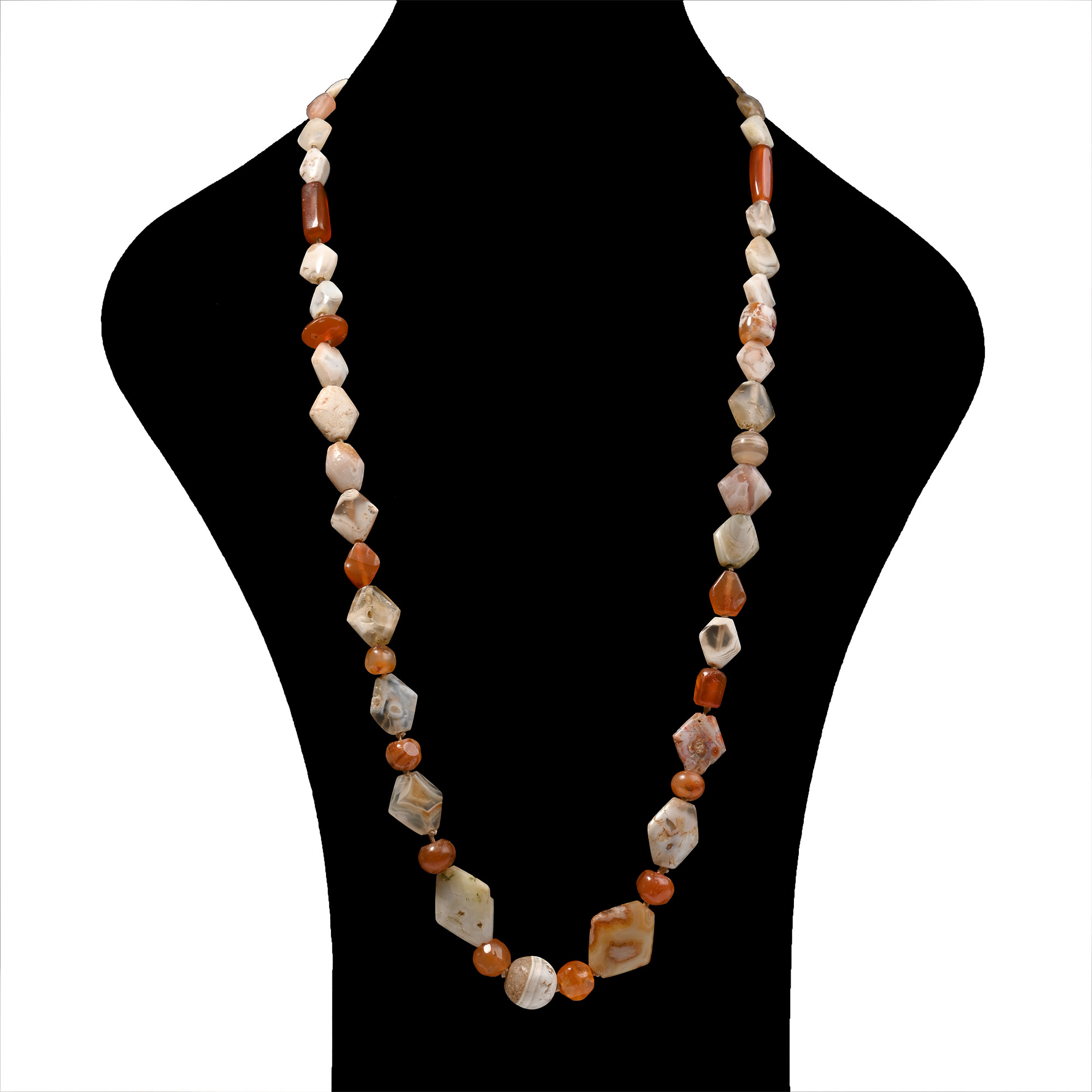
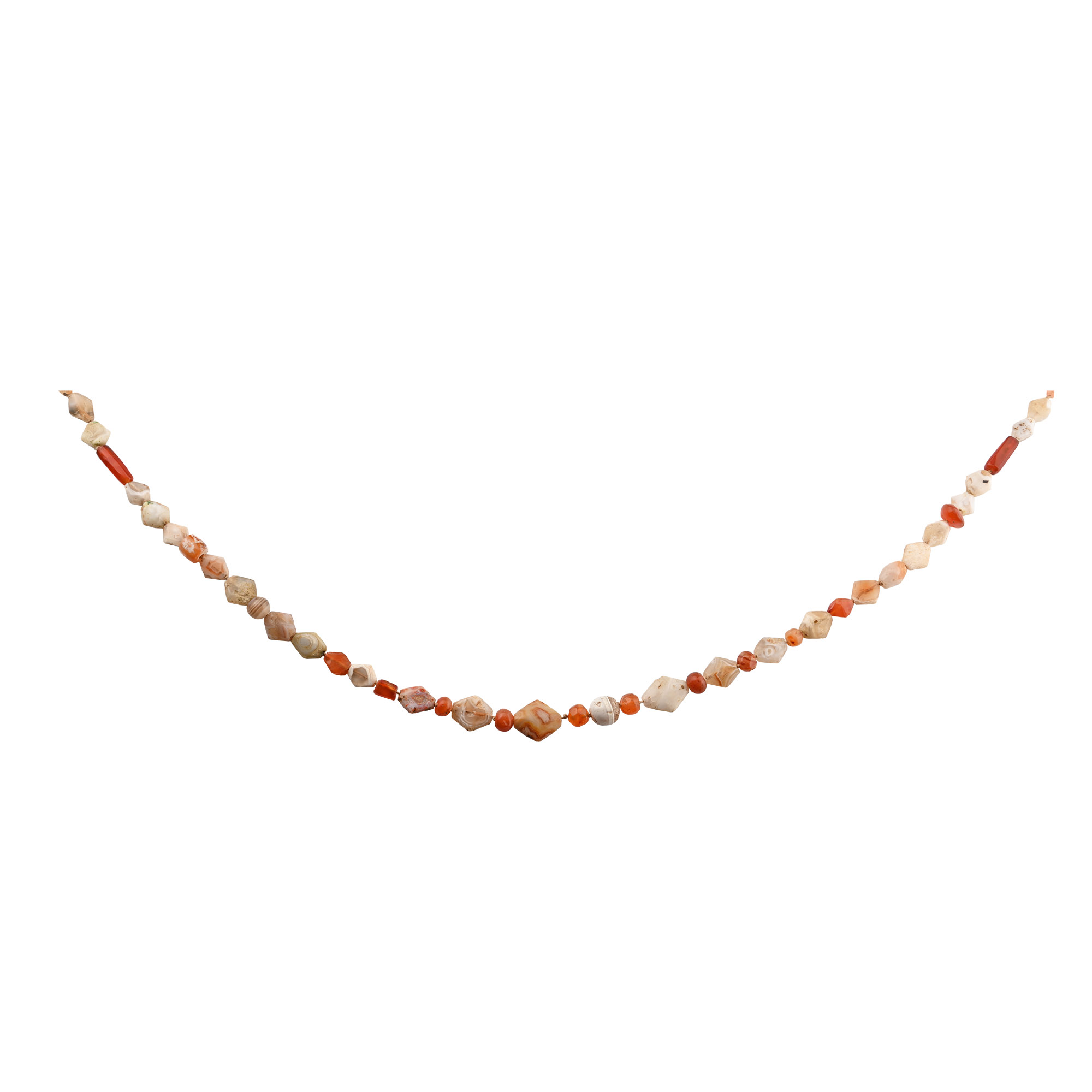
Bactrian Carnelian and Agate Bead Necklace
LATE 1ST MILLENNIUM B.C. AND LATER
33 5/8 in. (88 grams, 85.5 cm).
Restrung group of tabular lozenge beads, spherical and other spacer beads.
ProvenanceAcquired in London, 1974.
Ex K.M., London, UK.
with Gorny and Mosch, Auction 252, 13 December 2017, no.357.
with Gorny and Mosch, Auction 256, 26 June 2018, no.273.
Private collection, London, UK.
TimeLine Auctions follows a vetting process to ensure the authenticity and legality of all items, reinforcing our commitment to integrity and responsible trading. Each antiquity, antique, and coin lot undergoes thorough examination by a vetting committee of at least ten external specialists, professional trade association members, scientists, and archaeologists: Our Vetting Process
AUCTIONS:
TimeLine is a leading auction house specialising in antiquities, ancient art, collectables, natural history, coins, medals, and books. Our auctions offer museums, collectors, historians, and enthusiasts the opportunity to acquire unique and historically significant pieces.
LOT 0227
Bactrian Carnelian and Agate Bead Necklace
Estimate £500 - 700€580 - 810 (for guidance only)$680 - 950 (for guidance only)
-
South Arabian Alabaster Head of a Woman
6th-4th century B.C.Sold for (Inc. bp): £1,105
Large female head with angular nose with straight ridge, rounded cheeks and chin, large sockets for inlaid eyes with rounded depressions in the centre of the eyes, grooved eyebrows and outlines of the eyes, the tapering neck long and cylindrical, the back left roughly tooled; mounted on a custom-made display stand. 3.66 kg total, 31.4 cm including stand
UK collection, 1990s. Acquired on the UK art market, before 2000. Private collection, Mr M.V., a London-based businessman.
This finely carved calcite-alabaster head was originally set within a stela and inscribed with the name of the deceased. Six hundred of these funerary stelae were discovered in localities like Mārib, and other examples were later found during the excavations of the Awwam temple cemetery. -
Jemdet Nasr Cylinder Seal with Horned Quadrupeds
Circa 3000 B.C.Sold for (Inc. bp): £3,120
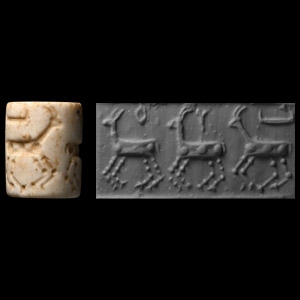
With three horned quadrupeds; accompanied by a museum quality impression and a copy of an old scholarly note, typed and signed by W.G. Lambert, late Professor of Assyriology, University of Birmingham, 1970-1993, which states: 'Cylinder Seal of Alabaster, 27 x 16 mm. The design consists of three prancing horned quadrupeds. All are cut largely with the drill, save for some hand work on the bodies, necks, heads and tails. Above each animal's back is a device, apparently a symbol. [...] The animals were from temple herds, and the prized possessions of the communities, since sheep and goats were the normal domestic animals of the time.' 63.5 grams, 36 mm
with Bonhams, Fine Antiquities 20th May, 1992, no.68. Accompanied by a copy of a scholarly note, typed and signed by Professor Wilfrid George Lambert in 1992.
Seals were the working signatures of the ancient Near East. Pressed or rolled into wet clay, they secured jars, bags, doors and tablets, and left a distinct impression that identified the owner, authorised a transaction, and showed whether a container had been opened. Stamp seals (pressed once to leave a single emblem) appear from the 7th–4th millennia BC and continue throughout later periods; cylinder seals (rolled to create a repeating frieze) developed in Mesopotamia in the late 4th millennium BC and are used into the 1st millennium BC. Beyond administration, seals were miniature artworks and amulets. Their images—gods and worshippers, royal hunts, banquets, heroes and mythic beasts—broadcast rank, piety and profession, and were believed to protect the owner. Materials range from soft stones to hard chalcedonies, haematite and lapis, worked with drills and abrasives to achieve crisp intaglio cutting. Many were worn on cords or rings and followed their owners through life, sometimes into the grave. Seals matter because they underpin the earliest systems of record-keeping and trade. Impressions on tablets and bullae are primary documents for ancient law, economy and religion; the seals themselves preserve that imagery in the round. For collectors, well-cut examples with sharp impressions, good polish and honest ancient wear are especially desirable, and pieces with early collection histories are keenly sought. -
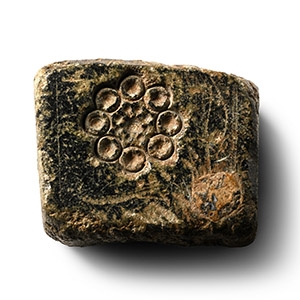
Western Asiatic Stone Jewellery Mould
Circa 10th-14th century A.D.Sold for (Inc. bp): £46
Rectangular in plan with vent and pouring channel to the reverse, incuse rosette pattern to obverse. 49 grams, 37 mm
From the collection of a Buckinghamshire, UK, collector established from the earlier 1960s.
Intended for one-piece casting for small jewellery components.
