
Loading, please wait...
LOT 0245
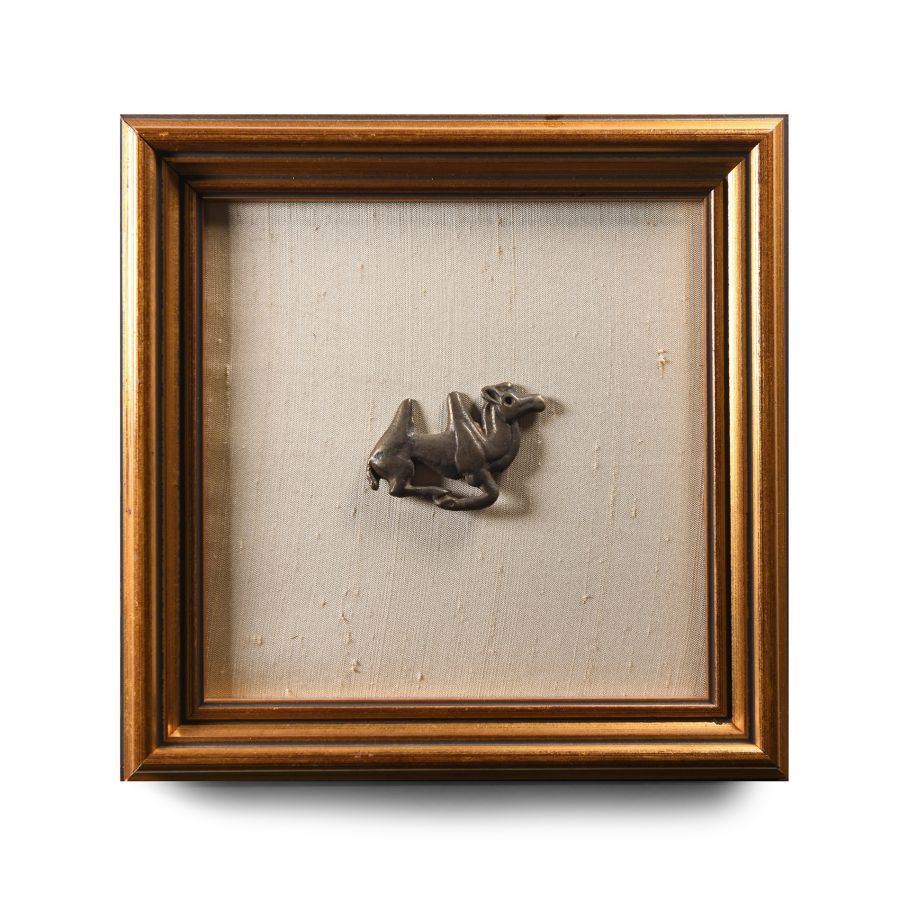
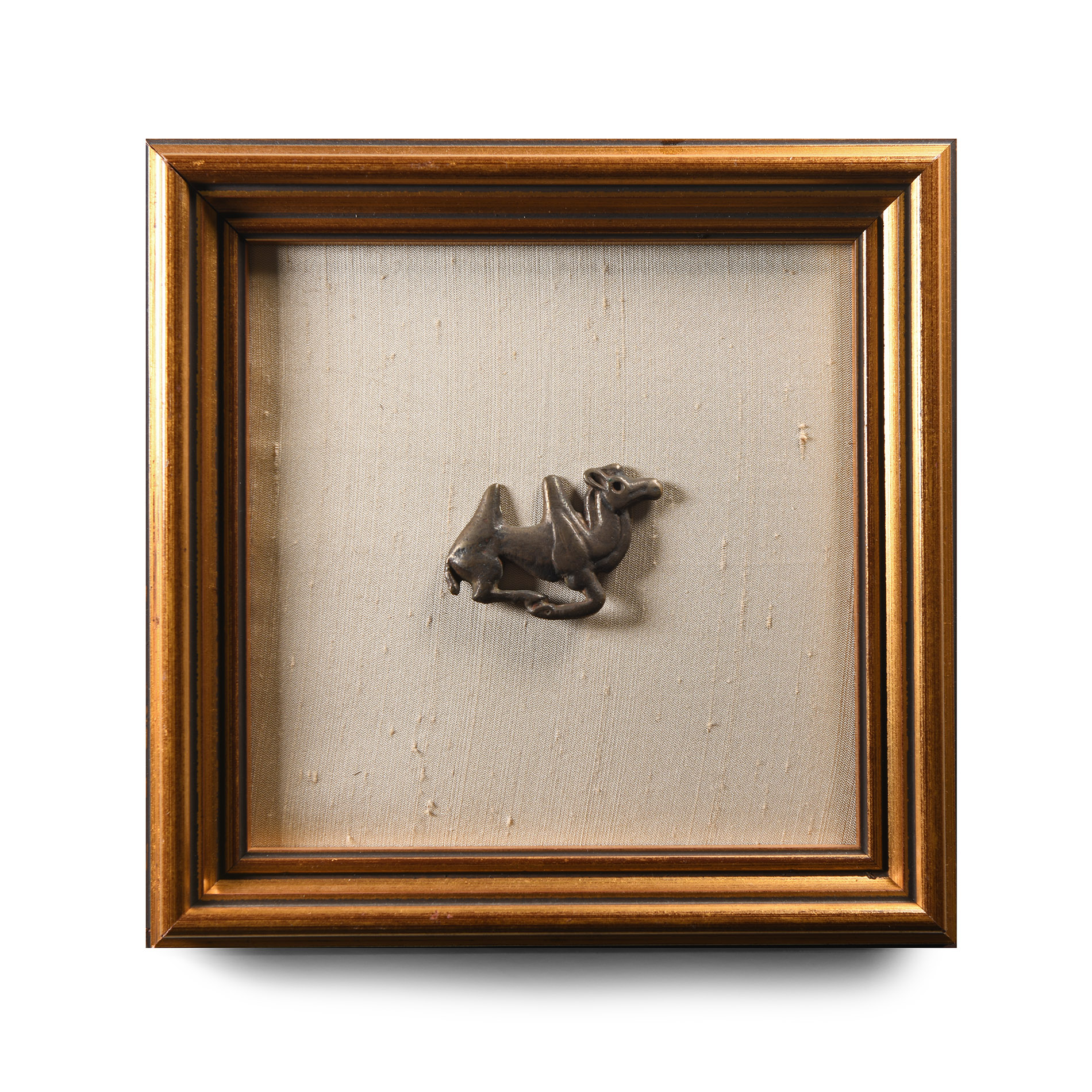
Bactrian Camel Applique
3RD-2ND MILLENNIUM B.C.
6 3/4 in. (245 grams total, 17.5 cm including frame).
A finely modelled two-humped camel, shown in a dynamic pose, possibly in the act of kneeling and balancing its body weight on its bent back and front legs; mounted in a display frame.
ProvenanceEx London, UK, gallery, 1971-early 2000s.
Property of a London gentleman.
Cf. Sarianidi, V., Myths of Ancient Bactria and Margiana on its Seals and Amulets, Moscow, 1998, fig.110, for similar; cf. also the Metropolitan Museum of Art, accession no.53.117.1, for a similar statuette.
FootnotesCamels were a symbol of wealth and well-being. The importance of the Bactrian camel is attested in the ancient sources. The two-humped Bactrian camel, object of many seal representations, was already widespread in North India during the first quarter of the 2nd millennium B.C. It was probably an Aryan introduction. The Mitanni came from Bactria and Margiana and maintained a close connection with their regions of origin, via Khorasan, as can be suggested by the presence of Bactrian camels on the Mitanni seals.
CONDITIONTimeLine Auctions follows a vetting process to ensure the authenticity and legality of all items, reinforcing our commitment to integrity and responsible trading. Each antiquity, antique, and coin lot undergoes thorough examination by a vetting committee of at least ten external specialists, professional trade association members, scientists, and archaeologists: Our Vetting Process
AUCTIONS:
TimeLine is a leading auction house specialising in antiquities, ancient art, collectables, natural history, coins, medals, and books. Our auctions offer museums, collectors, historians, and enthusiasts the opportunity to acquire unique and historically significant pieces.
-
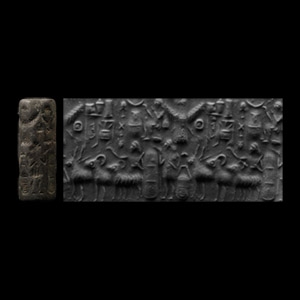
Western Asiatic Stone Cylinder Seal with Winged Figure
2nd-1st millennium B.C.Sold for (Inc. bp): £845
With frieze in two registers including a winged figure, procession of goats, facing robed figure and various symbols. 17.5 grams, 40 mm
Ex S collection, London, UK, 1970-1990s. -
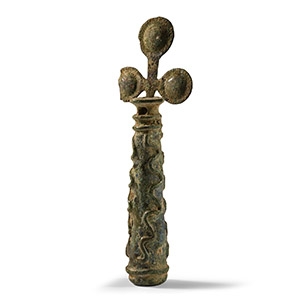
Luristan Bronze Kohl Pot with Snakes and Applicator
13th-7th century B.C.Sold for (Inc. bp): £85
Tapering tubular pot with trumpet-shaped mouth, raised collars to neck and base, undulating snake motifs; applicator with handle formed as three radiating lobes. 46 grams, 11.1 cm
From a collection of a gentleman, acquired on the London art market in the 1990s. -
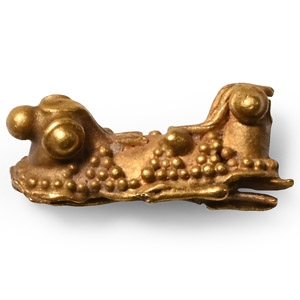
Western Asiatic Gold Recumbent Beast Bead
1st millennium B.C.Sold for (Inc. bp): £117
Rectangular plaque with recumbent lion(?) with clusters of granulation to the flanks. 0.42 grams, 9 mm.
Ex property of a late Japanese collector, 1970-2000s.
