
Loading, please wait...
LOT 1142
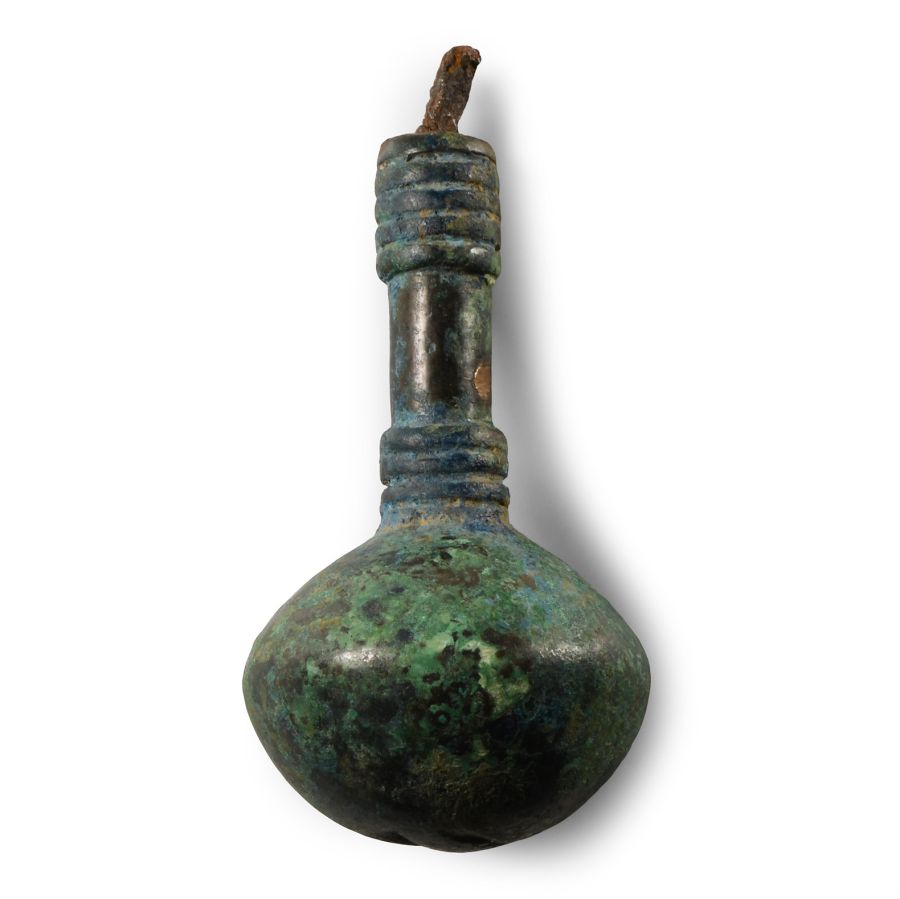
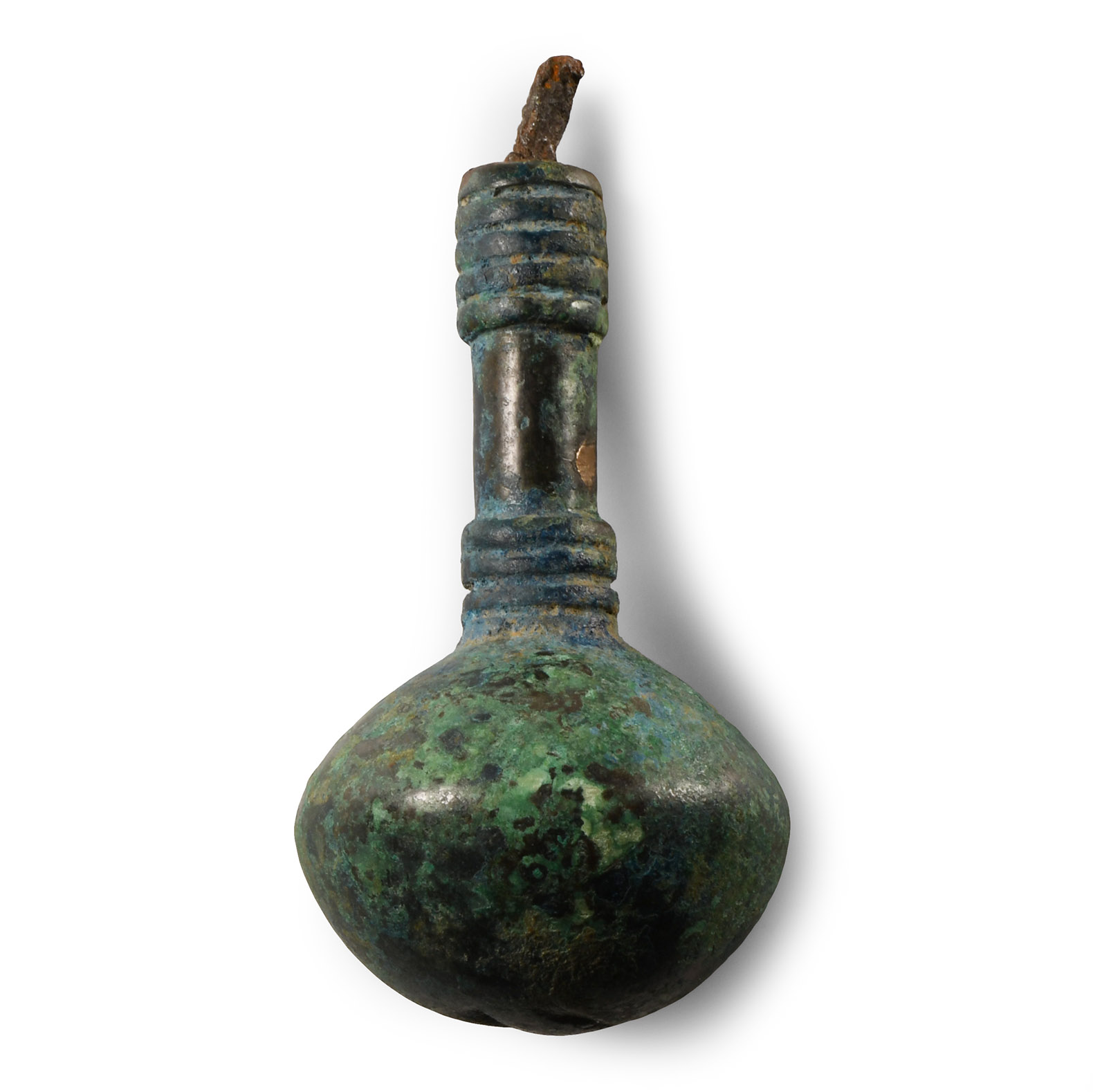
Bactrian Bronze Weight
1ST MILLENNIUM B.C.
3 3/4 in. (274 grams, 96 mm).
With biconvex body and tall tubular neck, integral ribbed collars; ferrous pin in situ. [No Reserve]
ProvenanceUK private collection before 2000.
On the UK art market.
Property of a London gentleman.
TimeLine Auctions follows a vetting process to ensure the authenticity and legality of all items, reinforcing our commitment to integrity and responsible trading. Each antiquity, antique, and coin lot undergoes thorough examination by a vetting committee of at least ten external specialists, professional trade association members, scientists, and archaeologists: Our Vetting Process
AUCTIONS:
TimeLine is a leading auction house specialising in antiquities, ancient art, collectables, natural history, coins, medals, and books. Our auctions offer museums, collectors, historians, and enthusiasts the opportunity to acquire unique and historically significant pieces.
-
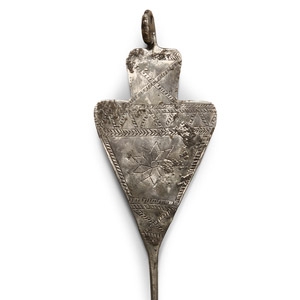
Western Asiatic Decorated Silver Pin
3rd century B.C.-2nd century A.D.Sold for (Inc. bp): £26
With triangular body, comprising a central rosette and herringbone borders; stem of the pin at the apex, rectangular panel above and S-curved securing loop. 17.5 grams, 16 cm
UK private collection before 2000. On the UK art market. Property of a London gentleman. -
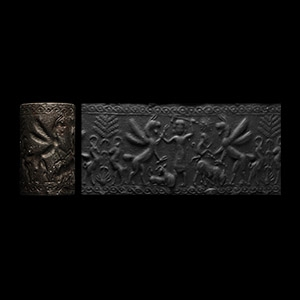
Large Neo-Assyrian Stone Cylinder Seal
Early 1st millennium B.C.Sold for (Inc. bp): £2,210
With figural frieze between two borders of guilloche ornament: central hero-figure with axe in one raised hand, the other gripping the foreleg of a winged rampant gryphon, with recumbent goat at his feet; behind, radiant sun above a monkey sitting on the rump of a horse with a second gryphon attacking; opposed rampant ibexes flanking a tree; supplied with a museum-quality impression. 65.7 grams, 44 mm
From the property of late Mr SM, London, UK, 1970-1990s, thence by descent. Examined by Professor Wilfrid George Lambert FBA (1926-2011), historian, archaeologist, and specialist in Assyriology and Near Eastern archaeology, in the late 1980s and early 1990s. -
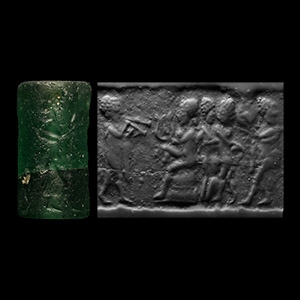
Western Asiatic Green Glass Cylinder Seal with Entertainment Scene
Early 1st millennium B.C.Sold for (Inc. bp): £715
With frieze of entertainers: standing nude figure with curly hair holding a syrinx to her mouth facing a seated nude female playing a curved lyre; to her rear, three nude female dancers; supplied with a museum-quality impression. 16.55 grams, 31 mm
From the property of late Mr SM, London, UK, 1970-1990s, thence by descent. Examined by Professor Wilfrid George Lambert FBA (1926-2011), historian, archaeologist, and specialist in Assyriology and Near Eastern archaeology, in the late 1980s and early 1990s.
Glass is very rarely used in this period for cylinder seals.
