
Loading, please wait...
LOT 1404
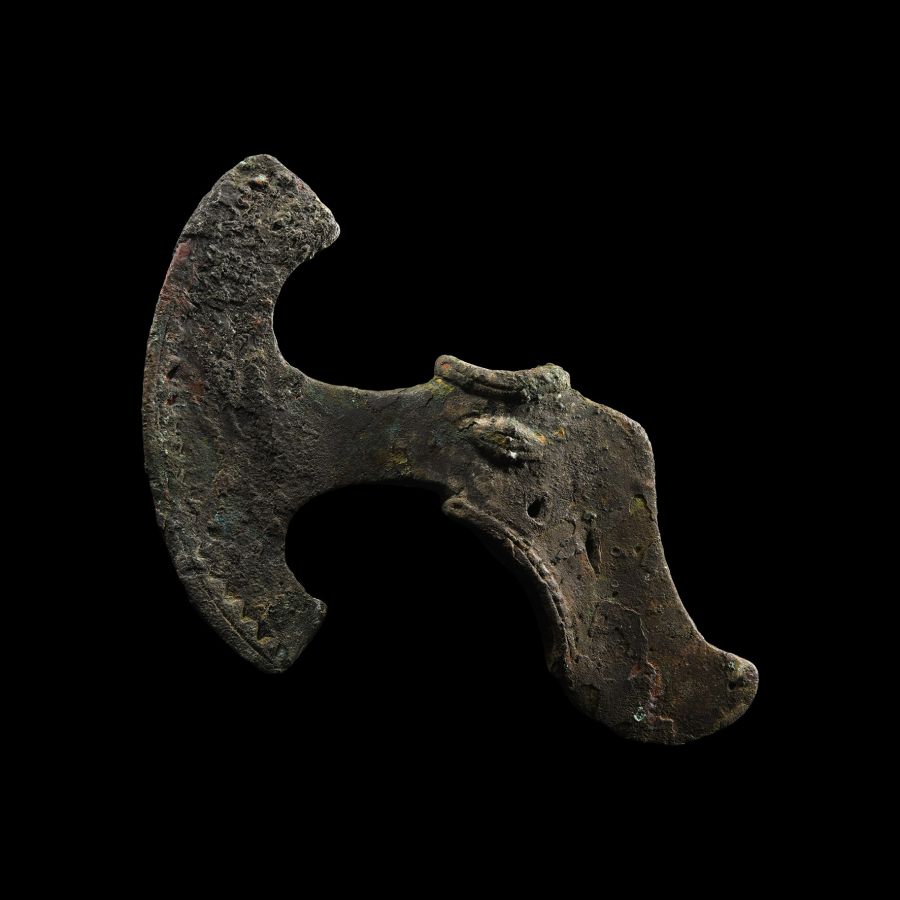
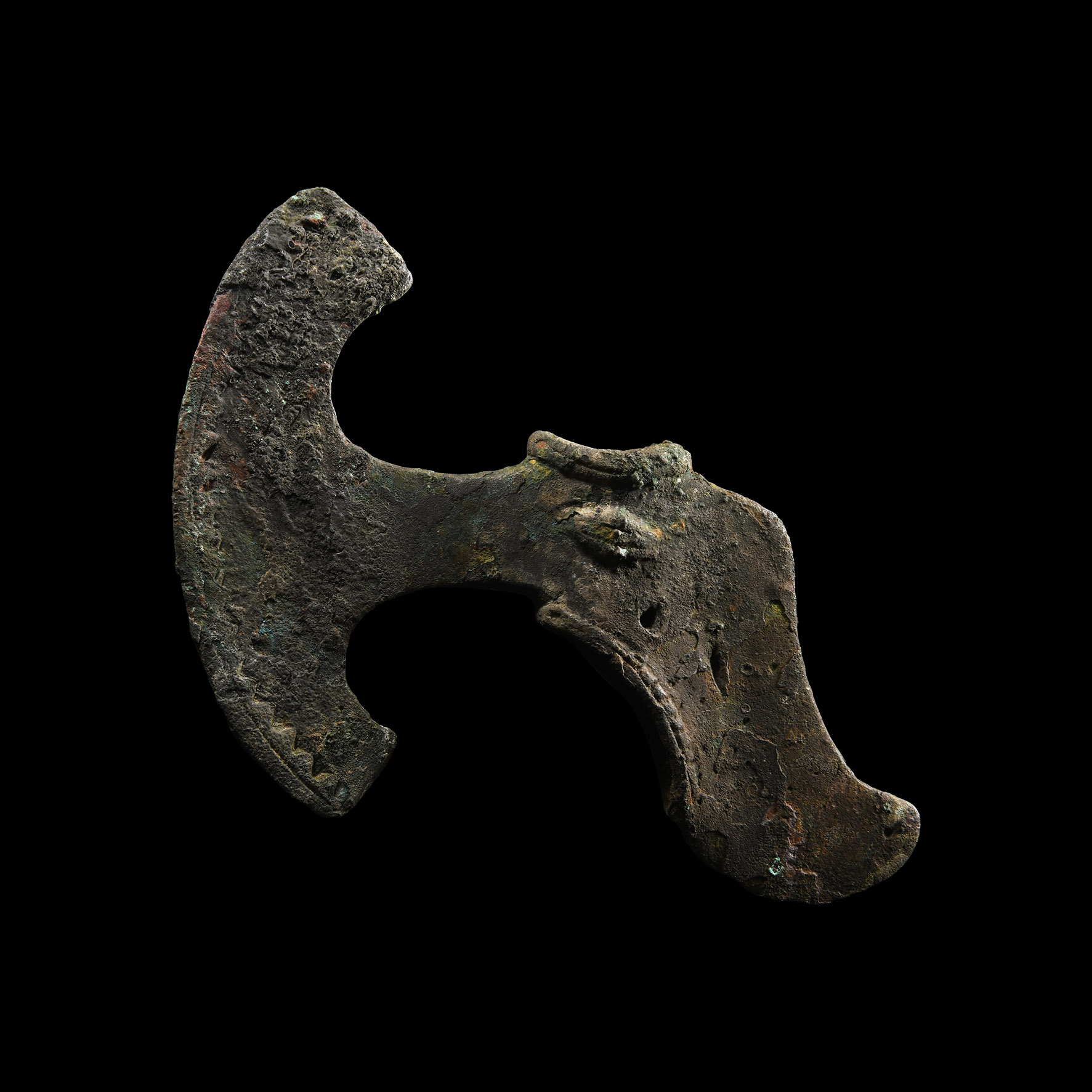
Bactrian Bronze Eye Axehead
3RD-2ND MILLENNIUM B.C.
6 1/4 in. (327 grams, 16 cm).
Fan-shaped blade; an apotropaic eye in relief to each side of the socket; wing-shaped extension to the rear.
ProvenanceFrom an old London, UK, collection.
Ex London, UK, gallery.
Cf. Gernez, G., L’armament en métal au Proche et Moyen-Orient: des origines a 1750 av. J.C., Paris, 2007, fig.2.15, subtype H 2.I.b.
FootnotesMost of these axes are believed to have originated in Bactria, but some objects come from well documented contexts in Margiane (Gonur), Lut (Shahdad) and Kermanshah (Khinaman). According to Gernez they were made for ceremonial use.
CONDITIONTimeLine Auctions follows a vetting process to ensure the authenticity and legality of all items, reinforcing our commitment to integrity and responsible trading. Each antiquity, antique, and coin lot undergoes thorough examination by a vetting committee of at least ten external specialists, professional trade association members, scientists, and archaeologists: Our Vetting Process
AUCTIONS:
TimeLine is a leading auction house specialising in antiquities, ancient art, collectables, natural history, coins, medals, and books. Our auctions offer museums, collectors, historians, and enthusiasts the opportunity to acquire unique and historically significant pieces.
LOT 1404
Bactrian Bronze Eye Axehead
Estimate £200 - 300€230 - 350 (for guidance only)$270 - 410 (for guidance only)
-
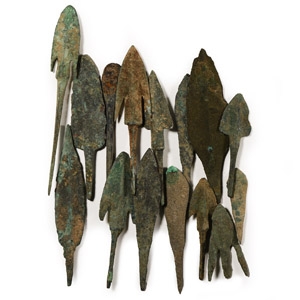
Luristan Bronze Arrowhead Group
Circa 13th-7th century B.C.Sold for (Inc. bp): £117
Including barbed, leaf-shaped and other types, all tanged. 154 grams total, 4.3-10.8 cm
Acquired 1980-2015. Ex Abelita family collection. -
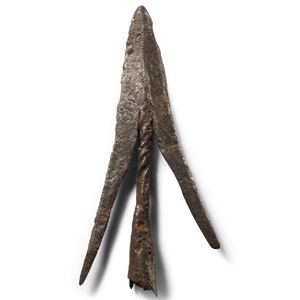
Medieval Swallowtail Iron Arrowhead
14th-15th century A.D.Sold for (Inc. bp): £286
With two splayed long barbs, twisted neck and split socket. 15.7 grams, 96 mm
Acquired prior to 2000. Ex private collection, Cambridgeshire, UK. Property of a Kent lady collector. -
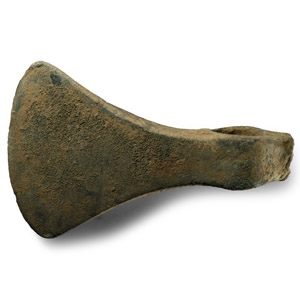
Large Western Asiatic Bronze Socketted Axehead
3rd-2nd millennium B.C.Estimate: £120 - 170 (+bp*)
Opening Bid: £60
With wide swept blade, large socket with shallow raised circumferential rib, hammer to the rear. 1.34 kg, 19 cm
Acquired 1980-2015. Ex Abelita family collection.
