
Loading, please wait...
LOT 1379
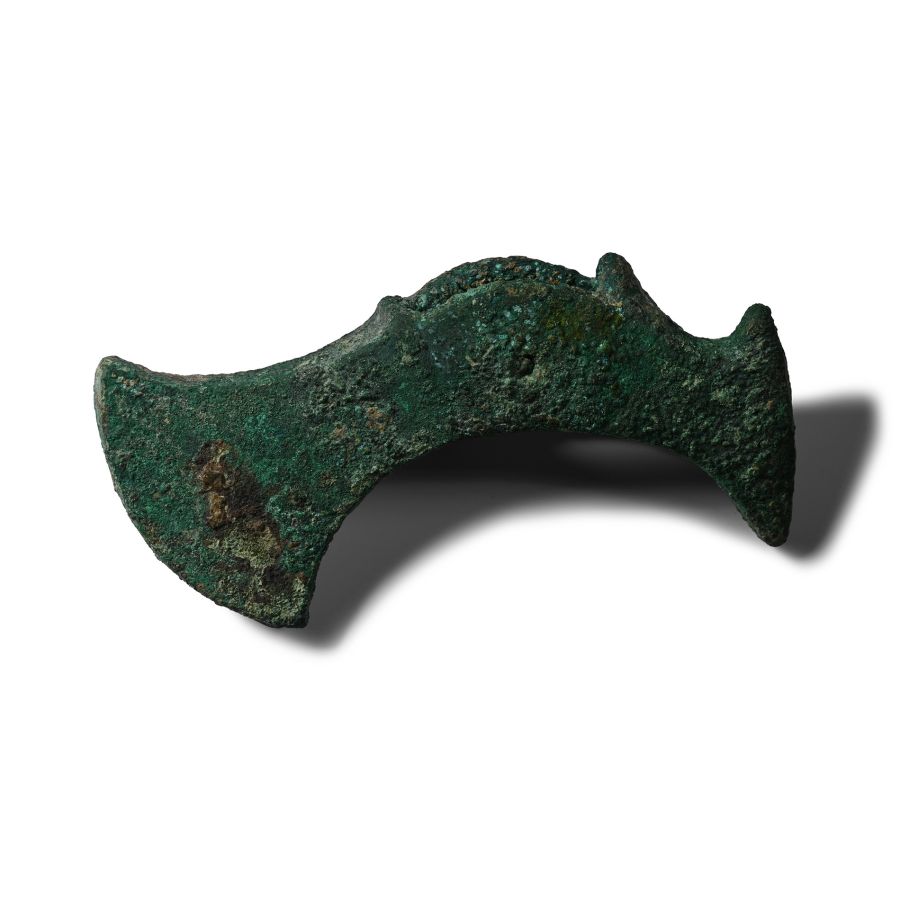
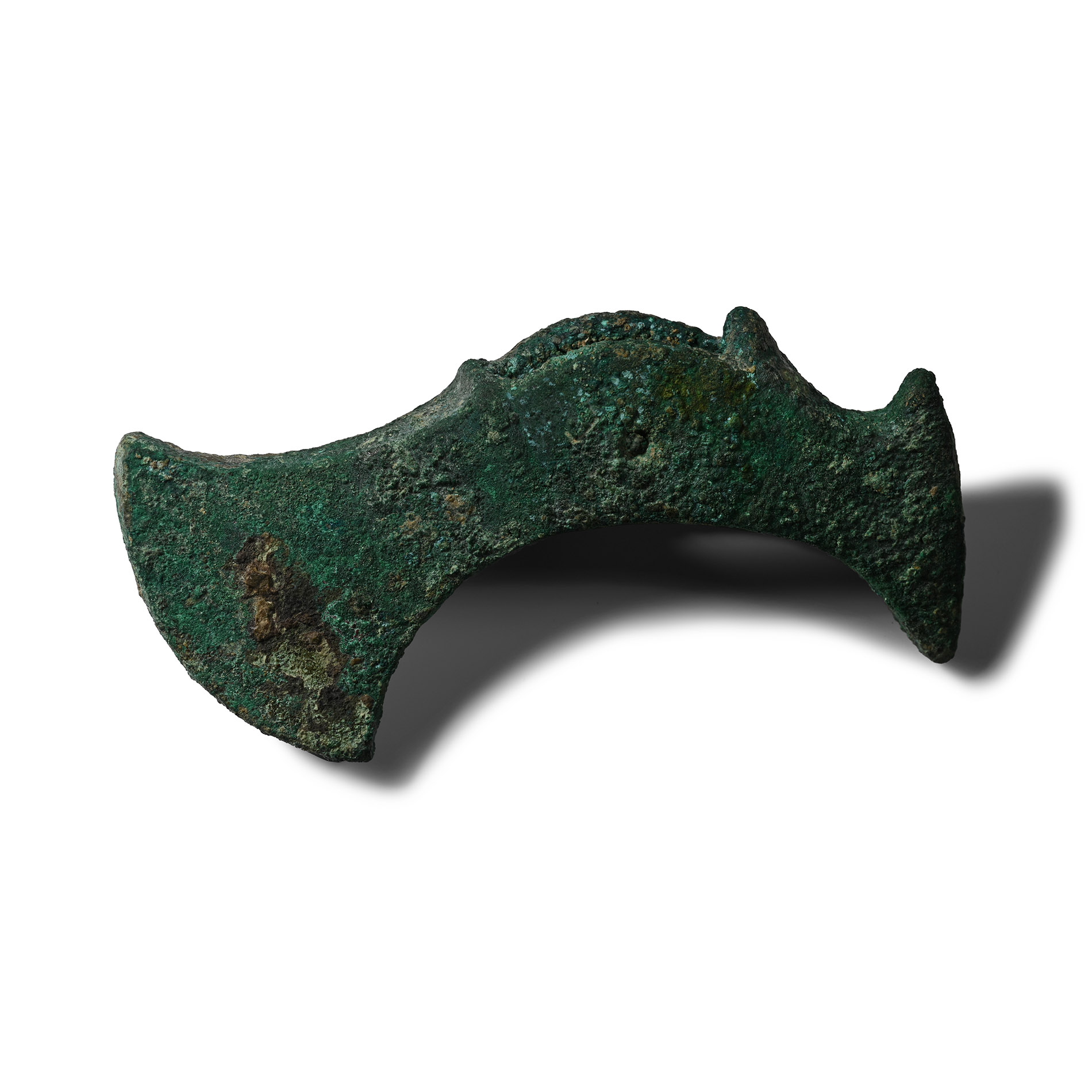
Bactrian Bronze Axehead
3RD-2ND MILLENNIUM B.C.
4 1/8 in. (227 grams, 10.6 cm).
With curved flaring cutting edge, characteristic curving shape and narrow socket, blade end squaring off, shaft hole pierced on both sides.
ProvenanceAcquired in the mid 1980s-1990s.
Private collection, Switzerland, thence by descent.
Private collection, since the late 1990s.
Cf. Gernez, G., L’armament en métal au Proche et Moyen-Orient: des origines a 1750 av. J.C., Paris, 2007, fig.2.15, type H2.Ia1, for the type.
FootnotesThese collared axes have the specific feature of being equipped with variously shaped rear extensions. The provenance of this typology is clearer than others: these axes came from Margiana and southern Bactria. Gonur Depe and Susa yielded a rather atypical and probably imported example. P. Amiet suggests that they were an adoption of Elamite material, from conceptual and institutional models. They would have developed from the end of the 3rd and the beginning of the 2nd millennium B.C.
CONDITIONTimeLine Auctions follows a vetting process to ensure the authenticity and legality of all items, reinforcing our commitment to integrity and responsible trading. Each antiquity, antique, and coin lot undergoes thorough examination by a vetting committee of at least ten external specialists, professional trade association members, scientists, and archaeologists: Our Vetting Process
AUCTIONS:
TimeLine is a leading auction house specialising in antiquities, ancient art, collectables, natural history, coins, medals, and books. Our auctions offer museums, collectors, historians, and enthusiasts the opportunity to acquire unique and historically significant pieces.
LOT 1379
Bactrian Bronze Axehead
Estimate £350 - 450€410 - 520 (for guidance only)$470 - 610 (for guidance only)
-
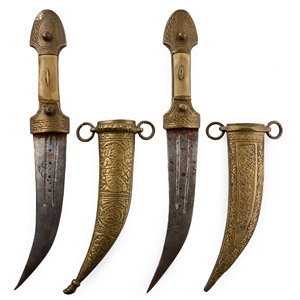
Western Asiatic Style Dagger Pair
20th century A.D.Sold for (Inc. bp): £65
Each a curved steel blade with two fullers, stamped 'SYRIE'; waisted bronze grip with applied bone panels, tendril ornament and 'SYRIA' legend to reverse; cast scabbard with suspension rings, guilloche decoration and 'SYRIA' legend. 655 grams total, 26.5-27 cm
Acquired during the 1960s. From an old North London oriental and ethnographical collection. From the property of a late Lincolnshire, UK, gentleman. -
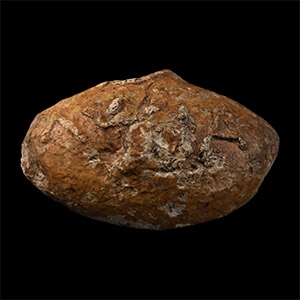
Greek Macedonian Lead Inscribed Slingshot
3rd-1st century B.C.Sold for (Inc. bp): £78
Biconical in profile with casting seam and reserved legend 'ΥΔΑ'. 38.2 grams, 29 mm
Ex German art market, 2000s. Acquired from an EU collector living in London. From the collection of a Surrey, UK, gentleman.
The leaden bullets, which were thrown from slings, were called molivdainai (μολύβδαιναι) in Greek, and in Latin glandes; the former indicating the material ‘lead’, the latter the shape ‘acorns’. These bullets were cast in a mould and bore letters or devices, or both. In form they were more like an almond than an acorn, but many were pointed at both ends; in size, they are generally about 1.5 inches in maximum length, and under 1 inch in maximum width. -
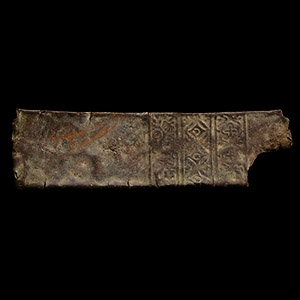
Post Medieval Bronze Decorated Scabbard Section
17th-19th century A.D.Sold for (Inc. bp): £20
Fragment of scabbard for a narrow two-edged sword; with three transverse bands of impressed crosses, lozenges and rosettes; edges butted to reverse. 39 grams, 13 cm
From the collection of a Buckinghamshire, UK, collector established from the earlier 1960s.
