
Loading, please wait...
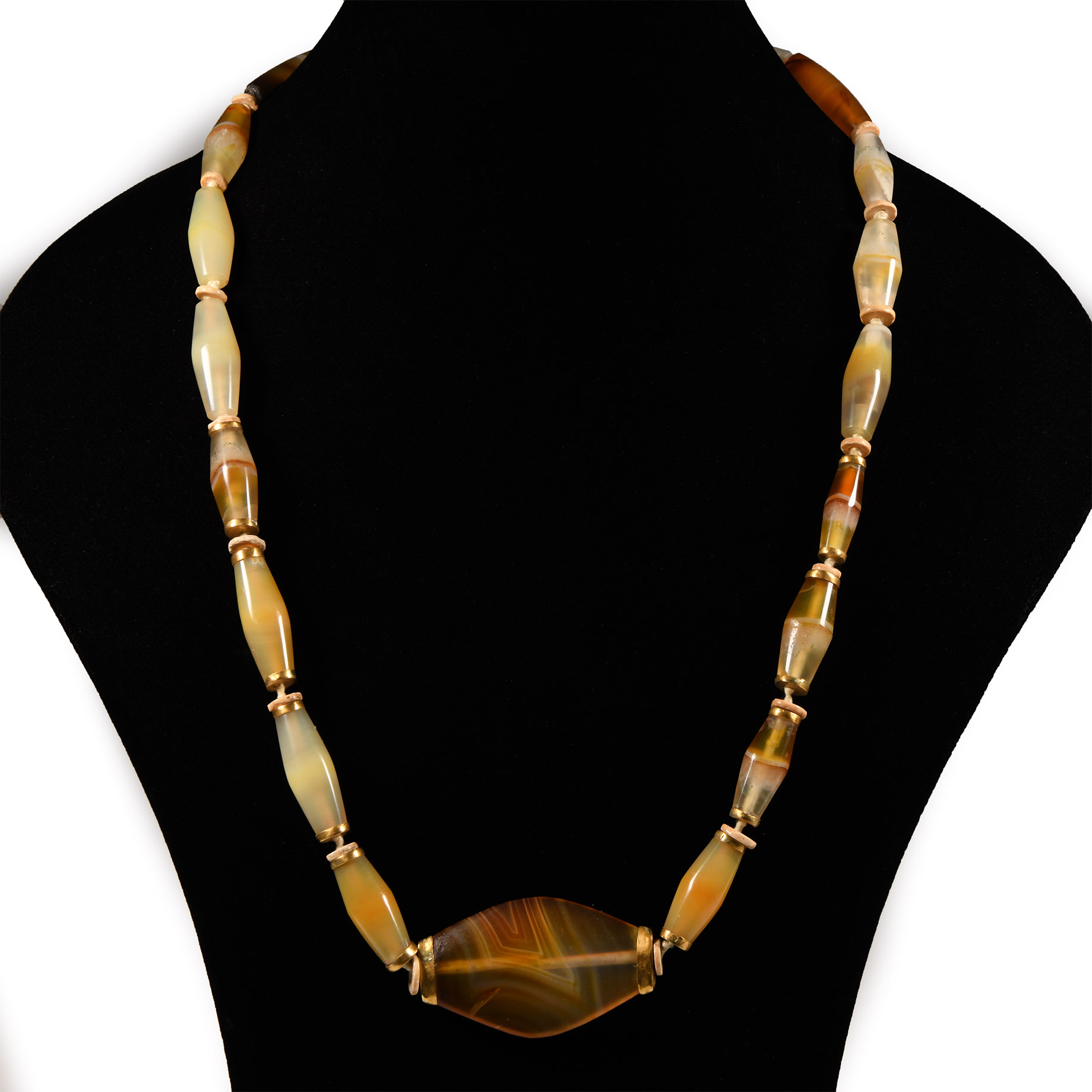
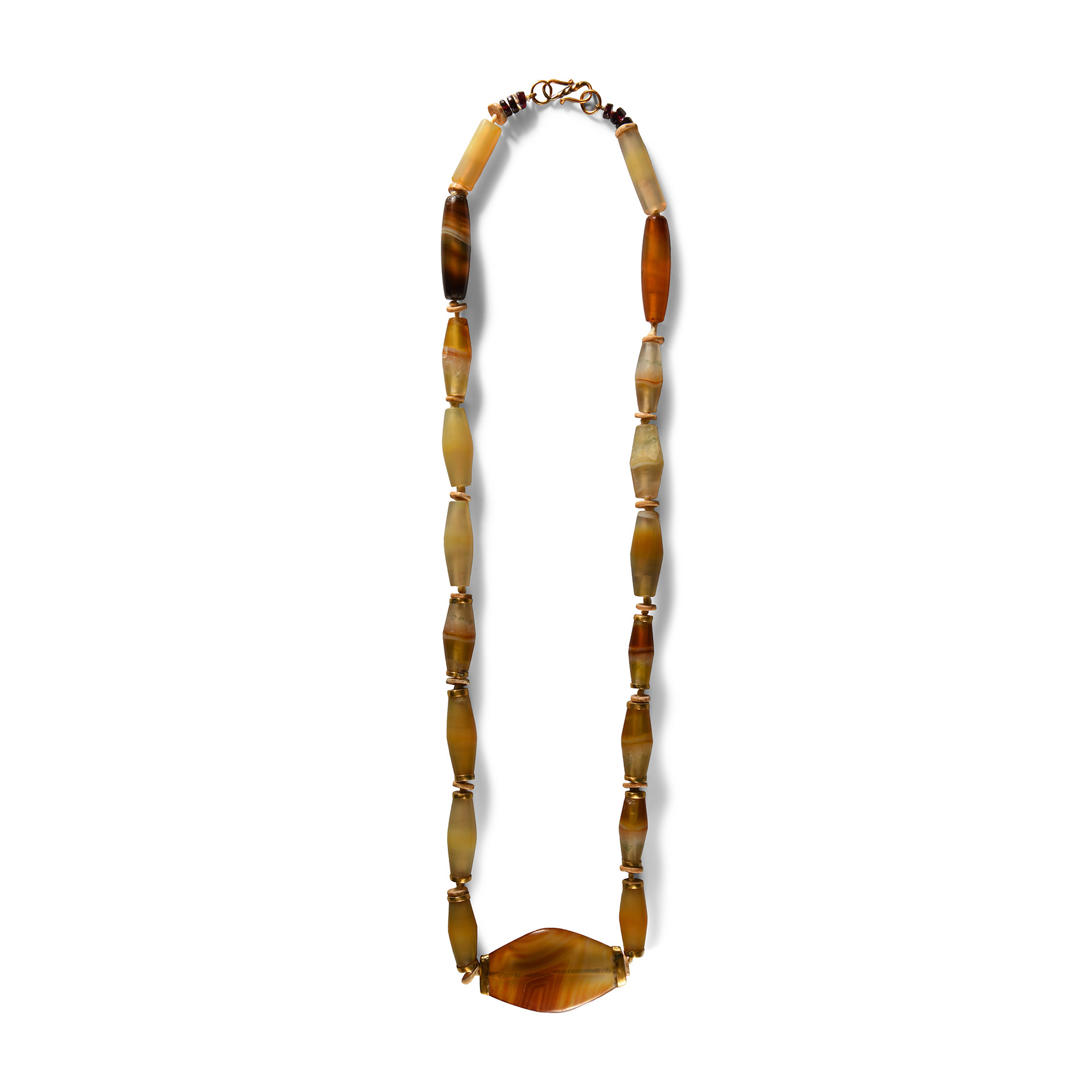
LOT 0290
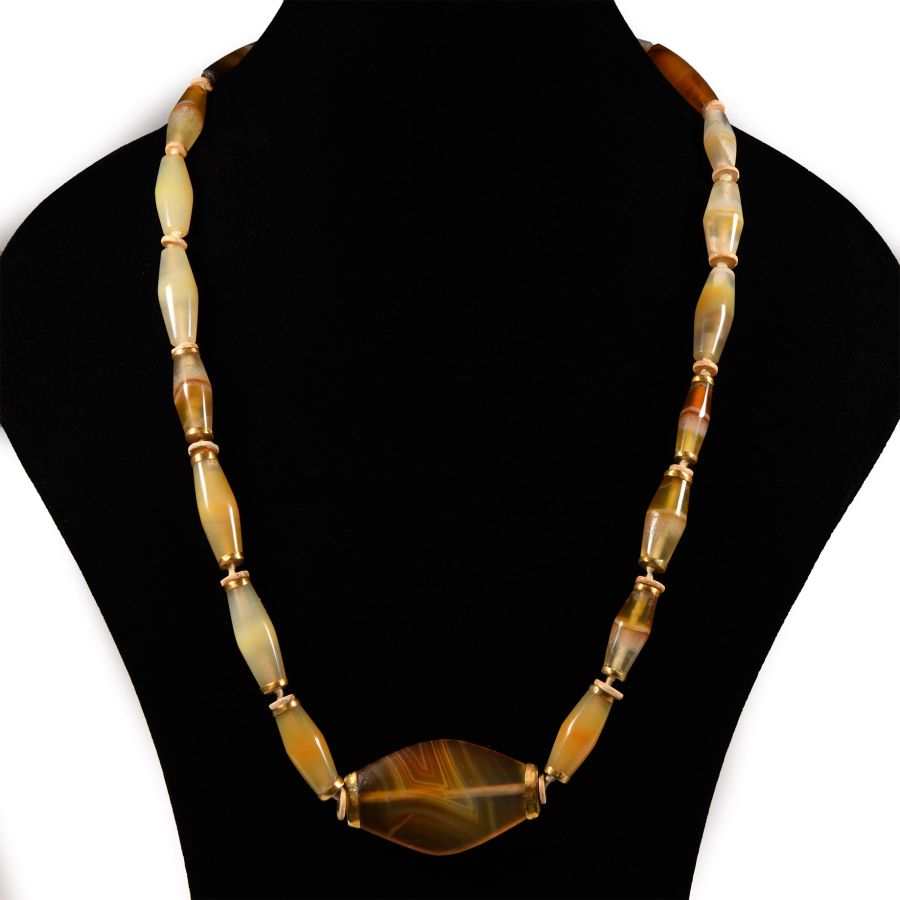
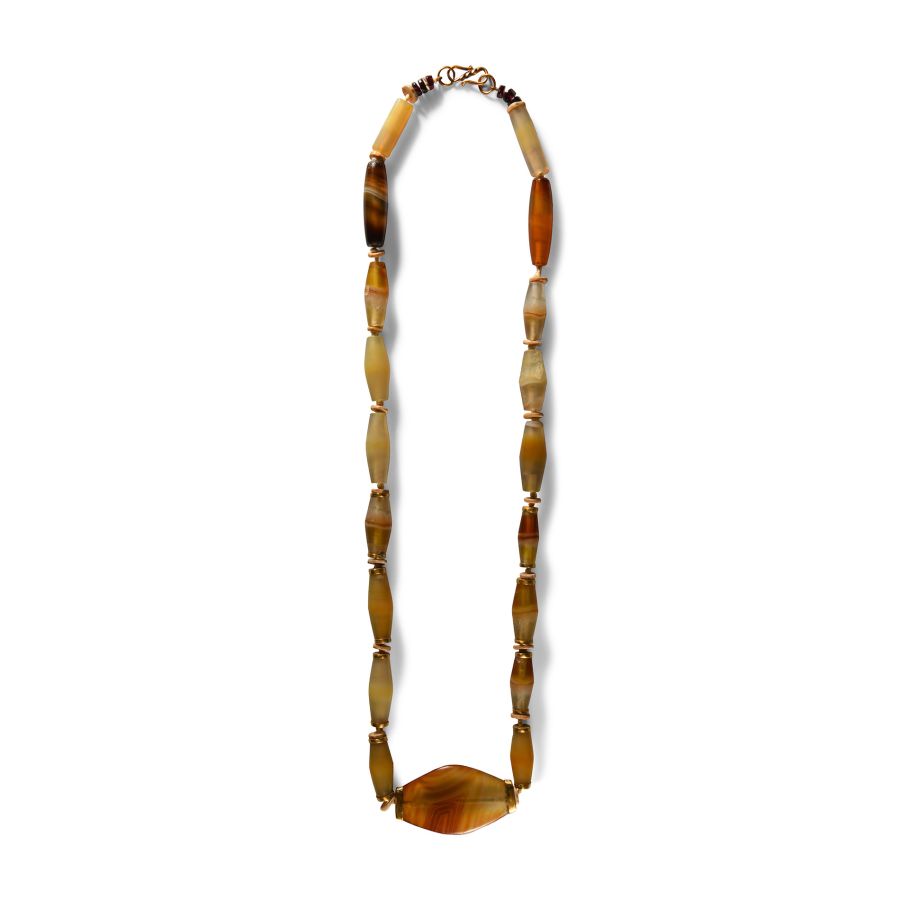
Bactrian Agate and Gold Bead Necklace
2ND MILLENNIUM B.C. OR LATER
28 3/4 in. (112 grams, 73 cm long).
A restrung designer necklace with graduated group of fusiform banded agate beads with later gold end-caps and flat bead centrepiece.
Provenancewith a London, UK, gallery, 1971.
CONDITIONTimeLine Auctions follows a vetting process to ensure the authenticity and legality of all items, reinforcing our commitment to integrity and responsible trading. Each antiquity, antique, and coin lot undergoes thorough examination by a vetting committee of at least ten external specialists, professional trade association members, scientists, and archaeologists: Our Vetting Process
AUCTIONS:
TimeLine is a leading auction house specialising in antiquities, ancient art, collectables, natural history, coins, medals, and books. Our auctions offer museums, collectors, historians, and enthusiasts the opportunity to acquire unique and historically significant pieces.
LOT 0290
Bactrian Agate and Gold Bead Necklace
Estimate £1,000 - 1,400€1,160 - 1,620 (for guidance only)$1,350 - 1,890 (for guidance only)
-
.jpg)
Very Large Western Asiatic Stone Stamp Seal with Animal
2nd-1st millennium B.C.Estimate: £500 - 600 (+bp*)
Opening Bid: £250
Discoid in plan with tiered handle and transverse hole, with gusset to the upper face, chamfered shoulder; underside with intaglio image of a stag with legs bent beneath the body, objects in the field; supplied with a museum-quality impression. 109 grams, 49 mm
Collected from 1969-1999. From the collection of the late Mr S.M., London, UK. -
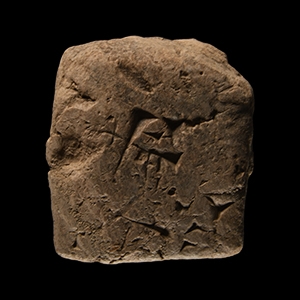
Mesopotamian Cuneiform Tablet
Early 2nd millennium B.C.Sold for (Inc. bp): £195
Tabular in form with short cuneiform text to one face. 57 grams, 54 mm
Specialised collection of cuneiform texts, the property of a London gentleman and housed in London before 1992. Thence by descent to family members. Examined by Professor Wilfrid George Lambert FBA (1926-2011), historian, archaeologist, and specialist in Assyriology and Near Eastern archaeology, in the late 1980s and early 1990s. This small collection is exceptional for the variety of types, including some very rare and well preserved examples. -
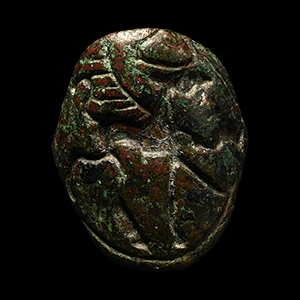
Large Luristan Bronze Ring with Animals
1st millennium B.C.Sold for (Inc. bp): £1,820
With thick hoop and opposed animal-heads to the reverse, large ellipsoid bezel with incuse winged bull motif. 34 grams, 30.15 mm overall, 22 x 20.4 mm internal diameter (approximate size British T 1/2, USA 9 3/4, Europe 21.89, Japan 21)
with Pierre Bergé & Associés, Paris, 23 April 2001, no.297 (part). Acquired by an important European family collection. Accompanied by copies of the relevant Pierre Bergé & Associés catalogue pages. This lot has been checked against the Interpol Database of stolen works of art and is accompanied by search certificate no.12055-213660.
