
Loading, please wait...
LOT 0214
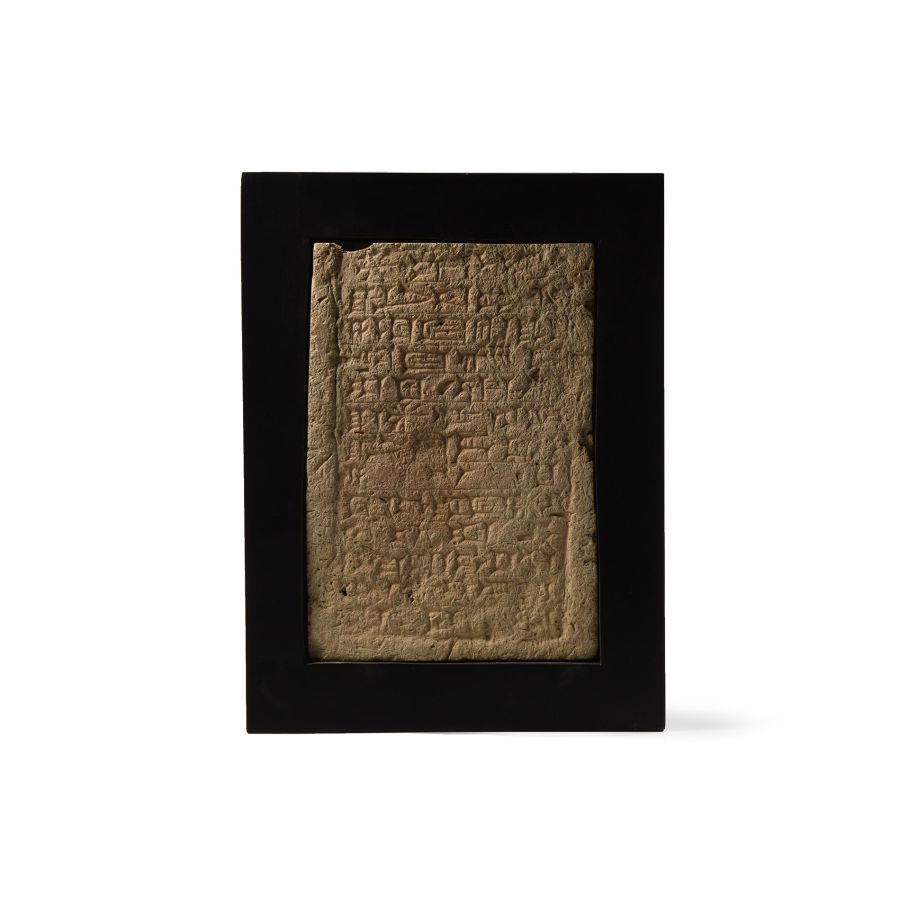
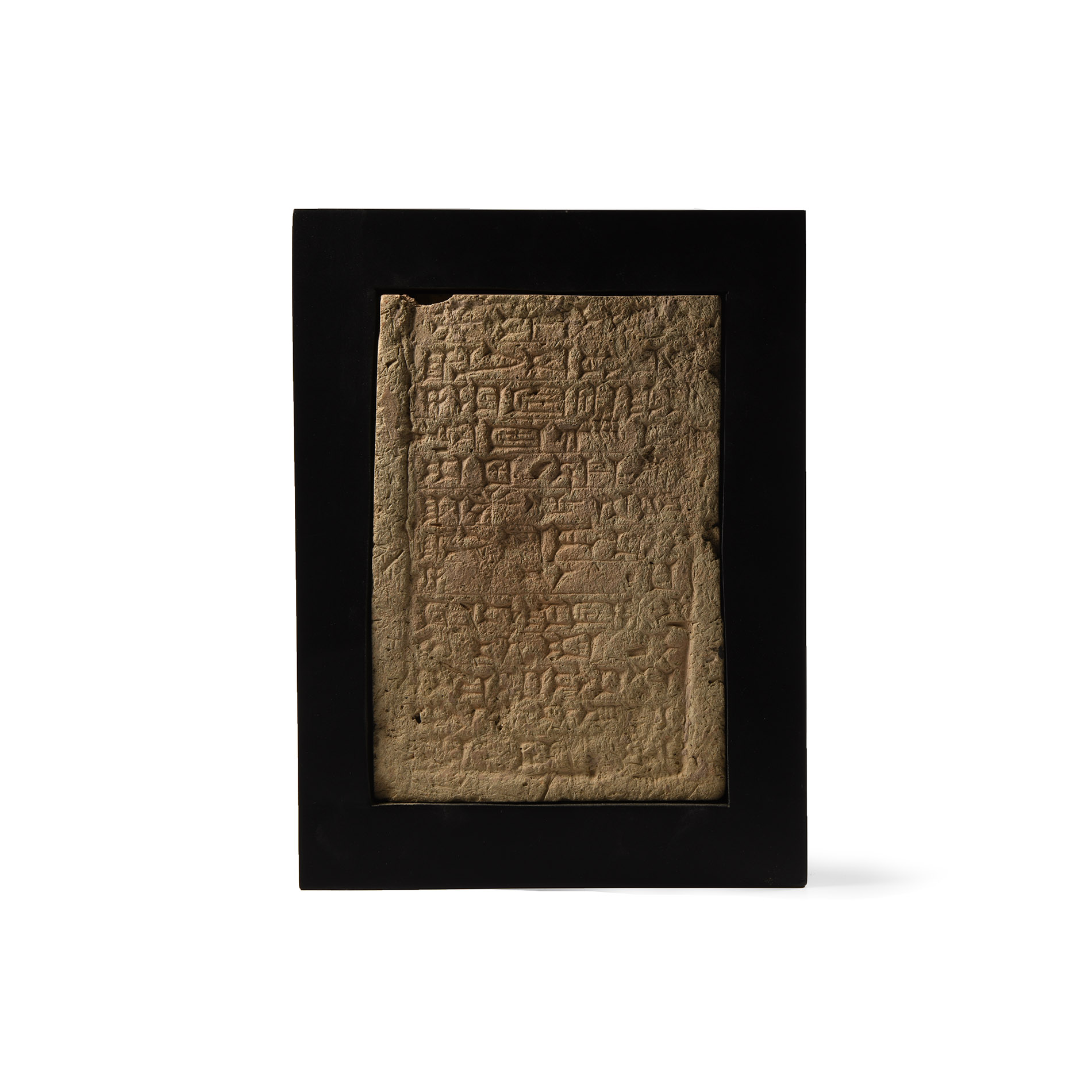
Babylonian Nebuchadnezzar The Great Brick Section with Cuneiform Inscription
1ST MILLENNIUM B.C.
10 5/8 x 8 in. (1.2 kg total, 27 x 20 cm).
Rectangular mud-brick with 14 lines of impressed cuneiform text within a reserved border; supposed reference to 'Nabû-kudurri-uṣur' (Nebuchadnezzar); mounted in a custom-made display frame.
ProvenanceEx B.A. family collection, Kent, pre 1990s.
E.P. collection, Cambridge,1990s-2000’s.
Latterly to the J.L. collection, Surrey, UK.
Nebuchadnezzar, known as 'the Great', was the second king of the Neo-Babylonian Empire, who reigned from the death of his father Nabopolassar in 605 B.C. to his own death in 562 B.C. He is often regarded as the empire's greatest ruler due to his military victories and his renovations at Babylon.
CONDITIONTimeLine Auctions follows a vetting process to ensure the authenticity and legality of all items, reinforcing our commitment to integrity and responsible trading. Each antiquity, antique, and coin lot undergoes thorough examination by a vetting committee of at least ten external specialists, professional trade association members, scientists, and archaeologists: Our Vetting Process
AUCTIONS:
TimeLine is a leading auction house specialising in antiquities, ancient art, collectables, natural history, coins, medals, and books. Our auctions offer museums, collectors, historians, and enthusiasts the opportunity to acquire unique and historically significant pieces.
LOT 0214
Babylonian Nebuchadnezzar The Great Brick Section with Cuneiform Inscription
Sold for (Inc. bp): £1,950
-
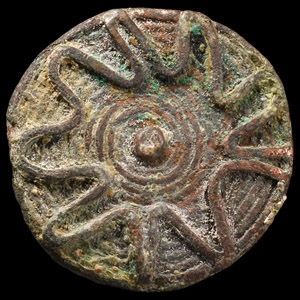
Amlash Bronze Ring
2nd-1st millennium B.C.Sold for (Inc. bp): £33
The discoid bezel displaying a stylised geometric motif in relief, supported by a hoop with convex outer face. 14.35 grams, 26.51 mm overall, 19.70 mm internal diameter (approximate size British Q, USA 8, Europe 17.49, Japan 16)
UK collection, early 1990s and before. Acquired on the UK art market since the early 2000s. From a private collection, Lancashire, UK. -
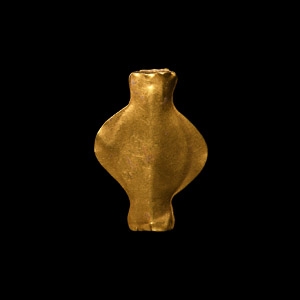
Western Asiatic Gold Butterfly Bead
2nd-1st millennium B.C.Sold for (Inc. bp): £676
Of hollow construction with two sub-triangular flanges flanking a tubular loop. 5.16 grams, 35 mm
Fine condition.
Acquired 1970-2010. Collection of a late Japanese gentleman. -
.jpg)
Western Asiatic Alabaster Bowl
1st millennium B.C.Sold for (Inc. bp): £117
Of carinated form with everted rim. 435 grams, 15 cm wide
Acquired 1960s-1990s. Late Alison Barker collection, a retired London barrister.
