
Loading, please wait...
LOT 0206
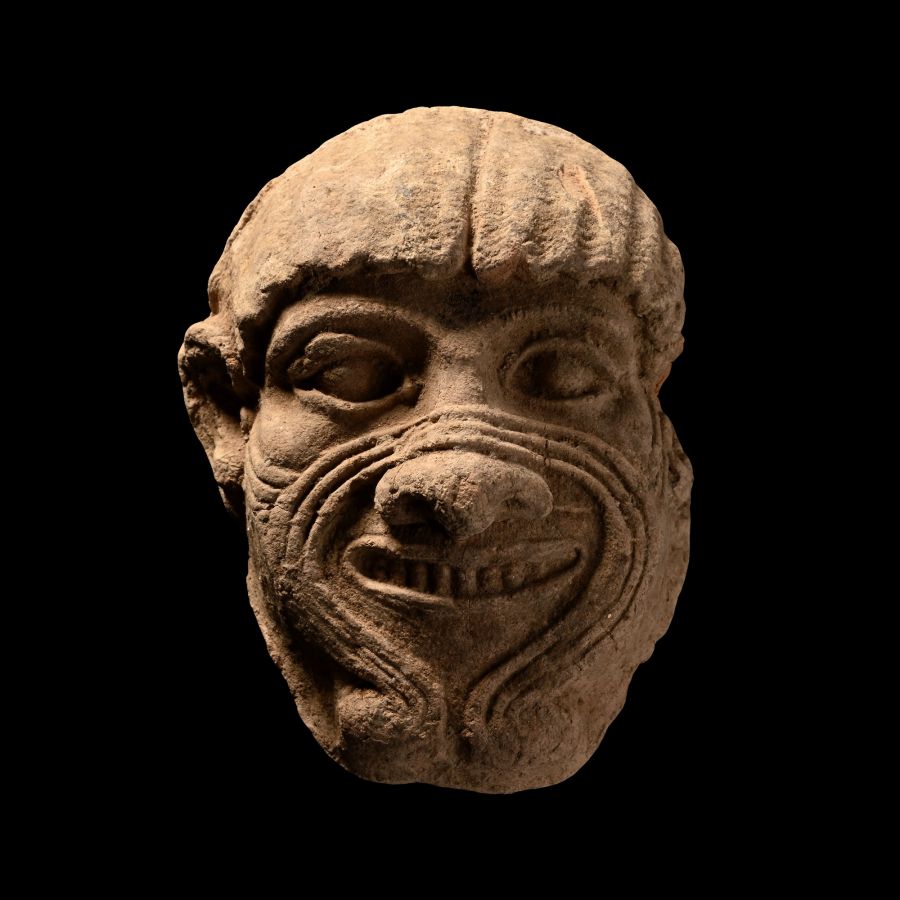
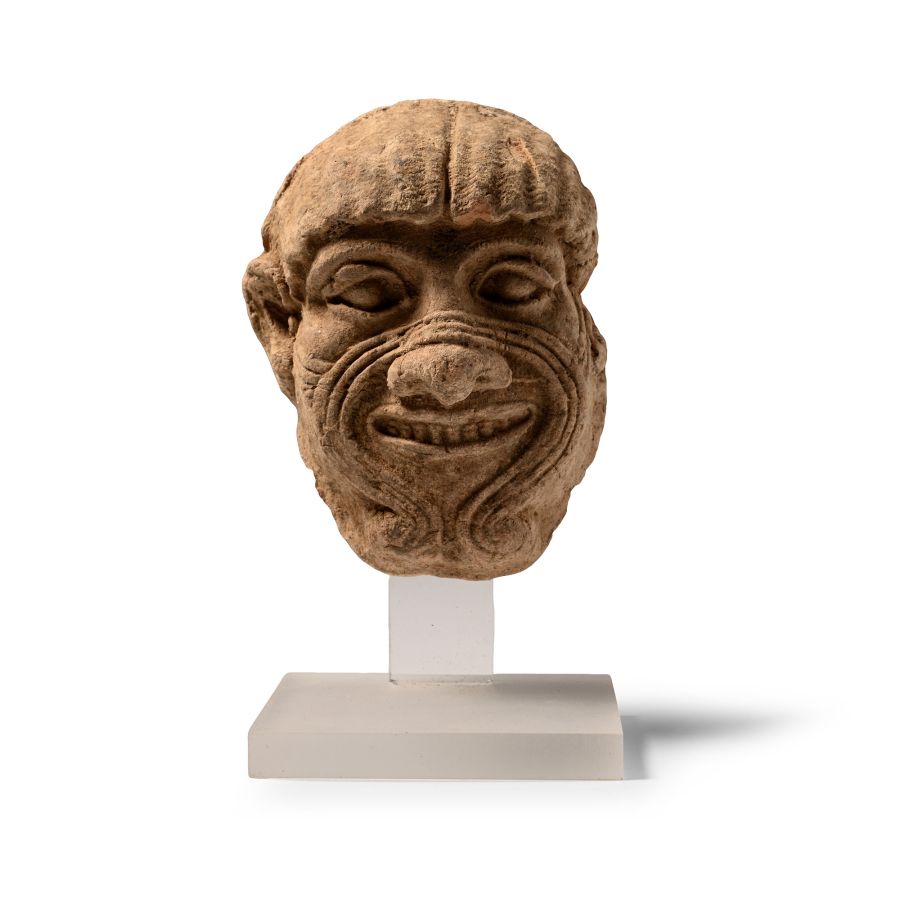
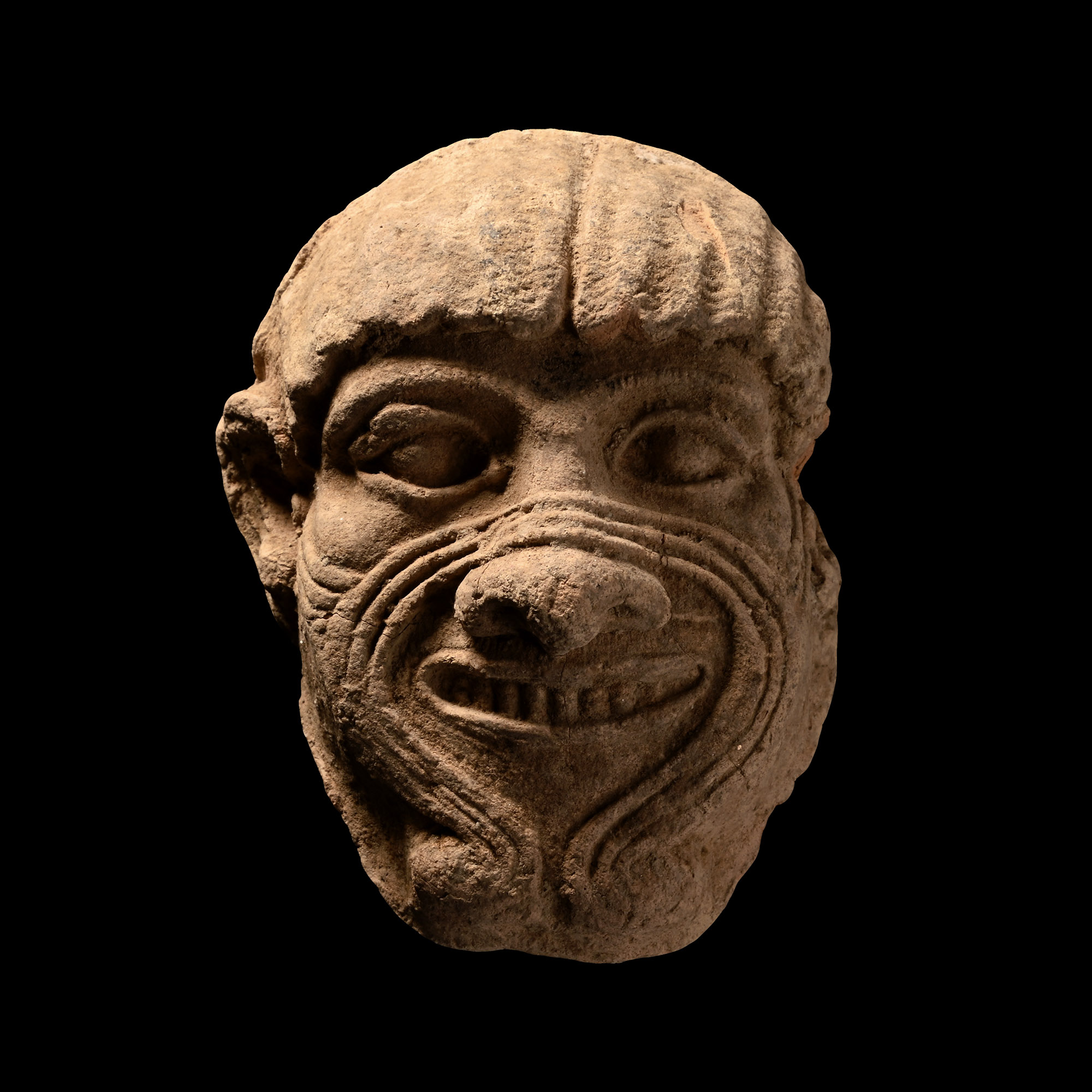
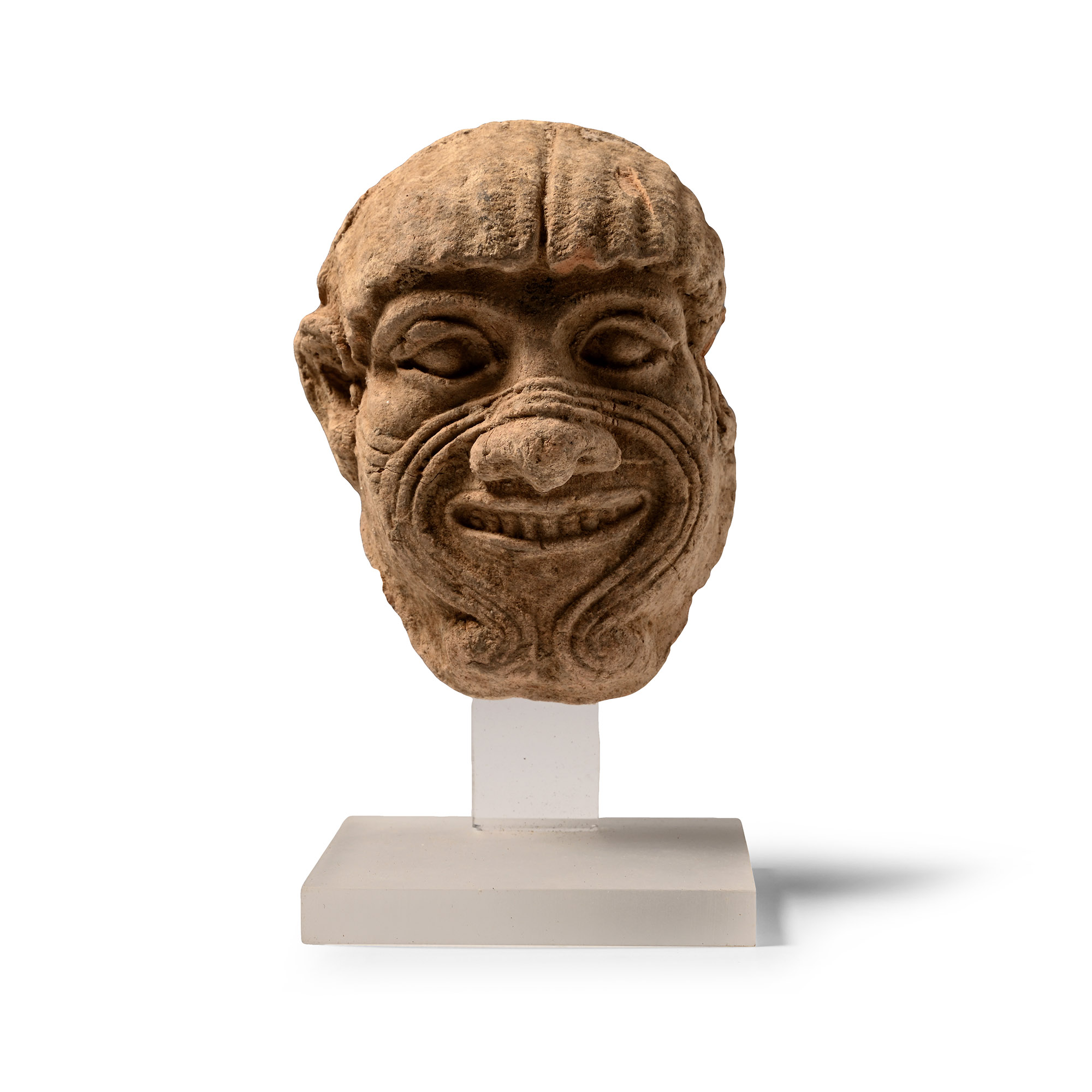
Babylonian Head of Humbaba
900-700 B.C.
4 1/2 in. (128 grams total, 11.5 cm including stand).
Modelled in the half-round with hollow reverse; thick band of hair above the brow, small deep-set eyes, broad nose and mouth with three raised bands extending to a short beard; mounted on a custom-made stand.
ProvenanceLondon art market, 1995.
Private collection, Switzerland.
Private collection, London.
Accompanied by an academic report by Dr Raffaele D’Amato.
This lot has been checked against the Interpol Database of stolen works of art and is accompanied by search certificate number no.12971-245208.
Cf. The British Museum, museum numbers 127443 and 128821, for comparable Humbaba faces; see Moorey, P. R. S., The Terracotta Plaques from Kish and Hursagkalama, c. 1850 to 1650 B.C., Iraq, vol.37, no.2, 1975, pp.79-99.
FootnotesHumbaba (or Huwawa) was a demon of Mesopotamian legend, most famously described in the Epic of Gilgamesh. He was appointed by the god Enlil as the terrifying guardian of the Cedar Forest, a place of the gods. His grotesque features, with glaring eyes and monstrous expressions, were said to strike fear into anyone who saw him. Babylonian representations of Humbaba often emphasise this fierce appearance, with distorted facial traits designed to ward off evil. Such images could serve an apotropaic purpose, protecting people and places from harm, while also evoking one of the most memorable figures of Babylonian mythology.
CONDITIONTimeLine Auctions follows a vetting process to ensure the authenticity and legality of all items, reinforcing our commitment to integrity and responsible trading. Each antiquity, antique, and coin lot undergoes thorough examination by a vetting committee of at least ten external specialists, professional trade association members, scientists, and archaeologists: Our Vetting Process
AUCTIONS:
TimeLine is a leading auction house specialising in antiquities, ancient art, collectables, natural history, coins, medals, and books. Our auctions offer museums, collectors, historians, and enthusiasts the opportunity to acquire unique and historically significant pieces.
-
Babylonian Fragmental Weight with Inscription
2nd-1st millennium B.C.Sold for (Inc. bp): £98
Plano-convex in section with incised cuneiform inscription to the flat face. 6.8 grams, 13 mm
with Archaeologia, Switzerland, before 1983. Ex private North American collection. London private collection, 2016. -
.jpg)
Sasanian Chalcedony Stamp Seal with an Ibex
5th century A.D.Sold for (Inc. bp): £117
Domed body with a large suspension hole to the centre, underside with a reclining ibex, long curving horns extending to the rump. 14.9 grams, 26 mm
UK private collection before 2000. Acquired on the UK art market. Ex property of a London gentleman. -
Western Asiatic Terracotta Zoomorphic Vessel
8th-9th century A.D.Estimate: £200 - 300 (+bp*)
Opening Bid: £100
With three splayed stub legs, ovoid body, loop handle and long pouring lip with strainer; applied loops and handles to the shoulders; hatched and scrolled painted decoration. 295 grams, 16 cm
UK collection, 1990s. Acquired on the UK art market, before 2000. Private collection, Mr M.V., a London-based businessman.
