
Loading, please wait...
LOT 1355
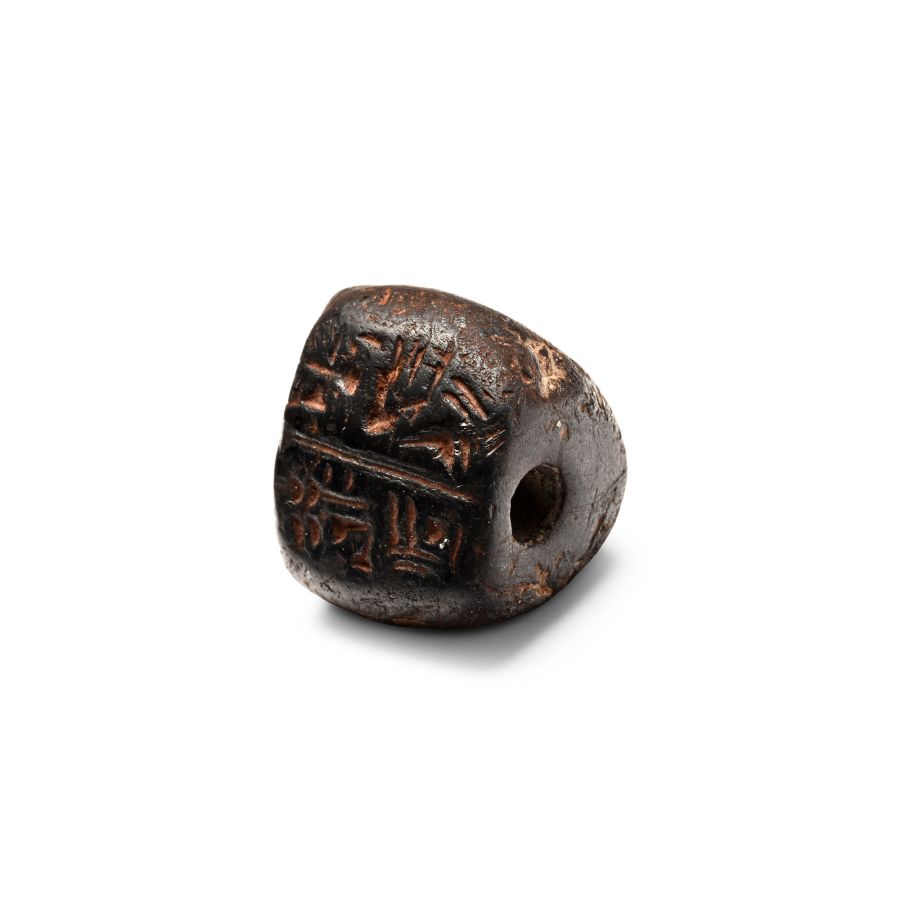
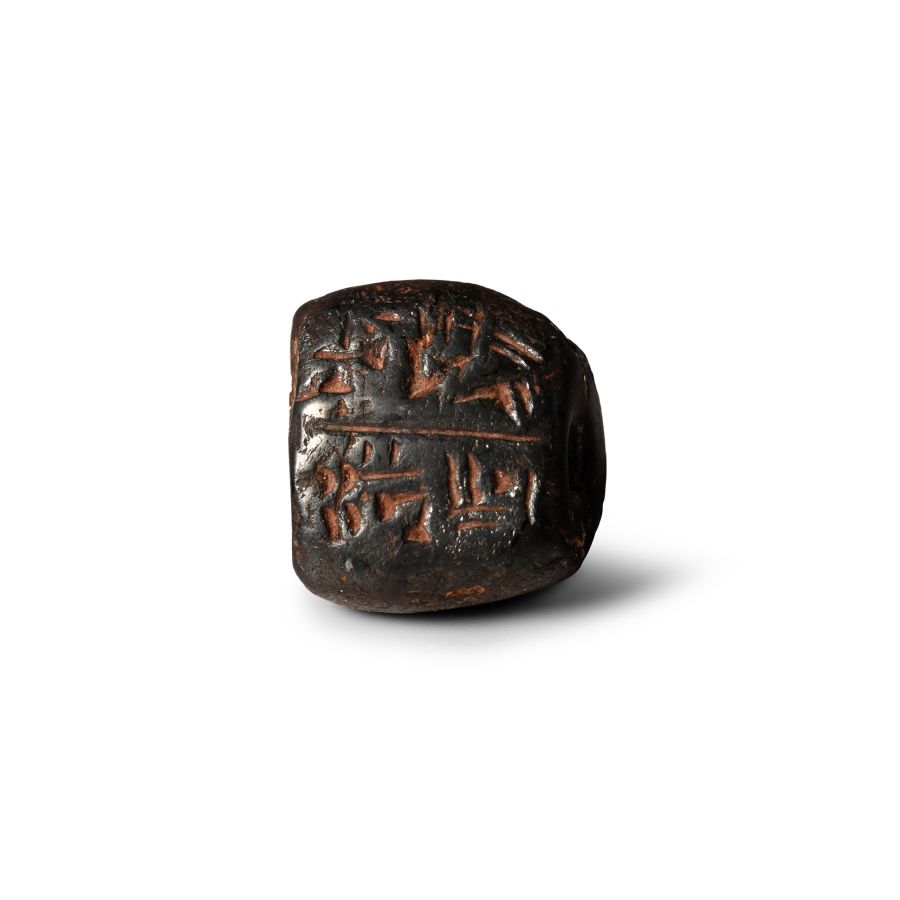
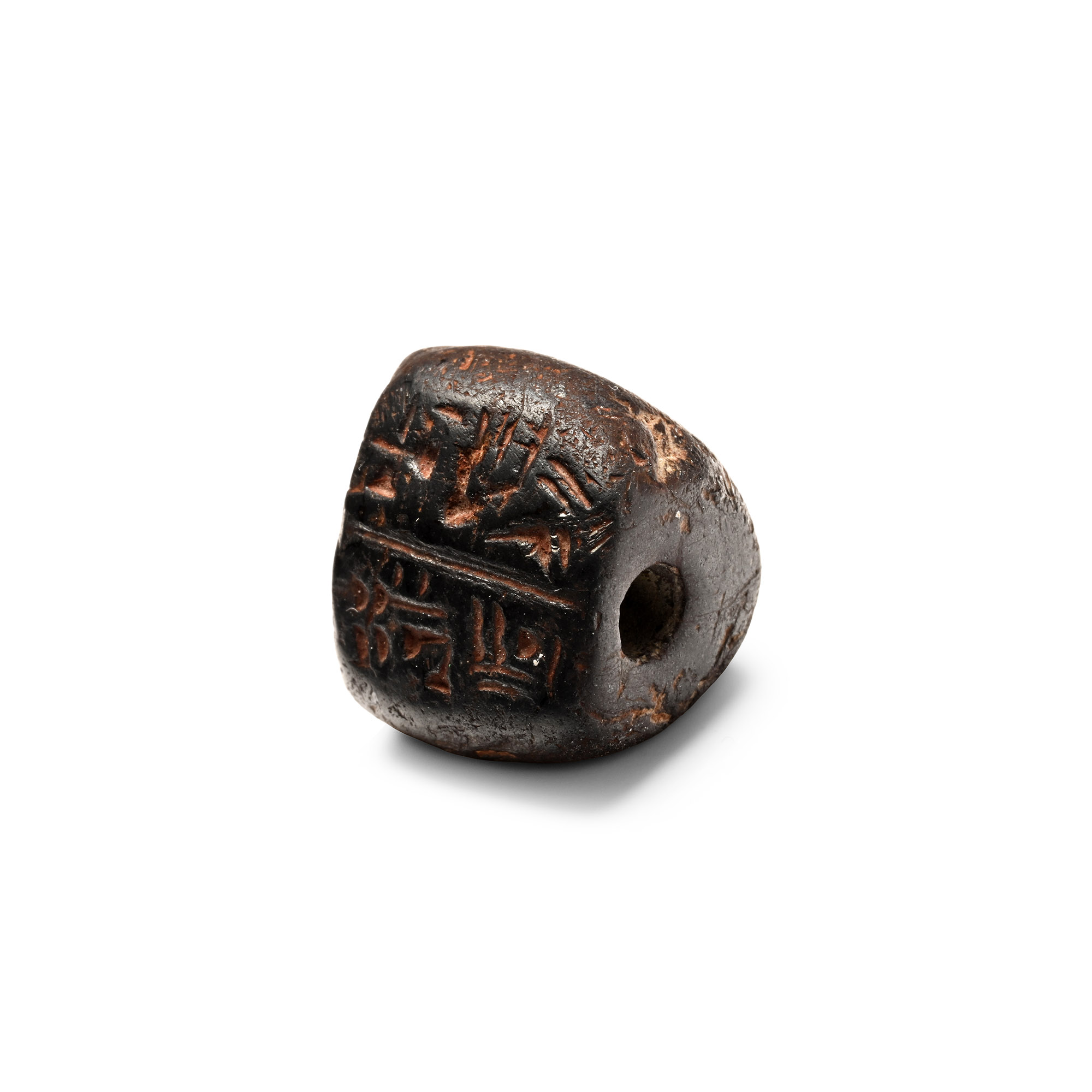
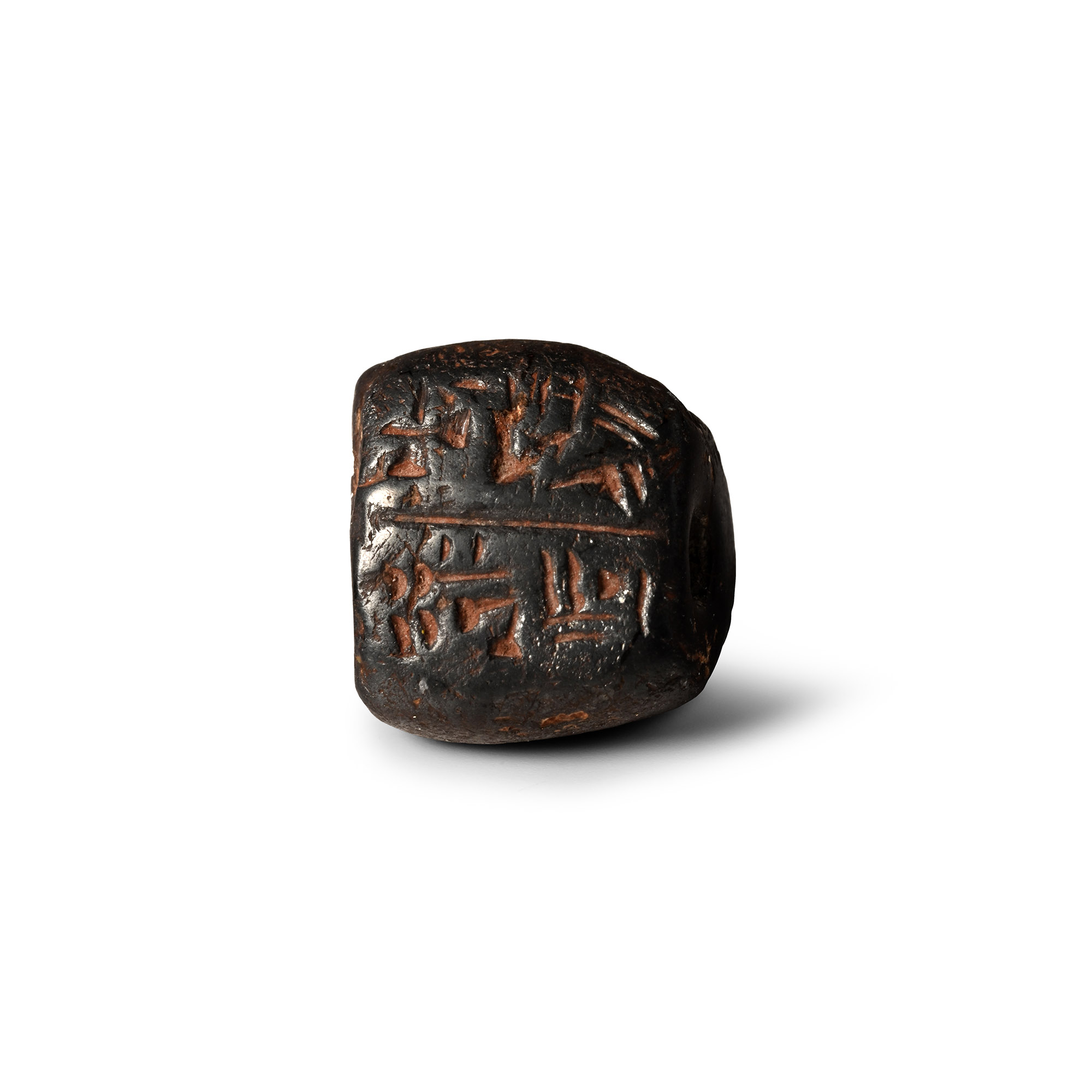
Babylonian Fragmental Weight with Inscription
2ND-1ST MILLENNIUM B.C.
1/2 in. (6.8 grams, 13 mm).
Plano-convex in section with incised cuneiform inscription to the flat face. [No Reserve]
Provenancewith Archaeologia, Switzerland, before 1983.
Ex private North American collection.
London private collection, 2016.
TimeLine Auctions follows a vetting process to ensure the authenticity and legality of all items, reinforcing our commitment to integrity and responsible trading. Each antiquity, antique, and coin lot undergoes thorough examination by a vetting committee of at least ten external specialists, professional trade association members, scientists, and archaeologists: Our Vetting Process
AUCTIONS:
TimeLine is a leading auction house specialising in antiquities, ancient art, collectables, natural history, coins, medals, and books. Our auctions offer museums, collectors, historians, and enthusiasts the opportunity to acquire unique and historically significant pieces.
-

Bactrian Bronze Zebu Vessel with Stopper
1st millennium B.C.Estimate: £15,000 - 20,000 (+bp*)
Opening Bid: £7,500
Modelled in the round as a zebu standing four-square with head raised; columnar muzzle with shallow slit mouth, discoid eye-sockets to accept and inlay; lateral loops at the shoulder and tubular filler-hole; separate hump forming a lid with corresponding loops for attachment. 870 grams, 16.5 cm wide
Private collection, New York, 1987. with Bonhams, London, 1 May 2013, no.154. Accompanied by a copy of the relevant Bonhams catalogue pages. Accompanied by a copy of French passport no.119527. Accompanied by an academic report by Dr Raffaele D’Amato. This lot has been checked against the Interpol Database of stolen works of art and is accompanied by search certificate number no.12976-245249.
The majestic zebu bull, with its heavy dewlap and wide curving horns, was considered to be a symbol of majesty and power since the first civilizations of the Indus Valley. It was the leader of the herd, the strength and virility (then symbol of fecundity) of which protected the group and ensured the procreation of the species. This is the reason why it was often chosen for sacrificial rites. It probably represented the emblem of the most powerful clans or top classes of Mohenjo-Daro and Harappa and it was the most impressive motif found in these cities, appearing constantly on painted pottery and bronze or clay figurines of the Indus area. -

Bactrian Gold Coiled Wire Necklace with Pendant
3rd-2nd millennium B.C.Sold for (Inc. bp): £3,120
Tightly-coiled wire band with graduated profile, domed disc closure with repoussé central boss and pellets to the rim, pendant formed as a rectangular frame enclosing two fusiform banded agate and another fusiform bead, barrel-shaped gold collars and coiled wire finials. 37.20 grams, 66 cm
with Ancient and Islamic Art Ltd, 1993. Private European collection, early 1990s. This lot has been checked against the Interpol Database of stolen works of art and is accompanied by a search certificate no.12597-232360.
In Old Bactria there are a number of necklaces with compartmented chlorite rosettes containing settings in lapis lazuli, cornelian, and turquoise, which seem to indicate a tradition of purely local taste; together with these should be considered other examples in twisted gold lamina, like our example, with pendants in gold or in semi-precious stones such as rock crystal. -
Akkadian Grey Stone Cylinder Seal
2nd millennium B.C.Sold for (Inc. bp): £182
With combat scene of a standing figure grappling with two rearing ibexes each looking backwards towards a rearing horse; supplied with a museum-quality impression. 17.2 grams, 30 mm
From an important London collection, 1980s-2000s.
