
Loading, please wait...
LOT 1100
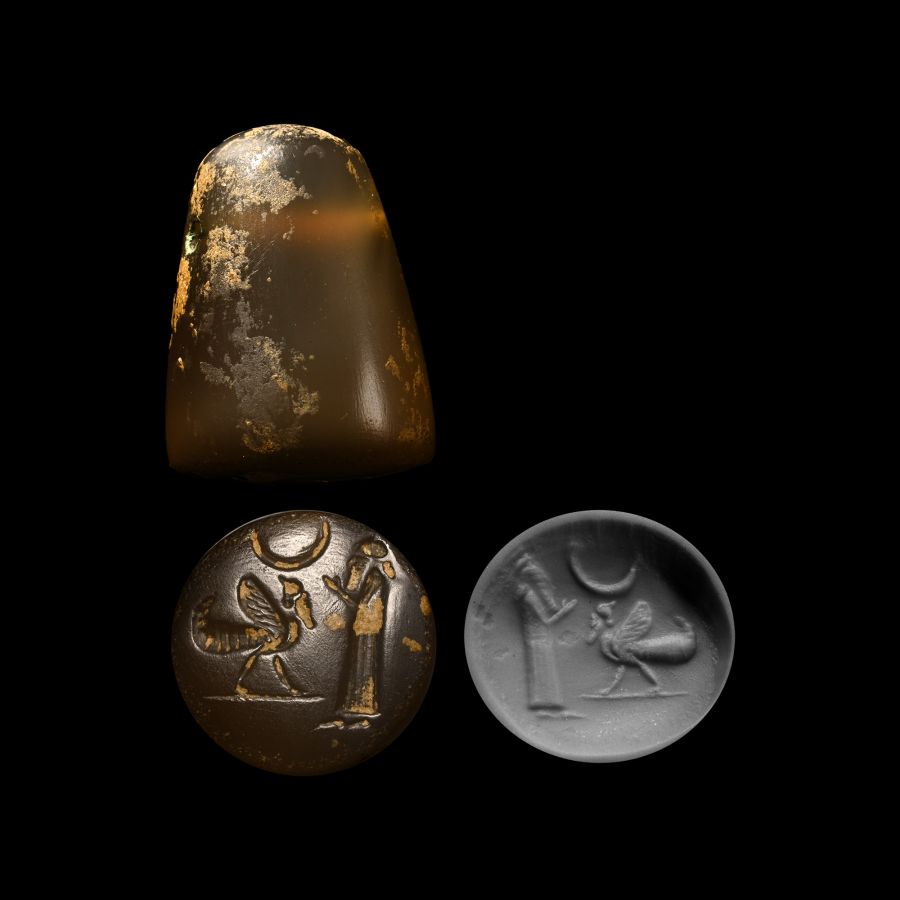
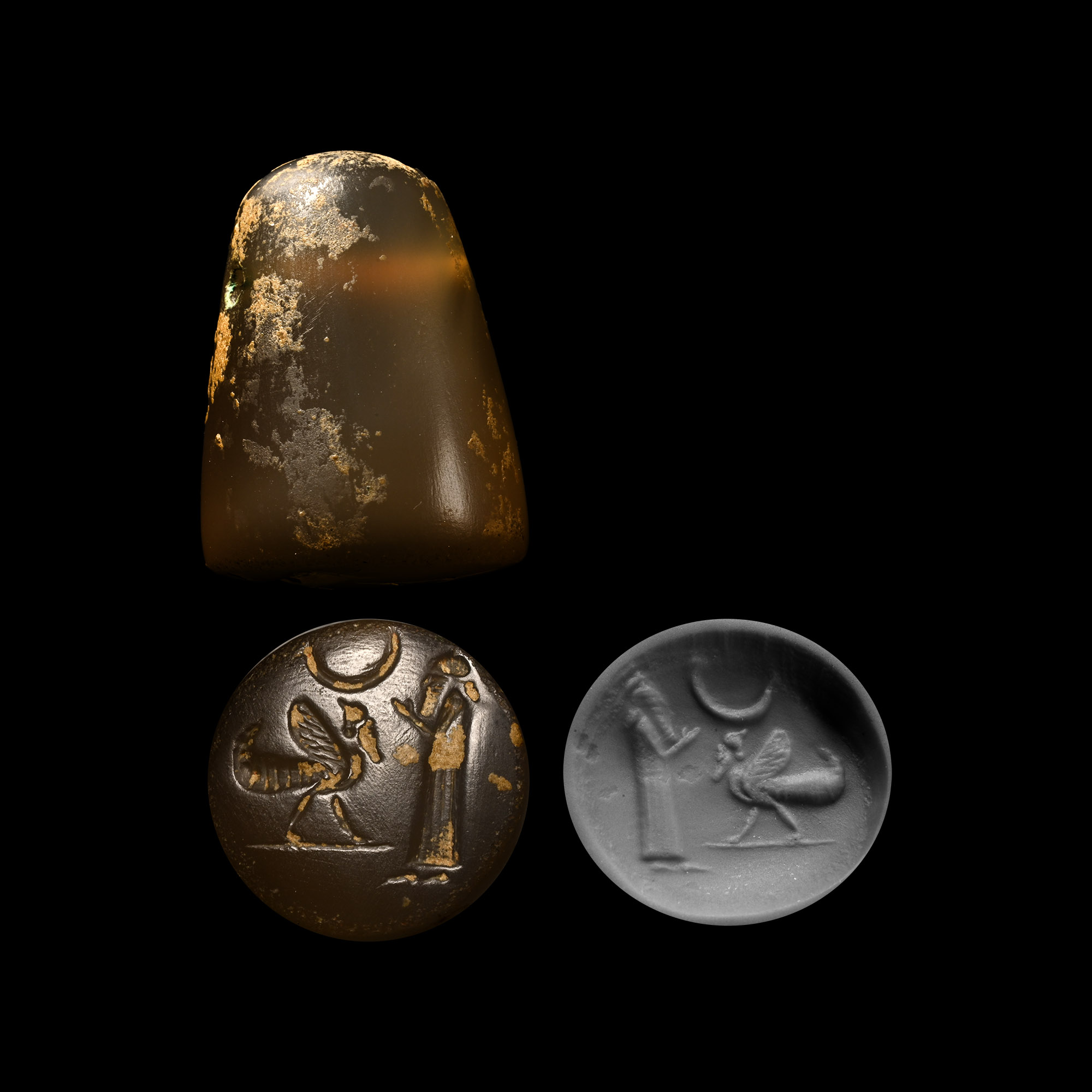
Babylonian Agate Stamp Seal
600-500 B.C.
1 in. (11.9 grams, 25 mm).
Bell-shaped with incuse image to underside comprising a harpy, crescent and standing bearded figure in a long robe; supplied with a museum-quality impression.
ProvenanceEx collection of the late S.M., London, UK, 1970-1990s.
This lot has been cleared against the Art Loss Register database, and is accompanied by an illustrated lot declaration signed by the Head of the Antiquities Department, Dr Raffaele D'Amato.
TimeLine Auctions follows a vetting process to ensure the authenticity and legality of all items, reinforcing our commitment to integrity and responsible trading. Each antiquity, antique, and coin lot undergoes thorough examination by a vetting committee of at least ten external specialists, professional trade association members, scientists, and archaeologists: Our Vetting Process
AUCTIONS:
TimeLine is a leading auction house specialising in antiquities, ancient art, collectables, natural history, coins, medals, and books. Our auctions offer museums, collectors, historians, and enthusiasts the opportunity to acquire unique and historically significant pieces.
-
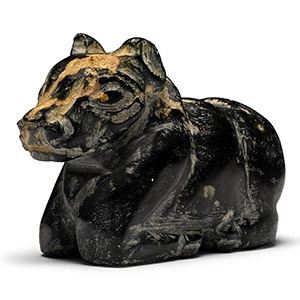
Western Asiatic Black Stone Recumbent Bull
1st millennium B.C. or laterEstimate: £400 - 600 (+bp*)
Opening Bid: £222
Carved in the round with its legs tucked underneath the body, stylised head with large almond-shaped eyes and incised details to the muzzle, large hump to the neck. 86 grams, 59 mm
From a collection formed before 1988, London and Geneva. This lot has been cleared against the Art Loss Register database, and is accompanied by an illustrated lot declaration signed by the Head of the Antiquities Department, Dr Raffaele D'Amato. -
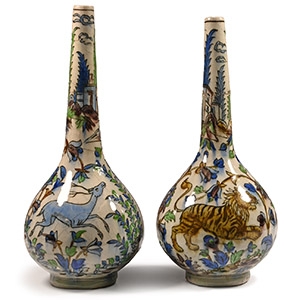
Persian Glazed Vase Pair
20th century A.D.Sold for (Inc. bp): £85
Each with a bulbous body and tall, narrow neck, both showing a scene of a lion chasing deer, flowers and other vegetation on the field, buildings on the neck; repaired. 1.3 kg total, 28.7-30 cm
From the family collection of a Hampstead gentleman; formerly acquired in the 1980s. This lot has been cleared against the Art Loss Register database, and is accompanied by an illustrated lot declaration signed by the Head of the Antiquities Department, Dr Raffaele D'Amato. -
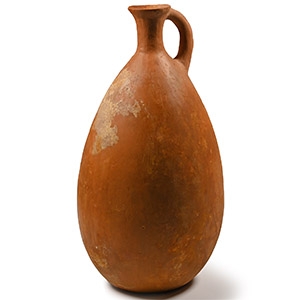
Amlash Tall Terracotta Jug
1st millennium B.C.Sold for (Inc. bp): £46
Ovate in profile with trumpet-shaped neck and mouth, single loop handle. 660 grams, 26.7 cm
From a London, UK, gentleman's collection of ancient pottery and artefacts, 1990s. This lot has been cleared against the Art Loss Register database, and is accompanied by an illustrated lot declaration signed by the Head of the Antiquities Department, Dr Raffaele D'Amato.
