
LOT 3035
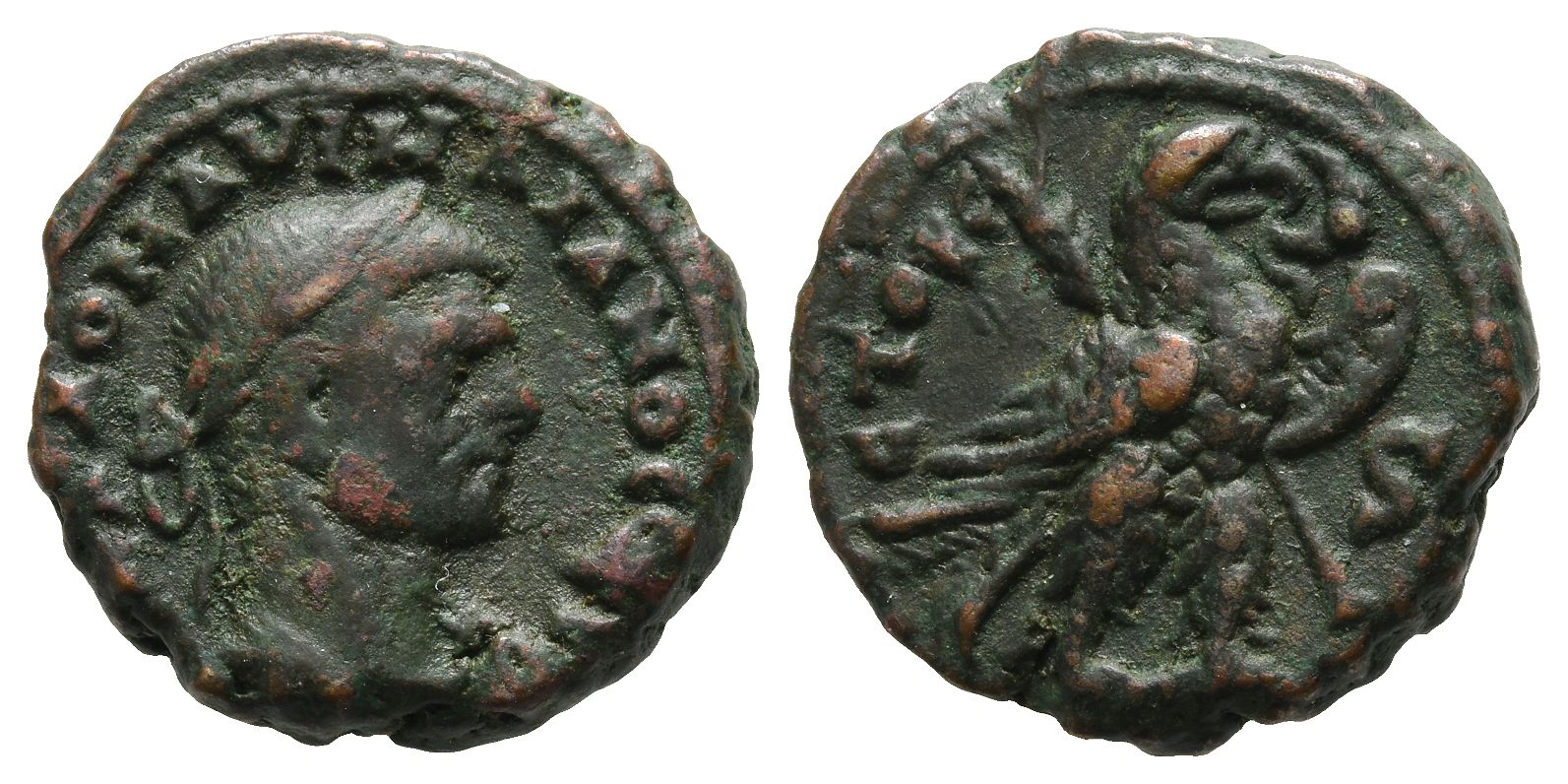
Aurelian BI Tetradrachm of Alexandria, Egypt. AD 270-275.
Dated RY 6 (AD 274/5). [Α] Κ Λ ΔΟΜ ΑΥΡΗΛΙΑΝΟϹ ϹЄΒ, laureate and cuirassed bust to right, seen from front / Eagle standing to right, wings closed, holding wreath in beak; behind, palm frond; ЄTOVC ς (date) around. RPC X Unassigned ID 75743; Köln 3095; Dattari (Savio) 5488; K&G 106.55; Emmett 3927.6. Very Fine.(6.85gr, 20mm, 11h.).
ProvenanceFrom the collection of a gentleman, acquired on the London art market in the 1990s.
TimeLine Auctions follows a vetting process to ensure the authenticity and legality of all items, reinforcing our commitment to integrity and responsible trading. Each antiquity, antique, and coin lot undergoes thorough examination by a vetting committee of at least ten external specialists, professional trade association members, scientists, and archaeologists: Our Vetting Process
AUCTIONS:
TimeLine is a leading auction house specialising in antiquities, ancient art, collectables, natural history, coins, medals, and books. Our auctions offer museums, collectors, historians, and enthusiasts the opportunity to acquire unique and historically significant pieces.
-
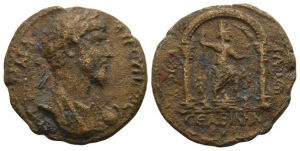
Lucius Verus AE 31mm of Abila, Decapolis. AD 161-169.
Sold for (Inc. bp): £52
Uncertain CY date. ΑΥΤ ΚΑΙϹΑΡ Λ ΑΥΡ ΟΥΗΡΟϹ, laureate and cuirassed bust to right / ϹЄ ΑΒΙΛΗΝധΝ Ι Α Α Γ [ΚΟΙ ϹΥ ...], Tyche of Abila, holding sceptre and Nike, standing to right with foot on river-god Heiromax; all within central arch of distyle temple façade; Nike standing on low basis on either side of Tyche. Cf. RPC IV.3, 3892 (temporary) (1 example); Spijkerman -. 18.18gr, 31mm, 12h.
Near Very Fine. Extremely rare; only one example on RPC Online and none on CoinArchives.
From the collection of a gentleman, acquired on the London art market in the 1990s. -
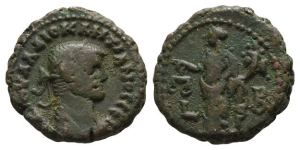
Diocletian BI Tetradrachm of Alexandria, Egypt. AD 284-305.
Sold for (Inc. bp): £13
Dated RY 2 (AD 285/6). Α Κ Γ ΟΥΑΛ ΔΙΟΚΛΗΤΙΑΝΟϹ ϹЄΒ, laureate and cuirassed bust to right / Dikaiosyne standing facing, head to left, holding scales and cornucopia; L B (date) across fields. RPC X Online Unassigned ID 75911; Dattari (Savio) 5645; Emmett 4033. 6.55gr, 20mm, 12h.
Near Very Fine.
From the collection of a gentleman, acquired on the London art market in the 1990s. -
.jpg)
Domitian AE 18mm of Balanea (as Leucas-Claudia), Seleucis and Pieria. AD 81-96.
Estimate: £30 - 40 (‡+bp*)
Opening Bid: £14
[ΑΥΤΟ ΚΑΙϹΑΡ ΔΟΜΙΤΙΑ]ΝΟϹ ϹΕΒ ΓΕ[ΡΜ], laureate head to right / [ΚΛΑΥΔΙΕധΝ Λ]ΕΥΚ[ΑΔΙധΝ], veiled and draped bust of Tyche to right, wearing mural crown. RPC II 2038; SNG München -. 4.74gr, 18mm, 12h.
Near Very Fine.
Private collection, acquired 1980–1985.
