
Loading, please wait...
LOT 0050
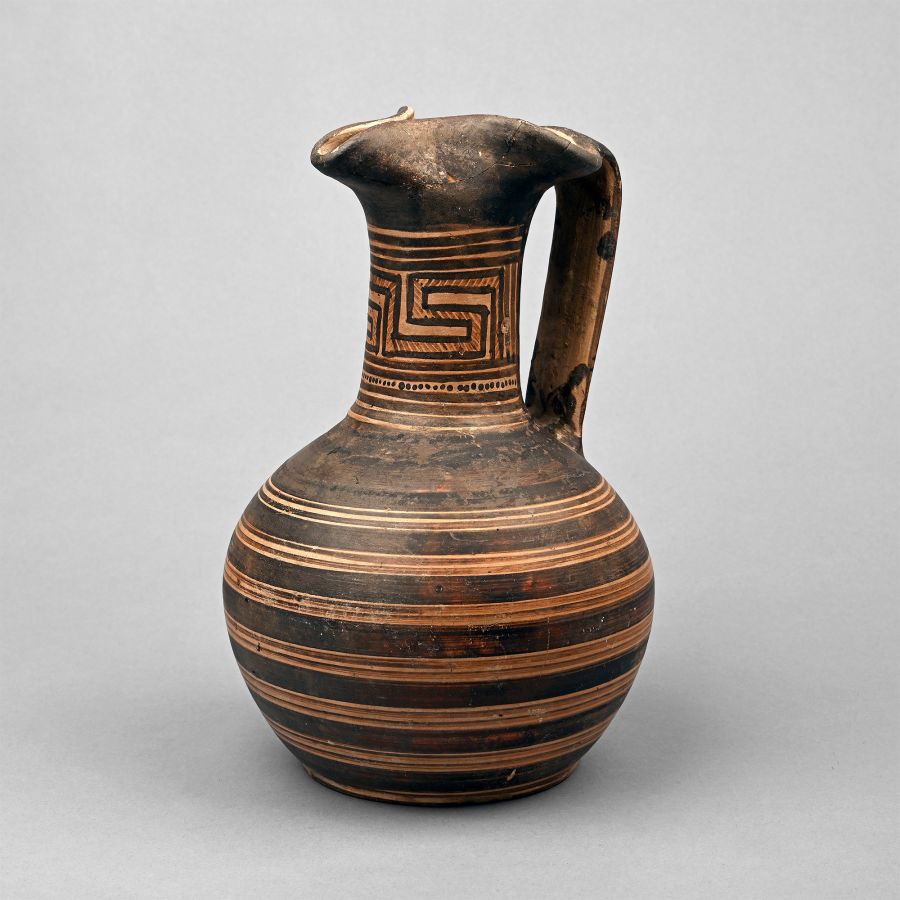
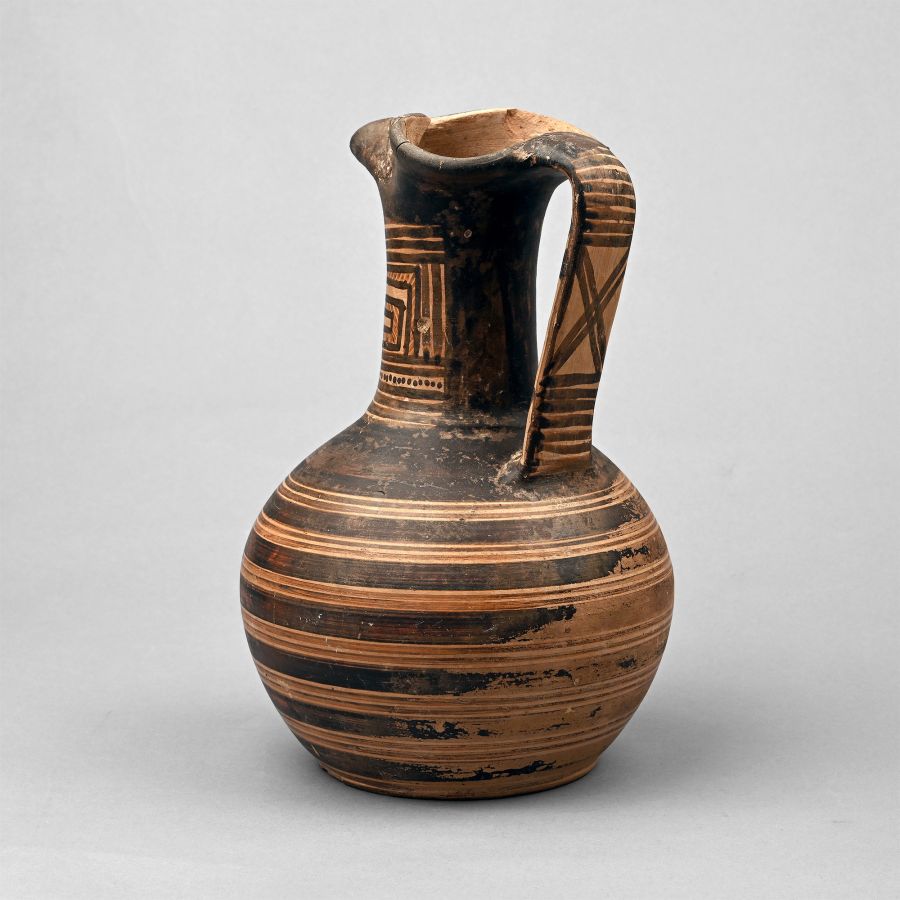
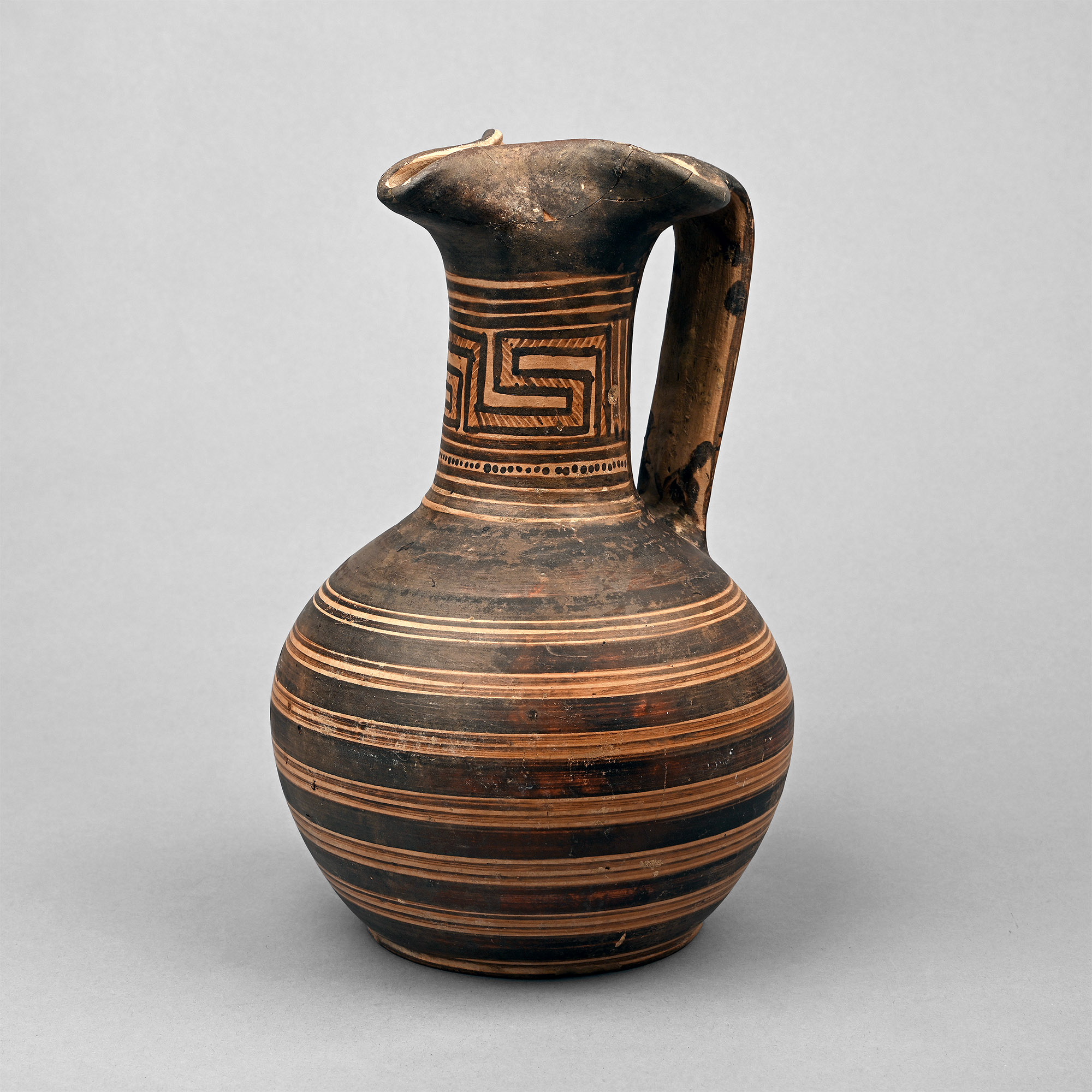
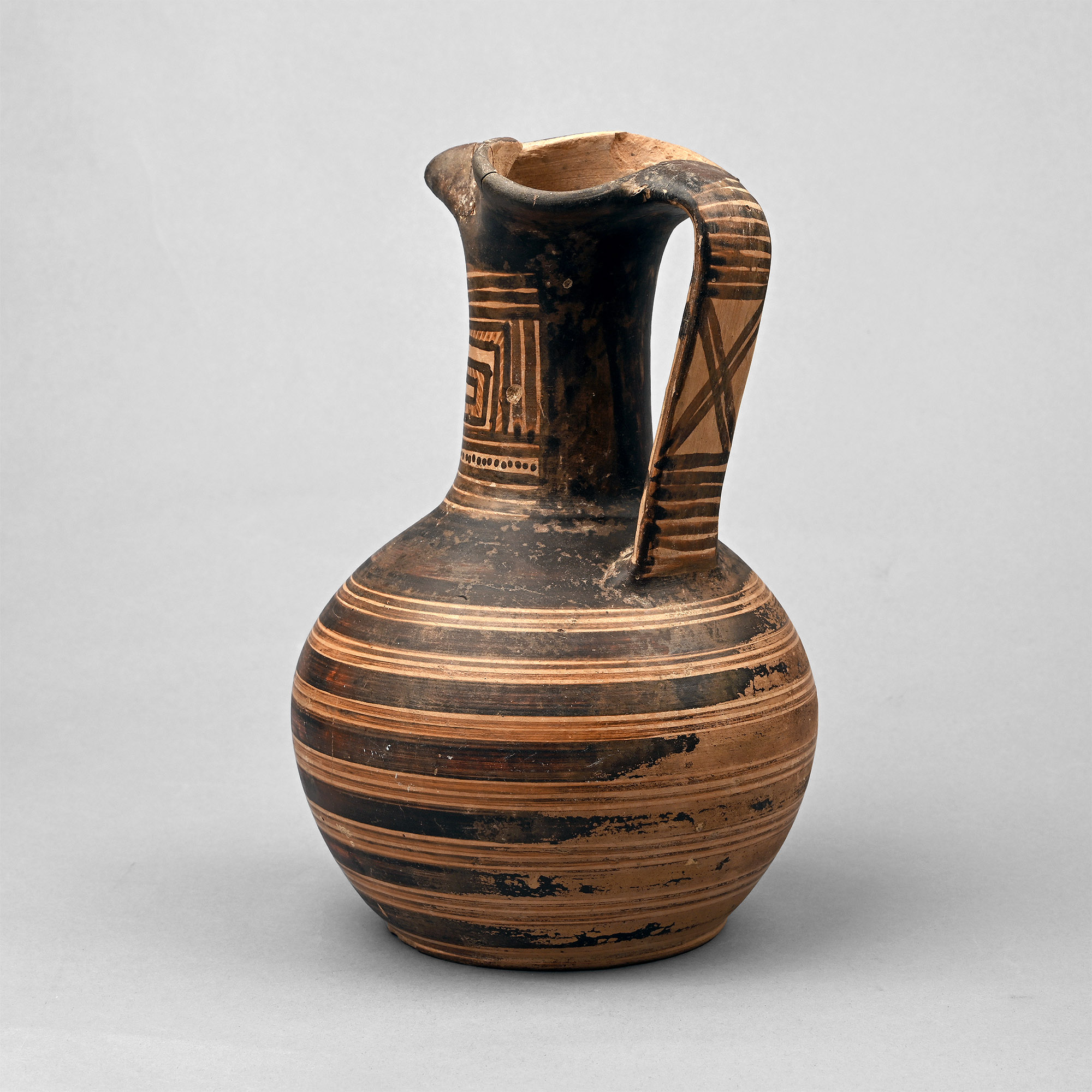
Attic Terracotta Geometric Jug with Handle
8TH CENTURY B.C.
9 3/8 in. (735 grams, 23.7 cm).
With a bulbous body and low basal ring, tubular neck with pinched trefoil spout and a wide strap handle to the rear; the body decorated with densely arranged circumferential bands, a panel of Greek key motifs on the neck, the handle with horizontal stripes and a central X-motif.
ProvenanceSwiss private collection, 1980-1990s.
Private collection, Bern, Switzerland.
This lot has been checked against the Interpol Database of stolen works of art and is accompanied by a search certificate number no.12654-236373.
Cf. Cristiansen, J., Greece in the Geometric Period, Copenhagen, 1002, fig.2, for the type.
FootnotesThese kinds of geometric oinochoai almost always had spherical bodies, cylindrical necks with trefoil mouths and strap handles from rim to shoulder. They are typical of Attic workshops of the Middle Geometric period (800-750 B.C.).
CONDITIONTimeLine Auctions follows a vetting process to ensure the authenticity and legality of all items, reinforcing our commitment to integrity and responsible trading. Each antiquity, antique, and coin lot undergoes thorough examination by a vetting committee of at least ten external specialists, professional trade association members, scientists, and archaeologists: Our Vetting Process
AUCTIONS:
TimeLine is a leading auction house specialising in antiquities, ancient art, collectables, natural history, coins, medals, and books. Our auctions offer museums, collectors, historians, and enthusiasts the opportunity to acquire unique and historically significant pieces.
-
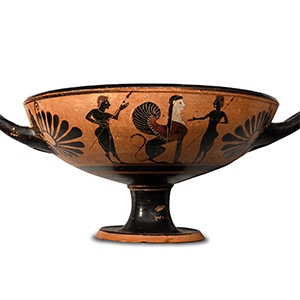
Greek Black-Figure Kylix with Warriors and Sphinxes
Attic, circa 530 B.C.Estimate: £9,000 - 12,000 (+bp*)
Opening Bid: £4,500
Comprising: a broad shallow bowl with two loop handles curving up towards the rim, short stem and broad foot with chamfered outer edge; the bowl with reserved central disc to inner face, palmette motifs at the junctions of the handles, frieze depicting two standing nude males flanking a crouching sphinx in profile; restored and with old dealer's labels beneath base. 414 grams, 27.3 cm wide
Ex Prof. F.S., Villingen-Schwenningen, Germany, 1991. with Gallery Drees Archeo S.P.R.L., Brussels. Acquired from the above, 16 December 2017. Accompanied by a copy of an Art Loss Register certificate, no.S00041086. Accompanied by a Gallery Drees Archeo certificate of authenticity. Accompanied by a thermoluminescence report no.0102 0910 from Laboratory Ralf Kotalla, 6 September 2010. This lot has been checked against the Interpol Database of stolen works of art and is accompanied by search certificate number no.12945-246388. -
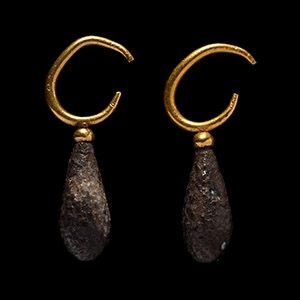
Late Eastern Greek Gold and Silver Earring Pair
1st century B.C.-1st century A.D.Sold for (Inc. bp): £468
Matched pair, each a gold open loop with bulb below supporting a silver imitation fig. 12.3 grams total, 41-42 mm
Acquired in the 1980s. Private collection, Switzerland, thence by descent. Private collection, since the late 1990s. -
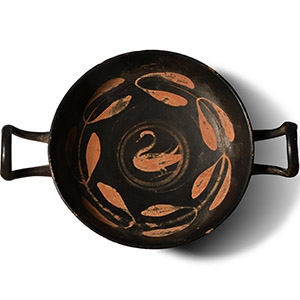
Greek Apulian Xenon Stemless Kylix Attributed to the Red Swan Group
South Italic, circa 4th century B.C.Sold for (Inc. bp): £715
Shallow with arched loop handles below the rim, low stepped foot; tondo with painted wreath of laurel leaves surrounding a standing swan in profile; to the outer face two horizontal sprigs of laurel leaves. 159 grams, 19.6 cm
Ex David Miller, Hemel Hempstead, London, UK. From the private collection of a West London, UK, gentleman, formed since the early 2000s.
